

TL;DR:
- Roses have carried profound cultural and spiritual meanings from ancient Greece, Persia, and Middle Eastern traditions to modern society. Their symbolism varies by color, number, and context, reflecting evolving social and cultural beliefs over time. Understanding these deep roots enhances the intentionality behind giving and receiving roses today.
Few flowers carry as much symbolic weight as the rose. Across thousands of years and dozens of civilisations, the cultural meanings of roses have shifted, layered, and deepened in ways most people never pause to consider. You probably know red means love. But do you know why yellow roses were once an insult in Victorian England, or what roses signify in Sufi mystical poetry? This article takes you through the most significant cultural meanings of roses, from ancient mythology to modern luxury gifting, revealing a symbol far richer than any greeting card suggests.
Table of Contents
- Key takeaways
- 1. Roses in ancient Greek and Roman mythology
- 2. Persian poetry and the rose as divine metaphor
- 3. The role of roses in Middle Eastern culture and Islamic tradition
- 4. Victorian floriography and the language of flowers
- 5. How yellow roses changed meaning in the 20th century
- 6. Roses as national symbols and political icons
- 7. Contemporary rose symbolism in art, luxury, and modern culture
- 8. A comparison of rose colour meanings across cultures
- My perspective on why this depth matters
- Discover luxury roses that honour their cultural heritage
- FAQ
Key takeaways
| Point | Details |
|---|---|
| Ancient roots run deep | Rose symbolism in Greek, Roman, and Persian cultures laid the foundation for most Western and Middle Eastern traditions. |
| Victorian colour codes persist | The meanings of rose colours established during the 19th century still shape how people choose and give roses today. |
| Middle Eastern reverence is unique | The role of roses in Middle Eastern culture weaves together spiritual, poetic, and ceremonial significance unlike any other tradition. |
| Colour meanings have evolved | Yellow roses shifted from symbolising jealousy to representing friendship, showing how cultural meanings change over time. |
| Numbers carry messages too | The quantity of roses given communicates distinct sentiments, from a single stem to a full dozen. |
1. Roses in ancient Greek and Roman mythology
The rose’s place in Western culture begins with the gods. In Greek mythology, the rose was sacred to Aphrodite, goddess of love, and legend tied its red colour to the blood of Adonis. Romans adopted this symbolism wholesale, linking the rose to Venus and weaving it into sacred ritual objects used in religious processions, funerals, and celebrations of power.
Roman garlands and rose petal showers in festivals symbolised fertility, divine power, and social status, embedding the flower deeply into public life. Roses were placed on tombs as a sign of remembrance and eternal beauty. This was not mere decoration. It was theological.
“The rose was not just a flower to the Romans. It was a social and spiritual currency.”
The phrase sub rosa, meaning “in strict confidence,” originates from ancient Rome, where roses symbolised secrecy when hung above tables during sensitive discussions. The convention survived into church architecture, where rose motifs were carved into confessional ceilings to signal that conversations were protected. It is a tradition that persists in language and design to this day.
2. Persian poetry and the rose as divine metaphor
In Persian literary tradition, the rose occupies a category of its own. Poets such as Hafez and Rumi used rose imagery for divine beauty and spiritual longing, particularly within Sufi mystical traditions. The rose represented the beloved, whether human or divine, and the nightingale represented the yearning soul.
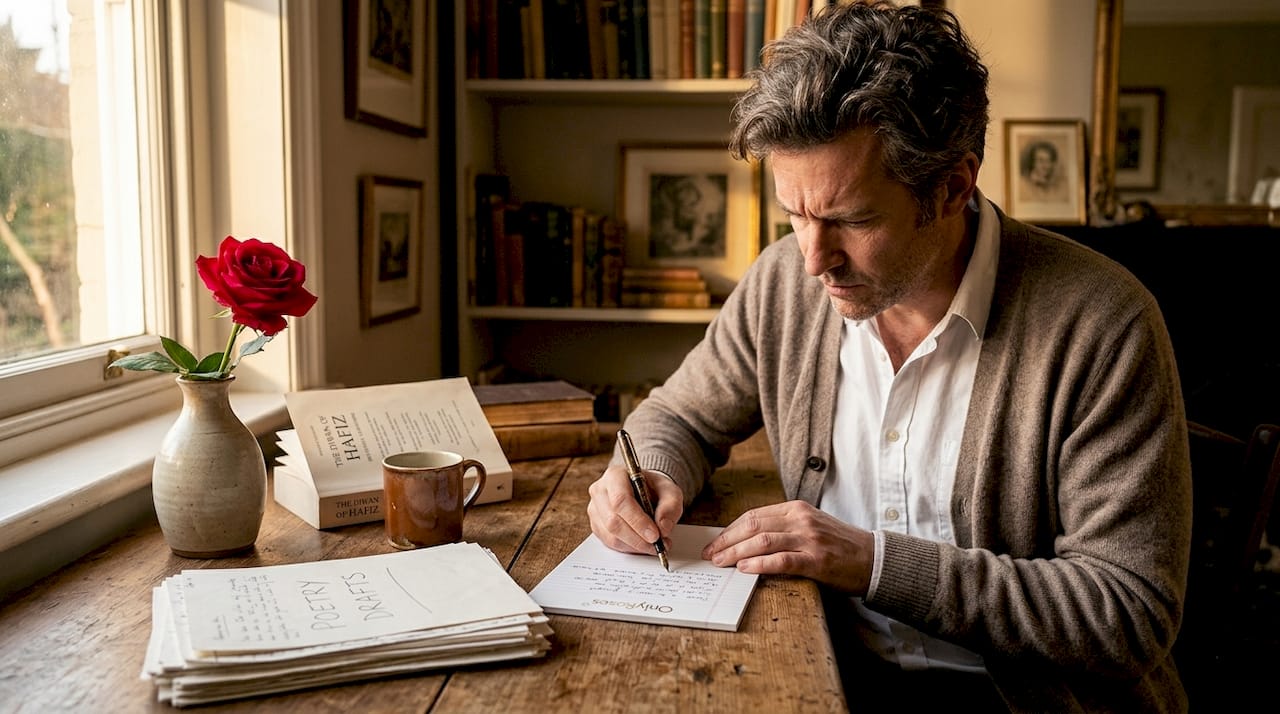
This pairing of rose and nightingale became one of the most enduring metaphors in Persian and broader Islamic poetry. It described the soul’s relationship to the divine with an intimacy and longing that prose could not capture. For anyone exploring the historical meanings of roses, Persian literature offers some of the most psychologically rich interpretations anywhere in the world.
3. The role of roses in Middle Eastern culture and Islamic tradition
The role of roses in Middle Eastern culture goes well beyond poetry. In Islamic tradition, the rose carries spiritual associations with the Prophet Muhammad, and its fragrance is considered an expression of divine grace. Rose water holds a ceremonial function in mosques, homes, and weddings across the Arab world, Iran, Turkey, and South Asia.
Islamic gardens were deliberately designed to evoke paradise, and the rose was central to that vision. Its beauty, symmetry, and fragrance made it a living symbol of the divine garden described in the Quran.
| Cultural context | Rose symbolism | Common use |
|---|---|---|
| Islamic tradition | Divine beauty, mercy, purity | Rose water in worship and ceremony |
| Persian poetry | Spiritual longing, the beloved | Sufi and classical literary metaphor |
| Arab weddings | Love, blessings, new beginnings | Floral arrangements and rose water |
| Ottoman culture | Elegance, paradise | Garden design and decorative arts |
Rose water remains one of the most practical expressions of this symbolism. It is used to purify spaces, welcome guests, and bless occasions from births to weddings. The scent itself is considered meaningful, not merely pleasant.
4. Victorian floriography and the language of flowers
The 19th century produced something remarkable: a formalised, widely understood vocabulary built entirely from flowers. Floriography, the coded language of flower colours, emerged in Victorian England as a discreet way to communicate feelings that social convention would not permit to be spoken aloud. Roses were central to this system.
The meanings of rose colours during this period included:
- Red roses signified passionate love and deep romantic feeling.
- White roses represented purity, innocence, and worthiness.
- Yellow roses carried a pointed message. In Victorian England, they symbolised jealousy and suspected infidelity.
- Pink roses expressed admiration, grace, and gentle affection.
- Dark crimson roses conveyed mourning.
The numerical dimension added another layer. A single red rose denoted profound love, three roses meant “I love you,” and a dozen expressed complete devotion. Sending a bouquet was, in effect, writing a letter.
Pro Tip: When selecting roses as a gift today, the Victorian framework still applies in most Western contexts. A bouquet of white and red roses together traditionally signals unity and enduring love.
Victorian floriography created a universal vocabulary for gifting that persists in contemporary Western culture, even when most people are unaware of its origins.
5. How yellow roses changed meaning in the 20th century
Yellow roses offer one of the clearest examples of how cultural meanings shift over time. In Victorian England, giving someone yellow roses was not a kind gesture. It implied suspicion or jealousy. By the 20th century, that association had almost entirely reversed.
Yellow roses shifted from jealousy to friendship and warmth, becoming the standard choice for platonic celebrations, get-well bouquets, and expressions of joy. The transformation reflects how roses in different cultures and eras do not carry fixed meanings. They carry living ones, responsive to social change.
This is worth remembering when you choose roses for someone from a different cultural background. What communicates warmth in one context may carry an entirely different charge in another.
6. Roses as national symbols and political icons
The rose’s role in cultural traditions extends into politics and national identity. The rose was designated the national flower of the United States by law in 1986, with National Rose Month observed every June. England’s Wars of the Roses in the 15th century took its name from the red and white roses used as symbols by rival royal houses, showing how the flower could encode dynastic claims and territorial identity.
In socialist and social democratic movements across Europe, the red rose became a symbol of solidarity and working-class dignity. The same flower used by Roman emperors and Islamic poets was repurposed for entirely different ends, which speaks to its remarkable adaptability as a symbol.
7. Contemporary rose symbolism in art, luxury, and modern culture
Modern rose symbolism remains rich and diverse, with roses appearing in art, luxury branding, and public celebrations worldwide. Fashion houses use the rose to signal romance and refinement. Perfumers build entire brand identities around its fragrance. In contemporary gifting, the colour and arrangement of roses still carry distinct messages, even among people who have never heard the word floriography.
What makes this particularly interesting is that the traditional meanings have not disappeared. They have layered. A modern gift of deep red roses carries ancient mythological weight, Victorian coding, and contemporary romantic intention simultaneously. That depth is what makes roses special as a cultural object, not simply their beauty.
8. A comparison of rose colour meanings across cultures
Understanding rose colour symbolism across different traditions helps you make more considered and meaningful choices when giving or receiving roses.
| Rose colour | Western meaning | Middle Eastern meaning | Universal association |
|---|---|---|---|
| Red | Romantic love | Love, mercy, divine beauty | Passion |
| White | Purity, innocence | Purity, paradise | New beginnings |
| Yellow | Friendship, joy | Hospitality, warmth | Positivity |
| Pink | Admiration, gratitude | Grace, gentle affection | Care |
| Purple/lavender | Enchantment, mystery | Royalty, spiritual depth | Reverence |
These are starting points, not fixed rules. The context, the number of roses, and the relationship between giver and recipient all shape the final meaning.
My perspective on why this depth matters
I have spent years working closely with roses as a luxury product, and what consistently strikes me is how little people know about the cultural weight they are holding when they carry a bunch of roses. Most people buy red for romance and move on. That is perfectly fine. But they are missing most of the story.
What I find genuinely moving about rose mythology and folklore is that the symbolism has survived millennia without losing its power. A Roman senator invoking sub rosa and a Persian poet writing about the nightingale and the rose were reaching for the same thing: a flower adequate to the scale of human feeling. That is extraordinary.
In my view, knowing this changes how you give roses. It transforms an automatic gesture into a deliberate one. When you understand that white roses have signified purity across Greek, Roman, Christian, and Islamic traditions, you realise you are participating in something much older than Valentine’s Day. That awareness makes the act of giving richer for both you and the person who receives it.
— Anian
Discover luxury roses that honour their cultural heritage

At Only-roses, every selection reflects the centuries of meaning behind this extraordinary flower. Whether you are drawn to classic red for its deep romantic history or white for its cross-cultural associations with purity and new beginnings, the luxury roses guide at Only-roses walks you through colour meanings, arrangement choices, and care in genuine depth. For those seeking a gift that lasts beyond a week, the preserved roses range offers blooms that maintain their beauty for months, making the symbolism as enduring as the flower itself. Explore the full collection and find roses that say exactly what you mean.
FAQ
What are the main cultural meanings of roses?
Roses symbolise love, beauty, purity, secrecy, and spiritual devotion across different cultures. Their meanings vary by colour, number, and cultural context, from ancient Greek mythology to Islamic ceremony.
What does the red rose symbolise in different cultures?
Red roses represent passionate love in Western traditions and divine mercy or beauty in Middle Eastern cultures. The association with love and deep emotion is one of the most consistent meanings across civilisations.
How did Victorian floriography shape modern rose symbolism?
Victorian floriography established a coded colour vocabulary for roses that persists in Western gifting today. Red for love, white for purity, and pink for admiration all trace back to 19th-century social conventions.
What is the role of roses in Middle Eastern culture?
Roses in Middle Eastern culture carry spiritual, poetic, and ceremonial significance. They are linked to paradise in Islamic tradition, used in rose water ceremonies, and appear throughout Persian Sufi poetry as metaphors for the divine.
Why did the meaning of yellow roses change?
Yellow roses shifted from symbolising jealousy in Victorian England to representing friendship and joy in the 20th century, reflecting how cultural associations with roses evolve alongside changing social values.

