

TL;DR:
- Proper preparation and careful arrangement techniques ensure roses enhance home decor without looking overdone or wilted. Using the right tools, maintaining water quality, and matching rose styles to seasons yield elegant, long-lasting displays. Preserved roses offer maintenance-free options, while fresh roses bring seasonal fragrance and vibrancy to any space.
Roses have a reputation for being the most romantic flower in the world, yet many people struggle to translate that beauty into genuine home decor. The gap between a stunning arrangement and a wilting bunch in a glass jar often comes down to a handful of techniques most guides never bother to share. If you’ve ever felt uncertain about how to decorate with roses at home without it looking fussy or overdone, you’re in the right place. This guide covers everything from essential preparation to seasonal styling ideas that genuinely transform a room.
Table of Contents
- Key takeaways
- How to decorate with roses: tools and materials
- Preparing and arranging fresh roses step by step
- Rose decoration ideas for every room and season
- Common mistakes when styling roses at home
- My honest take on styling roses at home
- Discover luxury roses and expert styling at Only-roses
- FAQ
Key takeaways
| Point | Details |
|---|---|
| Prep work is everything | Cutting stems at a 45-degree angle and removing submerged leaves prevents bacteria and extends vase life. |
| Use a tape grid | A crisscross tape grid over the vase opening holds stems in place for balanced, professional-looking arrangements. |
| Fresh vs preserved | Fresh roses suit seasonal displays; preserved roses offer months of low-maintenance decor with no water required. |
| Seasonal colour matters | Matching rose colours to seasonal palettes makes arrangements feel intentional rather than accidental. |
| Avoid common pitfalls | Keep roses away from heat sources and direct sunlight to protect blooms and prevent rapid wilting. |
How to decorate with roses: tools and materials
Before you touch a single stem, having the right materials makes the difference between a polished display and a frustrating afternoon. You do not need a florist’s toolkit, but a few specific items genuinely change the result.
What you’ll need:
- Sharp floral scissors or a clean knife (blunt blades crush stems rather than cut them)
- A selection of vases in varying heights and widths
- Clear sticky tape for creating stem grids
- Floral foam, if you prefer structured arrangements
- A clean bucket for conditioning roses before arranging
- Flower food sachets or a drop of bleach in water to reduce bacteria
The choice between fresh and preserved roses is worth considering before you start. Fresh roses offer the classic fragrance and live colour that people love, while preserved roses last months with minimal upkeep, making them ideal for spaces where you want long-lasting decor without constant replacement.
| Type | Lifespan | Maintenance | Best use |
|---|---|---|---|
| Fresh roses | 7 to 10 days | Daily water checks | Seasonal displays, centrepieces |
| Preserved roses | Several months | Near zero | Permanent decor, shelves, gift displays |
When selecting fresh roses, look for tight or semi-open buds rather than fully open blooms. They’ll open gradually and give you the longest display life.
Preparing and arranging fresh roses step by step
Getting the arrangement right starts well before you place a single stem in water. These steps apply whether you’re creating a simple vase display or a structured rose centrepiece for an event.
- Condition your roses first. Place them in a bucket of cool water for at least two hours after purchase. This allows the stems to fully hydrate before arranging.
- Trim the stems at a 45-degree angle. A diagonal cut increases the surface area available for water absorption, extending the life of the bloom considerably.
- Remove leaves below the waterline. Submerged leaves break down quickly and encourage bacterial growth that shortens the life of your roses. Strip the lower third of each stem before placing it in the vase.
- Create a tape grid. Apply clear tape in a crisscross pattern across the vase opening. This acts as a structural grid, holding each stem exactly where you want it without visible supports.
- Measure stem height against your vase. A good rule of thumb is to cut stems so the blooms sit roughly one and a half times the height of the vase. This proportion looks naturally balanced.
- Arrange from the outside inward. Place your tallest stems at the centre and work outward and downward in a dome shape. This technique gives a full, rounded display that works beautifully on a dining table or sideboard.
- Handle blooms by the stem. Touching rose heads with your fingers transfers natural oils that can cause mould and accelerate decay.
Pro Tip: If you are using floral foam, let it float on the surface of the water until it sinks naturally rather than pushing it down into the water. Forcing it submerges air pockets and prevents full hydration of your stems.
Proper hydration alongside regular water changes every two days will keep your arrangement looking fresh for as long as possible. With the right care, cut roses typically remain fresh for seven to ten days.
Rose decoration ideas for every room and season
The most inspiring part of using roses in your home is how adaptable they are. A single styling tweak, such as swapping a colour palette or mixing in seasonal greenery, completely changes the mood of an arrangement.
Spring and summer styling
Pale blush, cream, and soft coral roses feel perfect from March through to August. Place a loose, overflowing arrangement of mixed heights on a dining table or kitchen island. Pairing roses with eucalyptus or baby’s breath adds texture and visual depth without competing with the roses. A windowsill arrangement in a narrow-necked bottle is one of the simplest and most effective rose decoration ideas for smaller spaces.
Autumn and winter styling
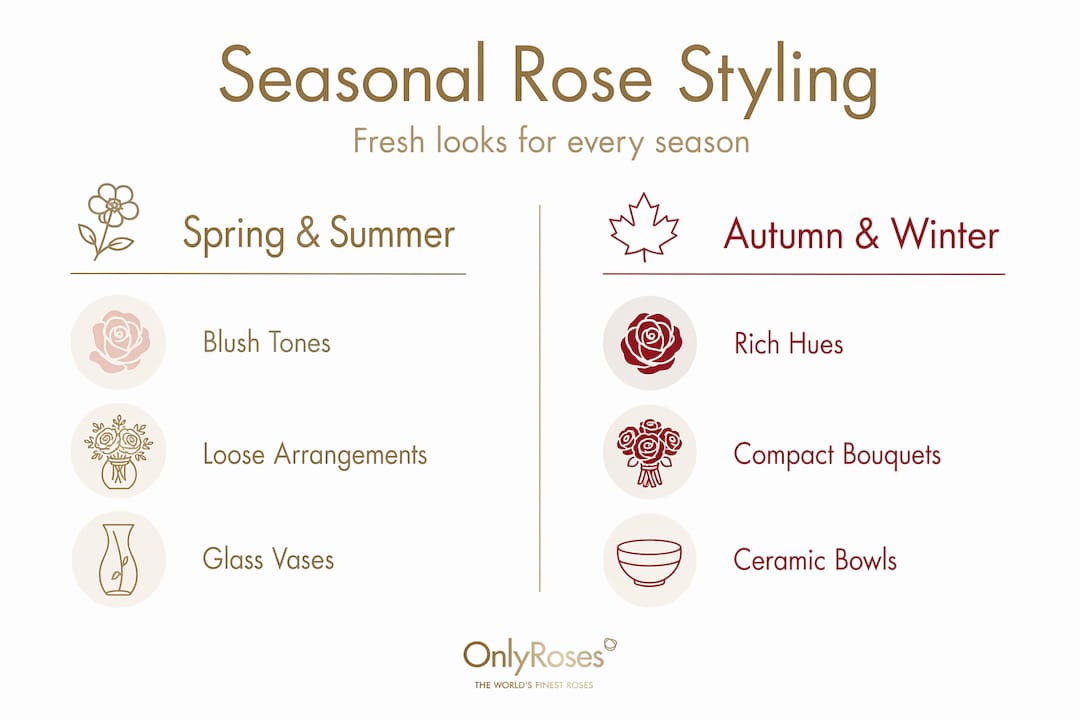
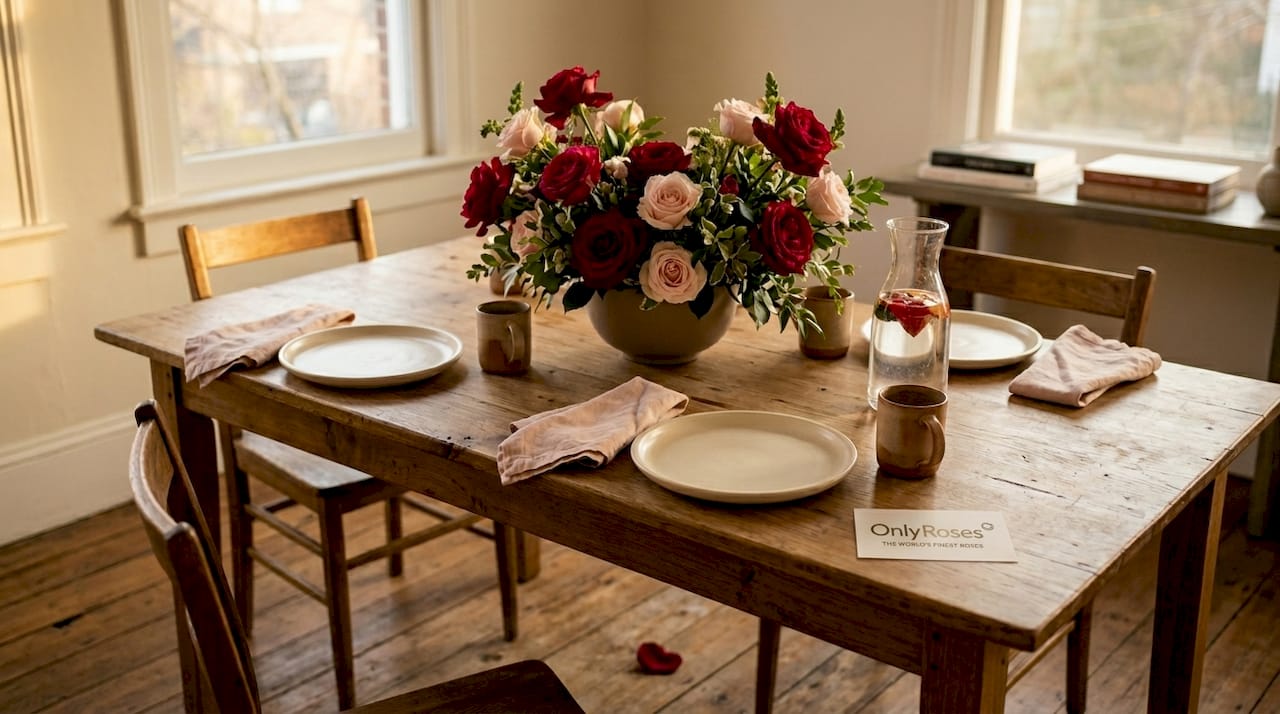
Deep red, burgundy, champagne, and dusty rose tones feel at home in autumn and winter rooms. A low, dense arrangement in a wide bowl creates an intimate, gathered atmosphere for dining tables during the colder months. This is where preserved roses genuinely earn their place. A classic rose arrangement in a hat box on a console table or mantelpiece requires no water, no trimming, and no maintenance, while looking polished every day of the season.
Pro Tip: For a quick and impactful display, use a single colour of rose in a cluster of three identical vases at different heights. Odd numbers and tonal groupings always look more considered than mixed colours in mismatched containers.
- Dining tables: Low centrepieces in wide, shallow bowls work best so guests can see each other across the table.
- Windowsills: Tall single stems in slim bud vases catch the light beautifully without blocking it.
- Shelves and sideboards: Preserved roses in hat boxes or small domes are styled without any structural fuss.
- Entryways: A generous fresh arrangement in a tall vase creates an immediate impression without overwhelming the space.
Common mistakes when styling roses at home
Even experienced decorators make a few consistent errors. Knowing what to avoid saves both time and money.
- Overcrowding the arrangement. Cramming too many stems into a small vase crushes petals and prevents air circulation. Give each stem space to breathe and the overall shape will look far more deliberate.
- Ignoring water quality. Tap water is fine, but change it every two days and re-trim the stems each time you do. Stagnant water is the single biggest reason roses die early.
- Placing roses near heat sources. A radiator, a sunny south-facing windowsill, or a spot near a cooking hob will wilt your roses within a day. Cool, indirect light is what they need.
- Skipping the conditioning step. Roses that go straight from the paper wrapping into a vase have not had time to hydrate and will droop faster than ones that were conditioned in a bucket first.
The simplest thing you can do for your rose displays is to change the water regularly and keep the vase clean. A dirty vase reintroduces bacteria even when the water looks clear.
For more detail on caring for your roses day to day, specific guidance on water temperature and storage will take your results noticeably further.
My honest take on styling roses at home
I’ve spent years experimenting with rose arrangements, and the lesson that took longest to learn is that restraint almost always wins. The most striking displays I’ve seen share one quality: they don’t try to do too much. A tight cluster of five roses in a single colour, trimmed to the same height, in a clean white vase will outperform an elaborate mixed arrangement nine times out of ten.
Seasonal adaptation is where real confidence grows. Once you start matching your colour choices to what’s happening outside the window, your arrangements start to feel genuinely part of the home rather than an afterthought. My favourite approach right now is using preserved roses for permanent room styling and reserving fresh roses for the moments worth celebrating. The combination keeps your home looking considered all year without the constant maintenance that puts people off decorating with fresh flowers altogether.
— Anian
Discover luxury roses and expert styling at Only-roses

Only-roses has built its entire identity around one flower, and that focus shows in the quality. Whether you’re looking for fresh classic rose stems to create a seasonal centrepiece or preserved roses for a permanent display that needs no upkeep, the range covers both beautifully. Their luxury roses guide covers colour meanings, arrangement styles, and care advice in one place, making it genuinely useful for anyone serious about styling roses at home. If you want your arrangements to last as long as possible, the expert rose care guide gives you the specific detail that generic advice tends to skip.
FAQ
How long do fresh roses last in a vase?
With proper care, cut roses last seven to ten days. Regular water changes, stem re-trimming, and cool placement away from direct sunlight all extend that lifespan.
What is the best way to arrange roses at home?
Create a tape grid across the vase opening, trim stems at a 45-degree angle, and remove any leaves below the waterline. Work from the outside inward for a naturally balanced dome shape.
How do I keep roses from drooping after arranging?
Condition roses in a bucket of cool water for at least two hours before arranging and re-cut the stems under water to prevent air locks. Keep the vase away from heat and change the water every two days.
Can preserved roses be used in home decor?
Yes. Preserved roses maintain their appearance for several months with no water or trimming required, making them ideal for shelves, hat box displays, and any space where fresh flowers are impractical.
Which rooms work best for rose displays?
Dining rooms, entryways, and living room sideboards all suit rose arrangements well. Use low, wide arrangements on dining tables so they don’t obstruct sightlines, and taller displays in entrance halls for immediate visual impact.

