

TL;DR:
- Roses have a rich history as coded symbols of love, secrecy, and emotional expression across cultures.
- Understanding rose colour meanings and cultural context enhances thoughtful gifting with intentionality and depth.
Most people assume roses mean love. Full stop. But hand someone a yellow rose at the wrong moment and you will quickly discover how much is lost in that oversimplification. Roses carry an entire vocabulary, built over millennia, refined through culture and ceremony, and still very much alive in the way we choose to give them today. Victorian floriography standardised rose colour meanings as a system of secret communication, and that tradition shapes modern gifting in ways most people never consciously realise. Understanding this language does not just make you more thoughtful. It makes your gesture genuinely unforgettable.
Table of Contents
- The history behind rose symbolism
- Rose colour meanings: decoding the message
- Rose symbolism around the world
- Using rose symbolism in gifting
- Why rose symbolism still matters today
- Explore premium roses and thoughtful gifting
- Frequently asked questions
Key Takeaways
| Point | Details |
|---|---|
| Rich history | Rose symbolism dates back centuries and shaped how we express emotions with flowers. |
| Colour meanings | Every rose shade carries a specific meaning for different occasions and relationships. |
| Cultural nuance | Rose symbolism changes around the world, adding layers of meaning to gifts. |
| Thoughtful gifting | Smart choice of rose arrangement and colour enhances the impact of your gesture. |
The history behind rose symbolism
Having introduced the secret language of roses, let us examine how this symbolism grew and why it carries such emotional weight.
Roses have been woven into human culture for at least five thousand years. Ancient Greeks associated them with Aphrodite, the goddess of love, and Romans scattered rose petals at feasts, funerals, and military triumphs. The Romans were particularly fond of the idea of sub rosa, meaning “under the rose,” a phrase that signalled secrecy. Meetings held beneath a carved rose were understood to be confidential. That association between roses and private, coded communication never truly disappeared.
“Flowers were used as a means of communication in the Victorian era, with each flower and colour carrying its own specific meaning, allowing people to send detailed messages without words.”
It was during the Victorian era that floriography became formalised as a social practice. Etiquette at the time discouraged direct emotional expression, particularly between men and women. Flowers filled that gap. Receiving a bouquet was not just a pleasant gesture. It was a message, and the wrong flower could communicate an entirely unintended sentiment. Dictionaries of floral meaning were published and widely consulted. A single luxury roses selection could communicate admiration, longing, rejection, or devotion depending entirely on its colour, number, and the direction in which it was presented.
This history matters because it explains why roses still feel emotionally significant today. The connection between roses and intentional, layered communication is not accidental. It is centuries deep.
| Era | Cultural context | Rose’s role |
|---|---|---|
| Ancient Greece and Rome | Mythology and ceremony | Symbol of love, secrecy, honour |
| Medieval Europe | Religion and courtly love | Purity, the Virgin Mary, devotion |
| Victorian Britain | Social restraint and etiquette | Encoded emotional messages |
| Modern era | Global gifting and luxury | Universal symbol of care and status |
Rose colour meanings: decoding the message
Building on how symbolism developed, let us reveal what each rose colour communicates today.
The colour of a rose is not a decoration. It is a declaration. Understanding the colour psychology of roses gives you a genuine advantage when choosing a gift, because it transforms a beautiful flower into a precise emotional statement.
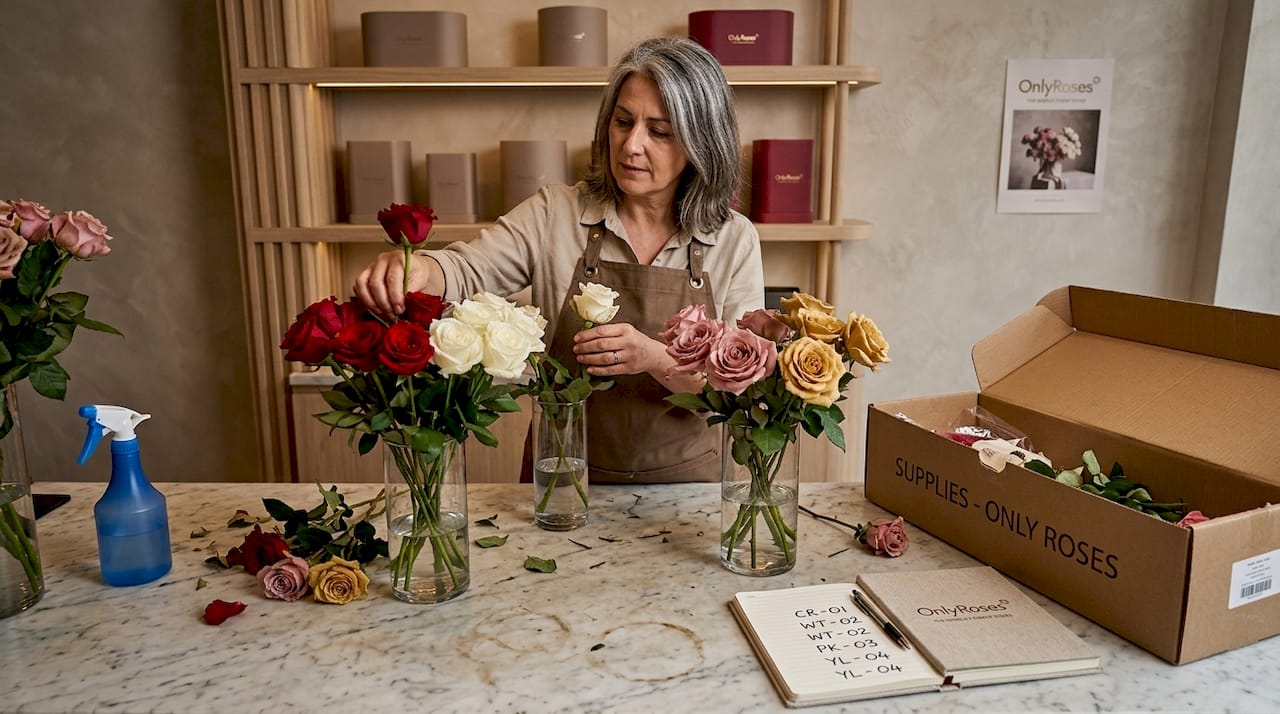
| Colour | Core meaning | Best gifting occasion |
|---|---|---|
| Red | Romantic love, passion | Valentine’s Day, anniversaries |
| White | Purity, new beginnings | Weddings, sympathy, new relationships |
| Pink (light) | Admiration, gentleness | Thank you gifts, new friendships |
| Pink (deep) | Gratitude, appreciation | Milestone celebrations |
| Yellow | Friendship, joy | Birthdays, congratulations |
| Orange | Enthusiasm, desire | Romantic gestures, bold declarations |
| Lavender | Enchantment, mystery | First-time gifts, creative individuals |
| Peach | Sincerity, modesty | Closing a deal, expressing thanks |
Here are a few nuances worth knowing before you choose:
- White and red together traditionally signify unity, which makes them a powerful combination for weddings or joint celebrations.
- Yellow roses have occasionally been misread as signals of jealousy in older floriography texts, so context matters enormously.
- Lavender or purple roses are rarer and carry an air of exclusivity, which makes them particularly well-suited to premium gifting.
- Orange roses bridge the gap between friendship and romance, making them ideal when your feelings are warm but the relationship is still developing.
Pro Tip: Avoid sending yellow roses to someone recently bereaved. In several European traditions, yellow flowers carry associations with grief or separation, and you want your gesture to land exactly as intended.
Rose symbolism around the world
Now that you know the messages different colours send, see how rose symbolism shifts across cultures.
Roses do not mean the same thing everywhere, and that variation is part of what makes them so fascinating. In British culture, red roses are synonymous with romantic love, particularly on Valentine’s Day, which sees millions of stems exchanged every February. White roses carry particular resonance in Yorkshire, where the white rose is a regional emblem tied to identity and pride.
In the Middle East, roses hold deep significance as tokens of hospitality and reverence. Gifting roses elegantly in Middle Eastern culture involves attentiveness to both colour and quantity, as certain numbers carry their own symbolic weight. Roses in this context often signal respect and generosity as much as romantic feeling.
In parts of East Asia, roses are increasingly popular as symbols of modern romance, though they sit alongside more traditionally significant flowers like peonies and chrysanthemums. The adoption of rose gifting has grown substantially with global cultural exchange, and roses have secured a meaningful place in contemporary Chinese and Japanese gifting culture.
Statistically, roses command a dominant position in the global luxury flower market, valued precisely because they transcend individual cultures whilst still allowing for deeply personal, culturally attuned expression.
Consider how the same rose communicates differently across contexts:
- A single red rose in Britain signals romantic intent.
- A white rose in Japan may be offered at a memorial or formal occasion.
- A bouquet of mixed roses in the Middle East marks a gesture of generous welcome.
- In India, roses feature prominently in religious offerings and wedding ceremonies, where their fragrance and beauty are considered auspicious.
The lesson here is not to memorise every cultural rule. It is to approach rose gifting with curiosity and care, especially when the recipient comes from a different background to your own.
Using rose symbolism in gifting
With cultural nuance in mind, let us get practical with your next rose gift.
Choosing the right rose arrangement is not complicated, but it does require a moment of genuine reflection. Follow this process and your gift will communicate far more than a last-minute purchase ever could.
- Define the relationship. Are you expressing romantic love, platonic appreciation, professional respect, or sympathy? Your answer immediately narrows your colour selection.
- Consider the occasion. A celebration calls for warmth and vibrancy. Roses in deep pink, orange, or classic red work beautifully. A quieter moment of support or remembrance leans towards white or pale pink.
- Think about quantity. Twelve roses traditionally signal complete devotion. Six suggest a desire to be loved in return. A single stem can be more powerful than a dozen when the moment is right.
- Choose an arrangement that matches the sentiment. A structured, elegant presentation in a signature hat box signals intentionality and luxury. An effortless-looking garden arrangement feels intimate and personal. The timeless luxury market confirms that presentation matters as much as the bloom itself.
- Personalise where possible. A handwritten note explaining the specific colour you chose transforms a beautiful gift into a deeply meaningful one. It invites the recipient into the symbolism rather than leaving them to guess.
For premium gifting impact, explore rose garden bouquets that combine multiple colours purposefully. Pairing white and pink roses, for example, communicates both purity of feeling and heartfelt appreciation simultaneously.
Pro Tip: Never mix more than three rose colours in a single arrangement unless you intend to create visual drama. Too many colours can dilute the symbolic message and make the gift feel unfocused rather than generous.
Why rose symbolism still matters today
There is a temptation to dismiss floriography as a charming Victorian curiosity, something quaint that belongs in a costume drama rather than modern life. That view misses something important.
We live in an age of rapid, impersonal communication. Texts are sent in seconds. Emojis do the emotional heavy lifting. Against that backdrop, the deliberate act of choosing a specific rose colour, in a specific number, presented with care, is almost radical. It says: I thought about you. I chose this for you.
That intentionality is precisely what makes roses special in the luxury gifting world. The meaning encoded in a perfectly curated arrangement cannot be replicated by a gift card or an automated delivery. It requires human judgement and emotional intelligence.
The most memorable gifts are never simply the most expensive. They are the most considered. A single stem of the right colour, presented thoughtfully, often outshines a grand arrangement chosen without reflection. Victorian floriography understood this instinctively. The best luxury gifting today operates on exactly the same principle, even if the recipients rarely know the history behind the tradition they are participating in.
Explore premium roses and thoughtful gifting
Ready to let rose symbolism shape your next heartfelt gesture? OnlyRoses makes that easier than you might expect.
Whether you are choosing your first arrangement or refining a well-established gifting ritual, the Luxury Roses Guide is an excellent place to deepen your understanding of what makes a rose gift truly exceptional. For something that endures well beyond a single occasion, explore the world of preserved roses, which maintain their beauty for months and carry the same symbolic richness as fresh blooms. Or browse our curated selection of classic rose stems to find the precise colour that matches your message. Every arrangement is sourced from Ecuador’s finest high-altitude farms and presented with the elegance the occasion deserves.
Frequently asked questions
What do different colours of roses symbolise?
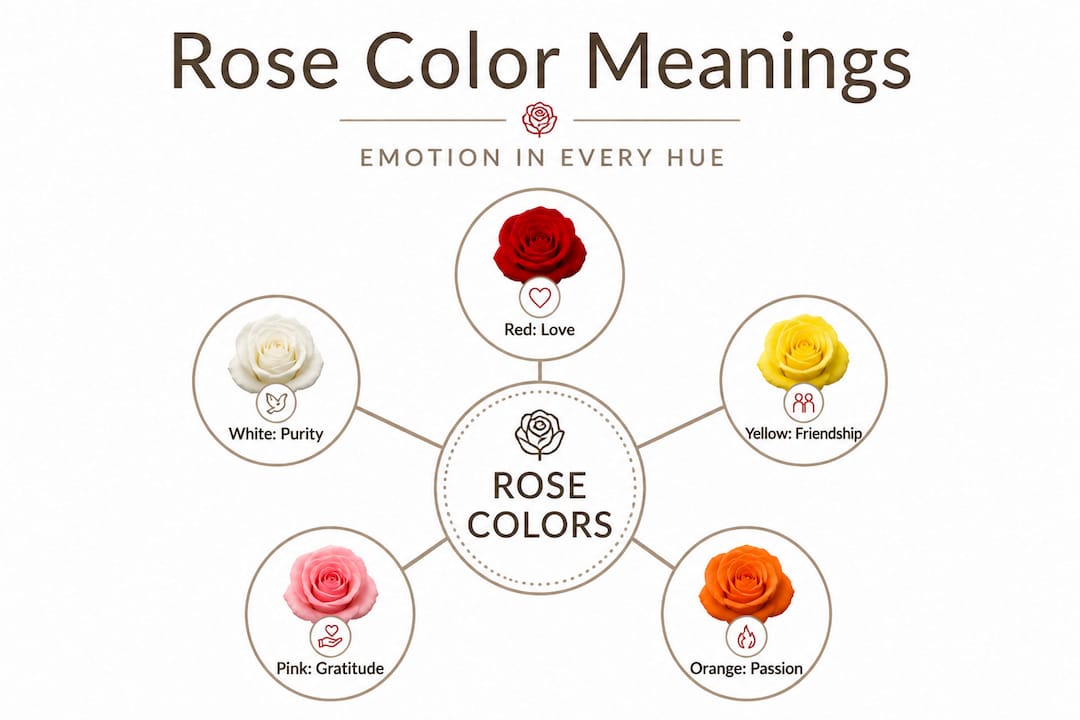
Each colour carries a distinct meaning: red signals romantic love, white represents purity or new beginnings, yellow conveys friendship, and lavender suggests enchantment or mystery.
Why are roses so strongly linked to romance?
Their association with love goddesses in ancient Greece and Rome, combined with centuries of use in courtship rituals and art, cemented the rose as the defining symbol of romantic feeling across Western culture.
How can I choose the right rose for a gift?
Start by identifying the core sentiment you want to convey, then match a rose colour to that emotion and consider the quantity and presentation to ensure the overall arrangement reflects the occasion.
Is rose symbolism the same across all cultures?
No. Whilst love is a common thread, cultural interpretations vary widely, with some cultures emphasising reverence, celebration, or spiritual significance over romantic meaning.

