

TL;DR:
- Rose customisation involves adapting roses through dyeing, accessory addition, and styling to create personal and meaningful arrangements. The choice of rose type, colour pairing, and ribbon material impacts the design’s appearance and emotional resonance, elevating it beyond generic bouquets. Thoughtful use of accessories and precise techniques can transform standard roses into unique, lasting gifts or event features that reflect intention and aesthetic.
Most people assume roses come as they are: red, pink, white, arranged in a vase and wrapped in cellophane. That assumption misses an entire creative dimension. Rose customisation is the practice of adapting roses through colour, material, and design choices to produce arrangements that carry personal meaning, suit specific occasions, or reflect a distinct aesthetic. Whether you are designing a gift for someone you love or styling flowers for an event, understanding what rose customisation involves gives you the tools to move beyond the generic and create something genuinely memorable.
Table of Contents
- Key takeaways
- Rose customisation techniques explained
- Choosing colours and materials
- Personalising arrangements for gifts and events
- Fresh, preserved, and artificial roses compared
- My perspective on rose customisation
- Explore OnlyRoses’ bespoke rose collections
- FAQ
Key takeaways
| Point | Details |
|---|---|
| Customisation goes beyond colour | Rose customisation covers dyeing, accessorising, layering, and finishing techniques for unique results. |
| Rose type shapes your options | Fresh, preserved, and artificial roses each offer distinct customisation potential and practical trade-offs. |
| Colour pairing is an art | Avoid exact ribbon-to-rose colour matching; use close-toned or quiet contrast pairings for visual depth. |
| Accessories add meaning | Charms, brooches, and ribbon colours with sentimental value transform roses into personal gifts. |
| Restraint produces refinement | Overloading an arrangement with accessories undermines elegance; edit ruthlessly for the strongest result. |
Rose customisation techniques explained
Rose customisation is a broader practice than most people realise. At its core, it refers to any intentional modification of roses, whether through colour treatments, structural arrangement choices, or the addition of accessories, to produce a result that feels personal and considered rather than off-the-shelf.
The two most accessible dyeing methods for fresh roses are absorption and dip-dyeing. With the absorption method, you place stems in warm water with 20 to 30 drops of food colouring and allow the rose to draw the dye up through its stem over several hours. This produces subtle to vibrant colour changes depending on the dye concentration and the flower’s base colour. White roses are the ideal canvas because they absorb colour without interference from existing pigmentation.
Dip-dyeing takes a faster approach. Dipping head-down into dye for two to three seconds delivers an instant colour shift and can create striking ombré effects along the petal edges. It offers less control than absorption dyeing but rewards those who want dramatic results quickly.
For artificial roses, the options expand considerably. Fabric dye, acrylic paint, and spray paint all work on synthetic petals, though results vary based on the material’s composition. Beyond colour, rose customisation also includes incorporating accessories such as ribbons, trailing charms, decorative brooches, and complementary blooms from other flower varieties.
Pro Tip: When working with artificial roses and dye, always test on a small hidden section of petal first. Synthetic materials react unpredictably, and a patch test saves the entire arrangement.
Choosing colours and materials
Colour is rarely a neutral decision in floral design. Each shade carries an emotional resonance that can shift the feeling of an entire arrangement. Warm tones such as deep red and burnt orange communicate intensity and passion, while cooler blush tones feel romantic and restrained. Understanding colour temperature helps you select roses that speak the right language for the occasion.
One of the most common mistakes in rose arrangement customisation is matching the ribbon colour exactly to the bloom. Exact colour matching flattens the design. A far more effective approach is quiet contrast or close-toned pairing. Think deep red roses with muted blue velvet ribbon, or blush roses with a dusty rose grosgrain. These pairings add dimensionality without creating visual competition between the elements.
Ribbon material matters as much as colour. Here is how the most common options compare:
| Ribbon material | Texture and character | Best suited for |
|---|---|---|
| Silk | Fluid, luminous, refined | Weddings, formal gifting |
| Velvet | Rich, tactile, dramatic | Winter events, statement arrangements |
| Satin | Smooth, classic, versatile | Everyday gifting, celebrations |
| Grosgrain | Structured, matte, clean | Contemporary and minimalist styles |
| Organza | Sheer, delicate, airy | Spring arrangements, layered looks |
Pro Tip: Plan your ribbon choice before you buy your roses, not after. The scale and bloom size of your arrangement should inform both the width and weight of ribbon you select.
Personalising arrangements for gifts and events
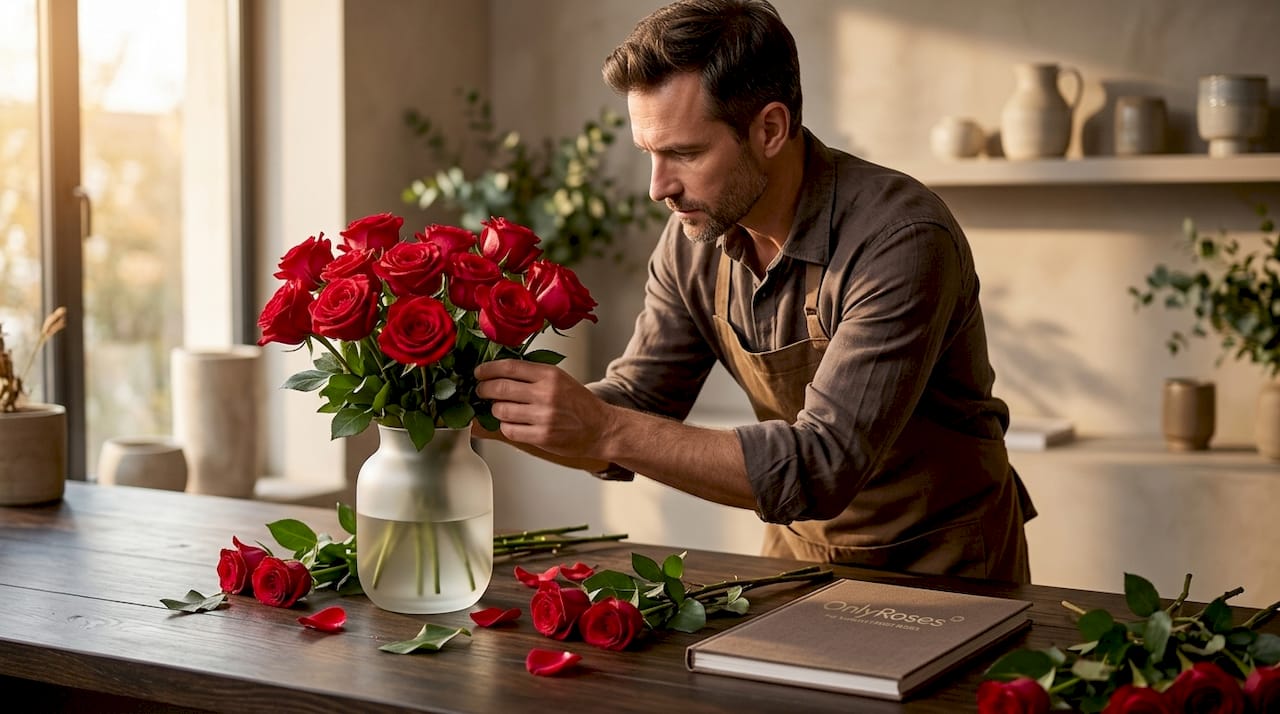
When approaching rose customisation with a specific gift or event in mind, the sequence in which you make decisions matters as much as the decisions themselves. Starting with the flower choice and bloom stage before adding any accessories gives you a solid foundation. A fully open bloom has different visual weight to a tight bud, and your ribbon width and accessory scale should respond to that.
Follow these steps for a considered, personalised arrangement:
- Choose your rose type and bloom stage. Decide whether you want the soft opulence of a fully open bloom or the structure of a tightly furled bud. This shapes every other decision.
- Select a colour palette with intention. Choose two to three colours that work together and relate to the occasion or the recipient’s personal aesthetic.
- Incorporate meaningful accessories. Charms, heirlooms, and ribbon colours with personal significance turn a beautiful arrangement into a genuinely personal gift.
- Layer for fullness using spray roses. Spray roses feature multiple blooms per stem and are excellent for adding volume and texture without dramatically increasing cost. They work particularly well in wedding florals and celebration bouquets.
- Wrap stems cleanly. Stem wrapping with floral tape before ribbon is applied creates a uniform base that holds the arrangement in shape.
- Finish with relaxed ribbon tension. Light tension and relaxed loops give a far more sophisticated finish than a tight bow. Anchor the ribbon at the natural taper of the stems and shape the loops by hand.
Pro Tip: Less is more with accessories. One meaningful charm or a single well-chosen ribbon does more for an arrangement than three competing elements. Edit the arrangement the same way you would edit a piece of writing: remove anything that does not add to the story.
Fresh, preserved, and artificial roses compared
The rose type you choose for customisation fundamentally shapes what is achievable and how long the result will last.
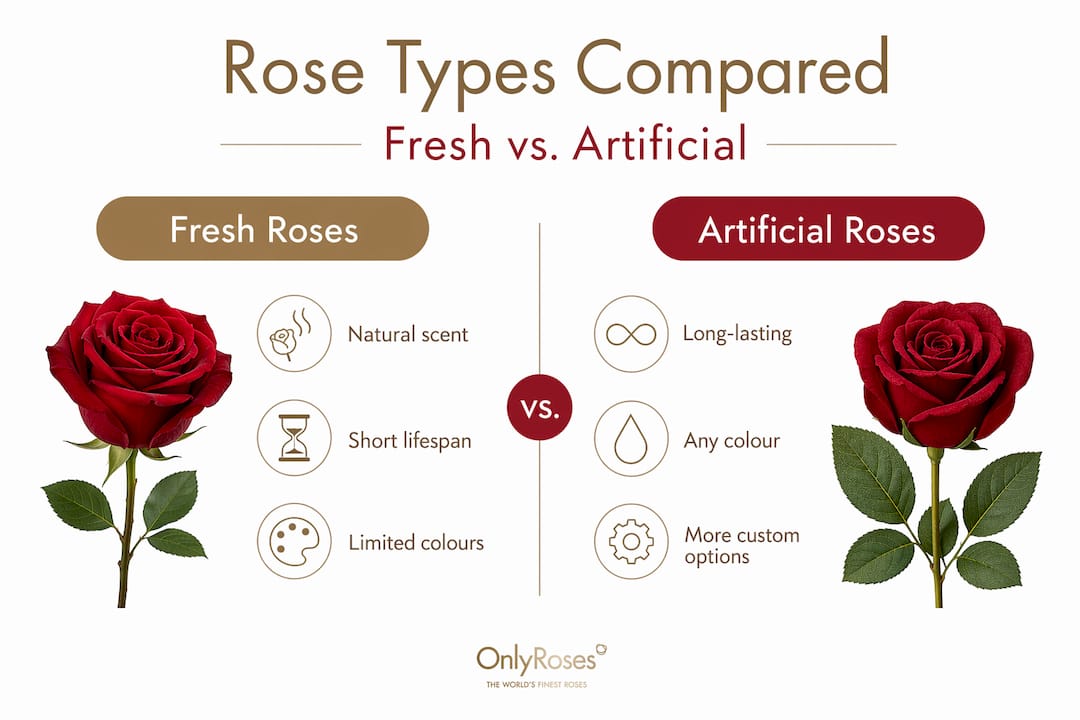
Fresh roses offer unmatched natural beauty and fragrance, but their colour range is limited to what grows and what the season allows. They are ideal for events where the arrangement will be enjoyed for a day or two, but they require care and have a brief lifespan.
Preserved roses are real roses that have been treated to maintain their softness and appearance for months. They hold colour exceptionally well and are available across a wide palette, making them a strong choice when you want a luxury lasting arrangement that continues to impress long after the occasion.
Artificial roses offer the greatest flexibility for dyeing and painting, though they require technique knowledge to achieve a refined finish. They carry no fragrance and require careful styling to avoid looking unconvincing.
Here is a summary of how each type performs across the key considerations:
| Rose type | Colour flexibility | Lifespan | Customisation potential | Best used for |
|---|---|---|---|---|
| Fresh | Moderate | Days | Dyeing, arranging | Events, same-day gifting |
| Preserved | High | Months | Colour stable, accessorise freely | Lasting gifts, display pieces |
| Artificial | Highest | Indefinite | Painting, dyeing, full modification | Décor, practice projects |
The cost and maintenance implications also differ. Fresh roses require relatively low upfront investment but regular replacement. Preserved roses cost more initially but offer lasting value. Artificial roses vary widely in quality and require no maintenance, though the investment in high-quality faux florals pays off significantly in the final appearance.
My perspective on rose customisation
In my experience, the most underestimated element in any customised rose arrangement is ribbon styling. Most people treat it as packaging. I see it as design. When ribbon is integrated thoughtfully, it contributes to the entire visual narrative of the piece. It sets the tone before the blooms even register.
I have seen arrangements with extraordinary roses completely undermined by a hasty bow, and I have seen modest fresh roses transformed into something genuinely lovely by a single velvet ribbon chosen with care. The finishing detail is never separate from the design. It is part of it.
My other strong view is that customisation should always serve meaning, not just novelty. Personalised roses resonate most deeply when the choices behind them reflect something true about the giver or the occasion. A charm from a grandmother’s jewellery box, a ribbon in the recipient’s favourite colour, a preserved rose chosen because it will last as long as the relationship. These are the details that make customisation worthwhile.
— Anian
Explore OnlyRoses’ bespoke rose collections
If you are ready to move from inspiration to something you can actually hold, Only-roses offers a curated range of luxury roses designed with exactly this kind of intentional beauty in mind. The luxury roses guide covers colours, meanings, and arrangement styles to help you make informed choices across over thirty carefully selected shades. For gifting that lasts well beyond the occasion, the preserved roses explained page walks you through the process and benefits in full detail.
Browse statement pieces like the Grand Bouquet Pink Mix or explore individual stems through classic rose stems for a more personal arrangement project. Every product is sourced from Ecuador’s high-altitude farms, presented in signature hat box packaging, and available for bespoke requests. Contact the team directly to discuss custom ribbon finishes, colour selections, and gifting requirements.
FAQ
What is rose customisation?
Rose customisation is the process of modifying rose arrangements through dyeing, colour selection, accessory integration, and styling techniques to create personalised gifts or event pieces that reflect specific aesthetics or meaningful intentions.
Can you dye fresh roses at home?
Yes. The absorption method uses 20 to 30 drops of food colouring in warm water, allowing the rose to draw colour through its stem over several hours. White roses produce the most vivid results.
What ribbon material works best for rose arrangements?
Velvet and silk ribbons are the most luxurious options for formal gifting or events. Grosgrain suits contemporary and minimalist styles. Regardless of material, use light tension and relaxed loops rather than tight bows for a professional finish.
Are preserved roses good for customised gifts?
Preserved roses are an excellent choice for custom rose gifts because they maintain their softness and appearance for months, hold colour reliably across a wide palette, and require no ongoing care from the recipient.
How do I avoid overloading a customised arrangement with accessories?
Limit yourself to one or two meaningful elements, such as a single charm or ribbon. Every addition should serve the design. If removing an element does not diminish the arrangement, it probably did not belong there in the first place.

