

TL;DR:
- Choosing the right rose type enhances garden beauty and depends on intended use and maintenance preferences. Hybrid Teas excel in cutting gardens with their large, fragrant blooms, while Floribundas offer reliable continual color with cluster flowering. Shrub and English roses combine fragrance, hardiness, and low maintenance, making them ideal for informal, natural planting schemes.
Roses are among the most beloved plants in horticultural history, yet choosing between hundreds of varieties can feel genuinely overwhelming. Whether you are planning a cutting garden, a cottage border, or a show-stopping floral display, understanding the famous rose types helps you select with purpose rather than guesswork. From the stately Hybrid Tea to the cascading climber, each category carries its own personality, growing habit, and visual statement. This guide breaks down the most recognised rose types so you can match the right rose to the right place in your garden or arrangement.
Table of Contents
- Key takeaways
- 1. Famous rose types: Hybrid Tea roses
- 2. Floribunda roses: vibrant clusters for continuous colour
- 3. Grandiflora roses: combining elegance and profusion
- 4. Shrub and English roses: fragrant, hardy, historically rich
- 5. Climbing roses and groundcover varieties
- My take on choosing famous rose types for modern gardens
- Bring iconic rose beauty into your home with Only-roses
- FAQ
Key takeaways
| Point | Details |
|---|---|
| Hybrid Teas lead for cutting | Their long stems and large single blooms make them the top choice for formal bouquets and cutting gardens. |
| Floribundas offer reliable colour | Cluster flowering and disease resistance make Floribundas the workhorse of the garden border. |
| Shrub roses suit informal spaces | Shrub and English roses combine fragrance, hardiness, and repeat flowering for relaxed, natural planting schemes. |
| Climbing roses reward training | Tying canes horizontally rather than vertically significantly increases bloom production along the full stem length. |
| Modern breeding favours ease | Disease resistance and low maintenance are now primary goals in rose breeding, benefiting everyday gardeners. |
1. Famous rose types: Hybrid Tea roses
Hybrid Teas, Floribundas, and Grandifloras remain the most popular choices among home gardeners, and Hybrid Teas sit firmly at the top of that list. They are the rose most people picture when the word “rose” is spoken. One perfectly formed bloom per long, upright stem. Deep fragrance. Exhibition-worthy symmetry.
Typical characteristics include:
- Height: 3 to 6 feet, making them ideal for back-of-border planting
- Bloom form: High-centred, spiralled petals with one large flower per stem
- Fragrance: Often highly fragrant, more so than most other categories
- Popular varieties: ‘Mr Lincoln’ (deep red, strong scent), ‘Queen Elizabeth’ (soft pink, vigorous), and ‘Double Delight’ (cream and red bicolour)
The Peace rose, introduced in 1945 with yellow blooms edged in pink, is arguably the most famous Hybrid Tea ever bred. With over 100 million plants sold since its launch, it transformed the commercial rose industry and remains a benchmark for disease resistance and visual impact.
Pro Tip: Hybrid Teas perform best in a dedicated cutting garden where you can prune hard for maximum stem length. Mixing them into a mixed border often crowds their lower stems and reduces bloom quality.
2. Floribunda roses: vibrant clusters for continuous colour
Where Hybrid Teas offer refinement, Floribundas offer abundance. These are the continuous cluster-flowering roses that fill borders with colour from late spring through to autumn. Rather than one statement bloom, you get generous sprays of smaller flowers opening in succession.
Key features that set Floribundas apart:
- More compact than Hybrid Teas, typically reaching 2 to 4 feet
- Superior disease resistance and lower maintenance requirements
- Repeat-blooming throughout the season without deadheading intervention
- Notable varieties include ‘Iceberg’ (white, prolific), ‘Sexy Rexy’ (coral pink, fragrant clusters), and ‘Trumpeter’ (vivid orange-red)
Floribundas prioritise continuous colour over intense fragrance, which makes them better suited to landscape planting than perfumery. That said, varieties like ‘Scentimental’ and ‘Julia Child’ offer a pleasing balance of both. For gardeners who want a border that looks after itself, Floribundas are a sound starting point.
3. Grandiflora roses: combining elegance and profusion
Grandifloras occupy an interesting middle ground. They were bred by crossing Hybrid Teas and Floribundas to get the best of each type: larger, more elegant blooms than a standard Floribunda, but in clusters rather than solitary stems. The result is a tall, vigorous rose that performs well both in the garden and in the vase.
Defining characteristics of the Grandiflora class:
- Height often exceeds 6 feet, making them natural focal points or screen plants
- Blooms appear in small clusters of 3 to 5, combining flower form with floral abundance
- Well-suited to the back of large mixed borders, driveways, and formal garden beds
- Popular examples include ‘Queen Elizabeth’ (though also classified as a Hybrid Tea in some systems), ‘Gold Medal’, and ‘Cherry Parfait’
The distinction among rose types really comes down to how you intend to use the plant. Grandifloras suit gardeners who want visual drama without sacrificing bloom frequency. They reward pruning and tend to be robust performers in a range of soil conditions.
4. Shrub and English roses: fragrant, hardy, historically rich
Shrub roses represent the broadest and arguably most rewarding category for the everyday gardener. Shrub roses unify old-fashioned and modern types, sharing care requirements and suiting informal hedging and large borders with ease. They repeat bloom reliably, resist disease, and ask relatively little in return.
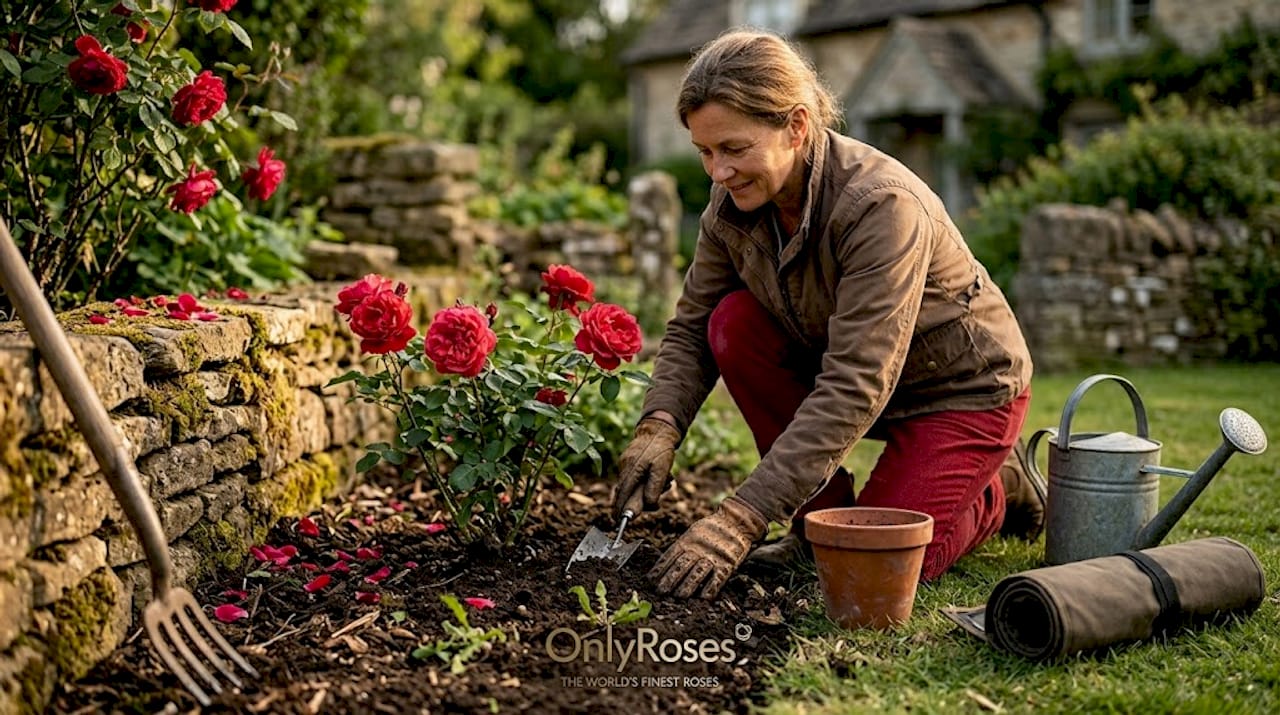
Within this class, David Austin’s English roses deserve particular mention. Bred to combine the quartered, cupped blooms of old garden roses with the repeat-flowering habit and disease resistance of modern varieties, they represent some of the most recognised roses in contemporary horticulture.
Popular shrub and English rose varieties include:
- ‘Gertrude Jekyll’ (officially ‘Ausbord’): deep pink, exceptional fragrance, upright habit
- ‘Knock Out’: award-winning modern shrub with extraordinary disease resistance
- ‘Belinda’s Dream’: soft pink, highly rated in landscape trials, repeat flowering
- ‘Olivia Rose’: cupped blooms in warm pink, compact and prolific
It is worth knowing that rose cultivars often carry two names, a commercial selling name and a Plant Breeders Rights name used for formal identification. ‘Gertrude Jekyll’ and ‘Ausbord’ refer to exactly the same plant.
Pro Tip: Shrub roses planted in groups of three make far more visual impact than solitary specimens. They also work beautifully as informal hedging where a clipped box hedge might feel too formal.
5. Climbing roses and groundcover varieties
Climbing roses
Climbing roses are almost always mutations of bush roses rather than a distinct botanical class. What separates them is vigour and cane length rather than any fundamental difference in flower type. The key to getting the most from them lies in how you train them.
Tying climbing rose canes horizontally rather than straight up a wall or pillar encourages lateral shoots along the full cane length, multiplying the number of flowering stems dramatically. ‘New Dawn’, a pale blush climber, is one of the most enduring performers on this method. ‘Climbing Iceberg’ and ‘Compassion’ are equally reliable on pergolas, arches, and trellises.
Groundcover roses
Groundcover roses form dense mats that suppress weeds and bloom continuously with minimal upkeep. They are particularly useful on slopes, in difficult-to-maintain areas, or wherever you need carpet-like colour without constant intervention.
Here is a quick comparison to help you choose:
| Type | Best use | Maintenance level | Key example |
|---|---|---|---|
| Climbing rose | Arches, walls, pergolas | Moderate (annual training) | ‘New Dawn’ |
| Groundcover rose | Slopes, borders, difficult sites | Low | ‘Flower Carpet’ |
| Rambling rose | Large structures, trees | Low (after establishment) | ‘Rambling Rector’ |
My take on choosing famous rose types for modern gardens
I have spent years watching gardeners make the same mistake: choosing roses based on how they look in a catalogue photograph rather than how they perform in real conditions. A Hybrid Tea photograph will always win on beauty. In practice, if you are not prepared to spray, feed, and coddle, you will be disappointed within a season.
What I have found genuinely exciting in recent years is how modern rose breeding has shifted decisively toward disease resistance without sacrificing fragrance or form. The new generation of shrub and English roses does things that would have seemed impossible two decades ago. You get old-rose character and modern durability in the same plant.
My honest advice: do not overlook the so-called “lesser glamorous” categories. Groundcover roses and Floribundas rarely feature on the covers of gardening magazines, yet they consistently outperform Hybrid Teas in real-world garden conditions. If I had to choose one type for a new gardener, it would be a modern shrub rose every time. The qualities that make roses special, fragrance, form, and emotional resonance, are fully present in a well-chosen shrub rose without the high-maintenance expectations.
— Anian
Bring iconic rose beauty into your home with Only-roses
If the history and variety of famous rose types has inspired you to bring more roses into your life, Only-roses offers a collection built around that same appreciation for excellence in a single flower. Every bloom is sourced from high-altitude Ecuadorian farms for exceptional stem length and colour depth.
Whether you are drawn to the classic form of a long-stem red or the softness of a blush arrangement, the luxury roses guide at Only-roses covers colour meanings, care tips, and arrangement ideas in detail. The brand also offers preserved roses that retain their beauty for months, making them an ideal gift for anyone who loves roses but wants them to last well beyond a single week.
FAQ
What are the most famous rose types for beginners?
Floribunda and modern shrub roses are the best starting point for beginners. They offer disease resistance, repeat flowering, and lower maintenance requirements than Hybrid Teas.
Which rose type is best for cutting and bouquets?
Hybrid Tea roses are the top choice for cutting. They produce one large bloom per long stem, making them ideal for formal arrangements and luxury bouquets.
What makes English roses different from other shrub roses?
English roses, bred by David Austin, combine the cupped, fragrant blooms of old garden roses with the repeat-flowering ability and disease resistance of modern varieties, giving you both character and reliability in one plant.
How do I get more flowers from a climbing rose?
Tie canes horizontally rather than vertically. This encourages lateral shoots along the full cane length, significantly increasing the number of flowers produced each season.
Are Grandiflora roses the same as Hybrid Teas?
No. Grandifloras are a distinct class bred by crossing Hybrid Teas and Floribundas. They produce clusters of large, well-formed blooms on taller plants, combining flower quality with greater abundance per stem.

