

TL;DR:
- A rose selection workflow is a structured process that considers personal taste, vase life, logistics, and postharvest treatments to ensure optimal flower quality. Most mistakes occur when people choose roses solely based on appearance or overlook cold-chain logistics, risking diminished freshness and longevity. Proper planning and supplier vetting can significantly extend rose freshness and success at any event.
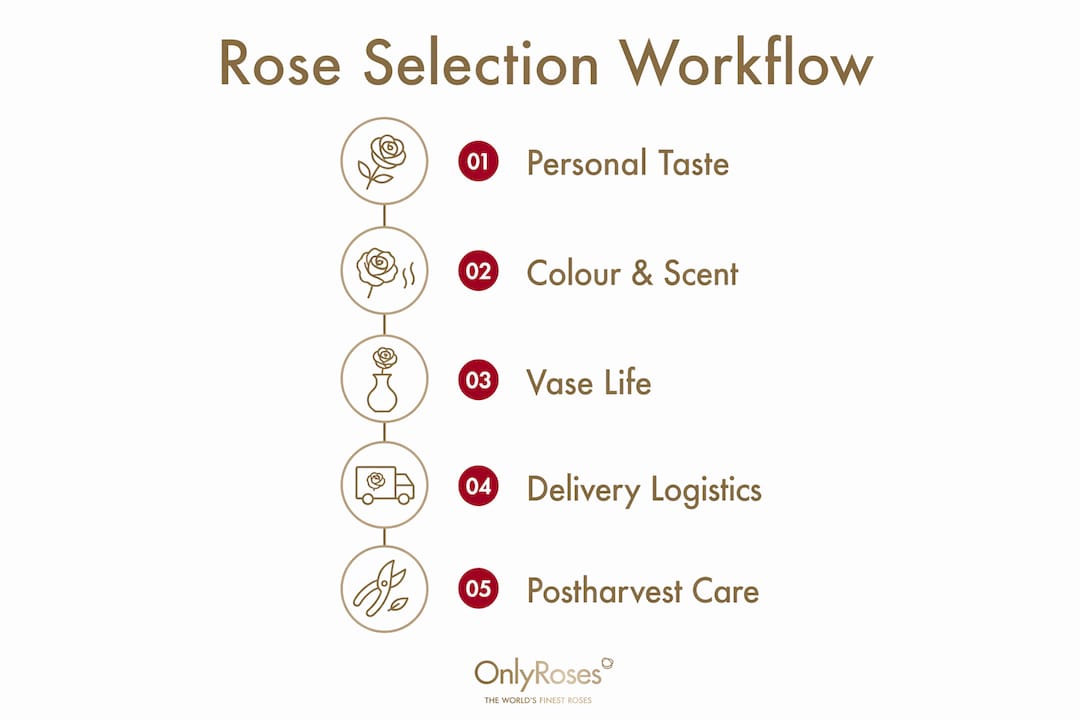
A rose selection workflow is a structured process for choosing the right roses based on your aesthetic preferences, event timing, and quality requirements. Done well, it removes guesswork from gifting and event planning, and it ensures your blooms arrive fresh, last the full duration of your occasion, and make the visual impact you intended. The workflow covers four distinct stages: personal taste, variety and durability, delivery logistics, and postharvest care. Each stage builds on the last, and skipping any one of them is where most people go wrong.
What does a rose selection workflow actually involve?
The RHS recommends starting any flower selection process with form, colour, and scent preferences, testing roses in bloom wherever possible. That advice applies equally to gifting and event planning. Personal taste is not a soft consideration. It is the foundation of the entire process.
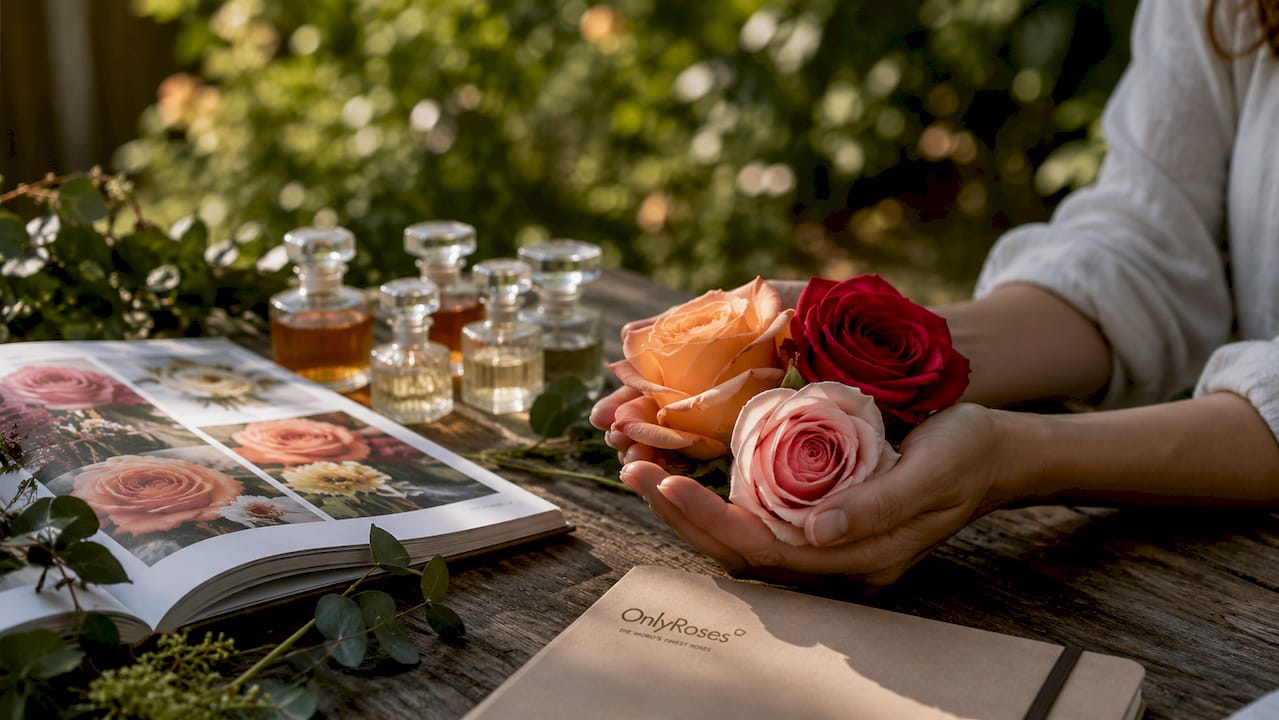
A complete rose selection workflow runs from sensory preference through to supplier vetting. It accounts for how long your roses need to look their best, how they will be transported, and what treatments they have received before they reach you. Brands like OnlyRoses build these considerations into their sourcing and presentation, drawing on high-altitude Ecuadorian farms known for consistent bloom size and colour depth.
How do you choose roses based on colour, form, and scent?
Personal taste drives rose selection more significantly than fixed aesthetic rules. The RHS Advice Team is explicit on this point: rigid aesthetic frameworks produce less satisfying results than choices grounded in genuine sensory preference. Start by identifying what you respond to, and then match that to a rose type.
The main categories to know are:
- Hybrid teas: classic high-centred blooms on long stems, ideal for formal gifting and structured arrangements
- Garden roses: full, multi-petalled heads with a softer, more romantic form, suited to weddings and intimate celebrations
- Spray roses: multiple smaller blooms per stem, excellent for textural variety and table centrepieces
- Shrub roses: hardy and often fragrant, better suited to garden settings than cut arrangements
Colour carries meaning in any arrangement. Deep reds and burgundies read as romantic and formal. Blush pinks and whites suit weddings and christenings. Coral and peach work well for birthdays and celebratory gifts. OnlyRoses offers a curated palette of over thirty colours, which makes matching to an occasion theme far more precise than a standard florist visit. You can explore the full rose colour meanings guide to align your choice with the emotion you want to convey.
Pro Tip: See and smell roses in bloom before committing to a variety for a large event. Photographs do not capture scent or the true depth of a petal’s colour in natural light.
How do vase life ranges affect your ordering timing?
Vase life is the most underestimated factor in the flower selection process. Standard roses last 5–10 days, garden roses last 3–7 days, and spray roses last 5–8 days when properly conditioned. That range determines when you should place your order relative to your event date.
Work backwards from the occasion:
- Identify the last day your roses need to look their best (the event itself, or the day after for a multi-day celebration).
- Subtract the minimum vase life for your chosen variety to find the latest acceptable delivery date.
- Add two days as a buffer for conditioning and any transit delays.
- Place your order so delivery falls within that window.
Garden roses, with their shorter vase life of 3–7 days, require tighter ordering windows than hybrid teas. If your event spans several days, hybrid teas or spray roses are the more forgiving choice. Suppliers who use advanced conditioning methods can extend these ranges further, which is worth asking about directly.
Vase life at a glance: Standard roses: 5–10 days. Garden roses: 3–7 days. Spray roses: 5–8 days. Order timing should always be calculated from the last day of display, not the first.
Does rose delivery logistics affect freshness?
Delivery conditions determine whether your roses arrive in peak condition or already in decline. Cold-chain conditions for cut roses must be maintained between 35–38°F with 90–95% relative humidity throughout transit. Any break in that chain accelerates cellular deterioration and shortens vase life before the roses even reach you.
Freshness preservation is a systems challenge, not a single supplier guarantee. C.H. Robinson, one of the world’s largest logistics providers, coordinates end-to-end cold chain management for cut flowers and reports a 98% on-time delivery performance for floral shipments. That figure reflects the complexity involved in maintaining temperature stability across multiple transit points.
When vetting a supplier, ask specifically about temperature monitoring during transit, dwell time at distribution centres, and whether they use refrigerated last-mile delivery. A supplier who cannot answer those questions clearly is unlikely to have the systems in place to protect your order.
Pro Tip: Do not assume delivery day equals freshness. Ask your supplier for their temperature monitoring protocol and whether they track humidity throughout the cold chain.
What postharvest treatments extend rose quality?
Postharvest care is where the science of rose selection becomes most tangible. Controlled atmosphere storage with 1-MCP treatment maintains chlorophyll levels and reduces disease incidence, outperforming standard atmosphere conditions in preserving bud quality. These are not marginal gains. They translate directly into roses that open correctly and hold their colour longer.
| Treatment | Mechanism | Benefit |
|---|---|---|
| 1-MCP (controlled atmosphere) | Blocks ethylene receptors | Slows ageing, reduces bud failure |
| Chrysal RVB hydrating solution | Promotes bud opening | Maintains visual quality during transit |
| Cytokinin application | Delays cell senescence | Extends vase life by 2.7–3.0 days |
Cytokinin treatments add a measurable 2.7–3.0 days to vase life compared to untreated controls. For events where roses need to look their best on day five or six, that extension is the difference between a successful display and wilted stems. When choosing a supplier, ask whether they use hydrating solutions such as Chrysal RVB, and whether their storage facilities use controlled or modified atmosphere conditions.
The key questions to ask any supplier:
- Do you use 1-MCP or modified atmosphere storage?
- Are stems treated with a hydrating solution before dispatch?
- What is your average storage temperature from farm to dispatch?
Key takeaways
A reliable rose selection workflow combines personal aesthetic preference with technical knowledge of vase life, cold-chain logistics, and postharvest treatments to ensure your roses look their best from delivery through to the final day of your event.
| Point | Details |
|---|---|
| Start with personal taste | Choose colour, form, and scent based on genuine preference, not generic rules. |
| Match variety to vase life | Standard roses last 5–10 days; garden roses last 3–7 days. Order accordingly. |
| Verify cold-chain standards | Ask suppliers about temperature monitoring and humidity control during transit. |
| Prioritise postharvest care | Suppliers using 1-MCP and cytokinin treatments deliver measurably longer-lasting roses. |
| Plan ordering timing precisely | Work backwards from your event’s last display day, then add a two-day buffer. |
Why most people get rose selection wrong
Most people treat rose selection as a single decision: pick a colour, place an order. The workflow I have described here treats it as four connected decisions, and that distinction matters enormously when the stakes are high.
The most common mistake I see is choosing a variety purely on appearance without checking vase life against the event schedule. Garden roses are stunning, and they are also the most demanding in terms of timing. Ordering them five days before a three-day wedding is a risk that a simple back-calculation would have flagged immediately.
The second mistake is treating delivery as a passive step. Logistics KPIs like temperature stability and dwell time are the real determinants of freshness, not the supplier’s marketing copy. A premium rose sourced from Ecuador and stored at the correct conditions throughout transit will outperform a locally grown stem that spent twelve hours in an unrefrigerated van.
My honest recommendation: treat the rose delivery workflow as seriously as the aesthetic choices. The best variety in the world will not rise to the occasion if the cold chain fails.
— Anian
OnlyRoses and your rose selection workflow
OnlyRoses sources exclusively from high-altitude Ecuadorian farms, where the growing conditions produce blooms with exceptional stem length, colour depth, and consistency. That consistency is not incidental. It is the result of applying the same quality criteria at every stage of the selection and handling process.
For fresh arrangements, the Classic Rose Stems collection offers expert-curated varieties across a palette of over thirty colours, each chosen for both aesthetic impact and durability. For gifts that need to last well beyond a single occasion, the Infinite Roses in pastel tones collection offers preserved roses that maintain their softness and appearance for months. Both options reflect the postharvest and logistics standards described in this workflow, so you can apply your selection criteria with confidence.
FAQ
What is the first step in a rose selection workflow?
The first step is identifying your personal aesthetic preferences, specifically colour, form, and scent. The RHS recommends testing roses in bloom before committing to a variety for any significant occasion.
How far in advance should I order roses for an event?
Order timing depends on the vase life of your chosen variety. Standard roses last 5–10 days, so ordering 5–7 days before your event gives a safe window with a conditioning buffer built in.
Why does cold-chain management matter for rose delivery?
Cut roses require 35–38°F and 90–95% relative humidity throughout transit. Any break in those conditions accelerates deterioration and shortens the time your roses will look their best.
What postharvest treatments should I ask my supplier about?
Ask whether they use 1-MCP controlled atmosphere storage, hydrating solutions such as Chrysal RVB, and cytokinin treatments. These methods can extend vase life by up to 3 days compared to untreated roses.
Are preserved roses a practical alternative for gifting?
Yes. Preserved roses maintain their appearance for months without water or special care, making them a strong choice when longevity matters more than the freshness of a cut stem.

