

TL;DR:
- The environmental impact of rose delivery mainly depends on cultivation methods and raw material inputs, not transportation distance. Choosing locally grown, preserved, or certified roses can significantly reduce a flower’s carbon footprint and ecological harm. Cold-chain refrigeration at every supply chain stage contributes substantially to emissions, making longer-lasting or preserved roses a greener alternative.
The environmental impact of rose delivery is defined by three core factors: how roses are cultivated, where they are grown, and how they travel to your door. A bouquet of five imported roses produces approximately 31–32kg of CO2, nearly ten times more than a British-grown seasonal bouquet at around 3.3kg CO2. That gap is not primarily about air miles. It is about energy-intensive growing conditions, cold-chain refrigeration, and raw material inputs. For eco-conscious gift buyers, understanding this breakdown is the first step toward making genuinely greener choices. Brands like OnlyRoses and Infinite Roses are already responding to this demand with more considered sourcing and longer-lasting products.
What are the main sources of environmental impact in rose delivery?
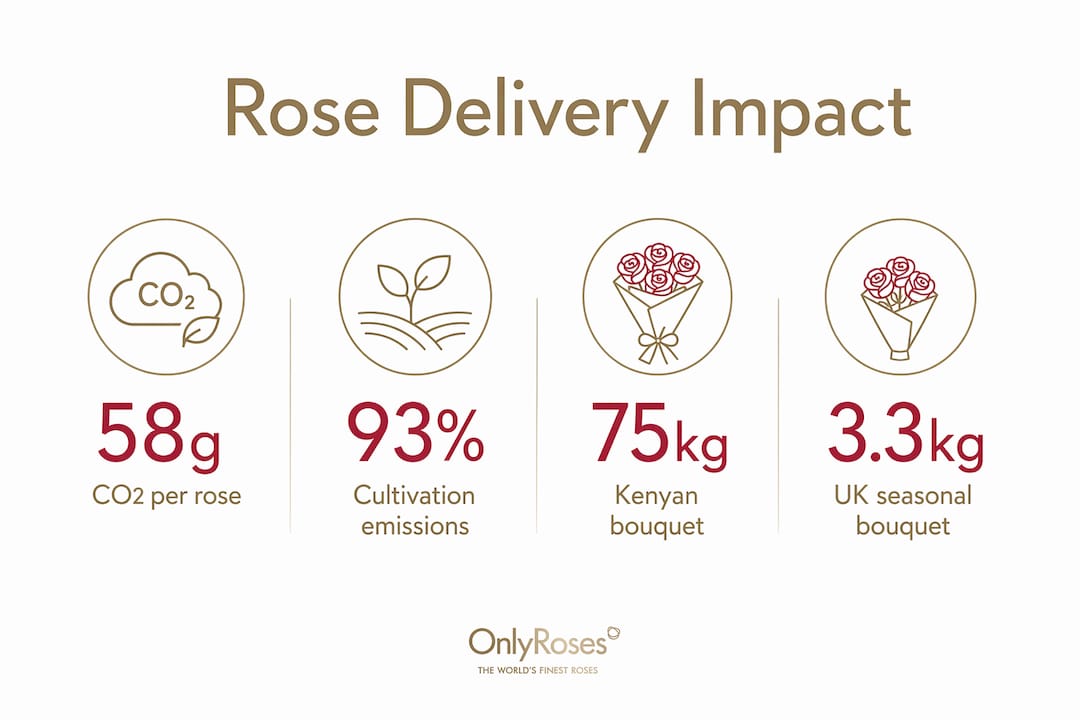
A single Ecuadorian rose stem emits approximately 58 grams of CO2e, and the breakdown is surprising. On-farm energy use accounts for 61% of that figure, raw materials such as fertilisers account for 32%, and transport contributes just 8%. This means the carbon footprint of roses is largely a farming problem, not a shipping problem.

On-farm energy covers greenhouse heating, irrigation pumps, artificial lighting, and post-harvest cooling. In temperate climates, these systems run continuously to maintain the conditions roses need. Raw materials, particularly synthetic fertilisers, carry a heavy carbon burden because their manufacture is energy-intensive. Switching to low-carbon fertiliser alternatives can reduce a stem’s footprint by up to 20%. That is a meaningful reduction from a single input change.
Cold-chain logistics add a further layer of impact. Roses must be kept refrigerated from the moment they are cut, throughout transit, and until they reach the consumer. Refrigerated transport is a substantial energy consumer, and it operates at every stage of the supply chain, not just during the flight.
- Pre-harvest cooling at the farm
- Refrigerated storage at the packing facility
- Temperature-controlled air or sea freight
- Chilled distribution vehicles at the destination
- Retailer or florist cold storage before sale
Pro Tip: Most consumers focus on air miles, but cold-chain refrigeration at the farm and distribution centre often contributes more to the total carbon footprint than the flight itself.
How does rose origin affect carbon footprint?
Rose origin is the single biggest variable in the carbon footprint of a floral gift. Around 86% of cut flowers sold in the UK are imported, primarily from the Netherlands and Kenya. That scale of importation has a direct and measurable effect on national floral emissions.
A dozen Kenyan red roses carry a carbon footprint of approximately 75kg of CO2, equivalent to driving a car for 570km. Yet the picture is more nuanced than it first appears. Roses grown in equatorial regions like Kenya or Ecuador benefit from natural sunlight and warm temperatures year-round. They require far less artificial heating than roses grown in Dutch greenhouses, where gas-fired heating runs for months. The flight from Nairobi to London can, in some cases, produce fewer total emissions than heating a Dutch greenhouse through a northern European winter.
| Origin | Approx. CO2 per Bouquet | Key Environmental Factor |
|---|---|---|
| UK seasonal | ~3.3kg | Low energy input, no freight |
| Netherlands | Higher than UK | Gas-heated greenhouses, road freight |
| Kenya | ~75kg per dozen | Air freight, but low farm energy use |
| Ecuador | ~58g per stem | High altitude, natural conditions, air freight |
Beyond carbon, water scarcity, pesticide use, and labour conditions in producing regions are important considerations. Lake Naivasha in Kenya has faced documented pressure from the water demands of flower farms. Ethical sourcing of flowers therefore extends well beyond emissions alone.
What sustainable alternatives exist for eco-friendly rose gifting?
Reducing the environmental cost of floral gifts does not require giving up roses entirely. It requires making more deliberate choices about which roses you buy, how many, and from whom.
- Choose seasonal, British-grown roses where possible. Seasonal rose selection removes the need for energy-intensive heating and artificial growing environments, cutting emissions significantly.
- Consider preserved roses. Infinite Roses, OnlyRoses’ preserved rose collection, maintain their appearance for months without water, soil, or ongoing energy input. A single preserved rose replaces dozens of fresh stems over time. Learn more about what preserved roses are and how they are made.
- Buy fewer, higher-quality stems. A single OnlyRoses SingleRose carries a fraction of the footprint of a large bouquet, while delivering equal emotional impact.
- Check for certifications. Look for Rainforest Alliance, Fair Trade, or MPS (Milieu Programma Sierteelt) certification when buying imported roses. These schemes address pesticide use, water management, and worker welfare.
- Support transparent brands. OnlyRoses sources from high-altitude Ecuadorian farms where natural growing conditions reduce on-farm energy demands. Their sustainable luxury roses page outlines their sourcing commitments in detail.
Pro Tip: A preserved Infinite Rose kept for a year produces a lower cumulative footprint than buying fresh roses monthly. Longevity is one of the most underrated sustainability metrics in gifting.
How does cold-chain supply affect the environmental footprint?
Cold-chain logistics represent the hidden cost of rose delivery. Flowers lose value and freshness rapidly once cut, which means the entire supply chain is built around speed and refrigeration. Cold-chain energy demands are significant because refrigeration operates continuously, not just during transit.
The trade-off between air and sea freight is real but often misunderstood. Air freight emits more CO2 per kilogram than sea freight, but it is faster. Slower sea shipping requires longer refrigeration periods, which partially offsets the lower transport emissions. Neither option is clearly superior without considering the full cold-chain energy calculation.
Consumers and florists can reduce cold-chain impact in several practical ways:
- Order from suppliers with shorter supply chains, reducing total refrigeration time
- Choose roses that are in natural season, which require less pre-shipment cooling
- Opt for preserved roses, which require no cold-chain at all after production
- Buy from farms with on-site solar or renewable energy powering their cold storage
The Infinite Roses vs fresh roses comparison is particularly relevant here. Preserved roses exit the cold chain entirely after the preservation process, removing one of the largest ongoing emission sources in the floral supply chain.
Key takeaways
The environmental impact of rose delivery is determined primarily by cultivation energy and raw material inputs, not transport distance, making farm-level choices the most powerful lever for change.
| Point | Details |
|---|---|
| Cultivation dominates emissions | On-farm energy and fertilisers account for 93% of a rose stem’s carbon footprint. |
| Origin matters, but not simply | Equatorial farms often use less energy than heated Dutch greenhouses despite longer flights. |
| Cold-chain is a hidden cost | Refrigeration at every supply chain stage adds substantially to total delivery emissions. |
| Preserved roses reduce impact | Infinite Roses require no cold-chain after production, lowering cumulative footprint significantly. |
| Fewer, certified stems help | Choosing seasonal, certified, or single-stem roses cuts the environmental cost of floral gifting. |
The complexity nobody talks about
The “buy local” instinct is understandable, but it oversimplifies a genuinely complicated picture. I have spent years looking at how supply chains work in the luxury gifting sector, and the rose industry is one of the most counterintuitive cases I have encountered.
A British consumer buying Dutch roses in february is not necessarily making the greener choice over Kenyan or Ecuadorian alternatives. Dutch greenhouses are heated with gas. Kenyan farms use sunlight. The local versus global framing misses the point entirely. What matters is the total energy system behind the flower, from seed to doorstep.
What I find most encouraging is that brands like OnlyRoses are building transparency into their sourcing. Ecuadorian high-altitude farms produce exceptional roses with naturally lower on-farm energy demands. Pairing that with preserved options like Infinite Roses creates a gifting model where luxury and lower environmental impact genuinely coexist. That is not a compromise. It is a better product. Consumers who understand this stop feeling guilty about gifting roses and start making choices they can stand behind. Read more on why roses are sustainable gifts for a fuller picture.
— Anian
Greener rose gifting starts here
OnlyRoses sources exclusively from high-altitude Ecuadorian farms, where natural growing conditions reduce on-farm energy demands compared to heated European greenhouses. Every arrangement is designed to deliver maximum impact with minimal excess, from single stems to curated hat box presentations.

For the most considered gifting choice, Infinite Roses preserved roses require no water, no cold-chain, and no repeat purchases. A preserved Infinite Rose maintains its beauty for months, making it one of the lowest-footprint luxury gifts available. If you prefer fresh stems, the OnlyRoses SingleRose delivers elegance with a fraction of the environmental cost of a full bouquet. Explore the full range and gift with confidence.
FAQ
What is the carbon footprint of a bunch of imported roses?
A bouquet of five imported roses produces approximately 31–32kg of CO2, compared to around 3.3kg for a British-grown seasonal equivalent. The difference is driven by greenhouse energy use and cold-chain logistics, not transport alone.
Are kenyan roses worse for the environment than dutch roses?
Not necessarily. Kenyan roses benefit from natural equatorial sunlight, reducing on-farm energy use, whereas Dutch roses require gas-heated greenhouses. Air freight emissions are higher, but total lifecycle emissions can be comparable or lower for Kenyan-grown stems.
Do preserved roses have a lower environmental impact than fresh roses?
Yes. Preserved roses like Infinite Roses require no cold-chain after production, no water, and no repeat delivery. Over time, a single preserved rose replaces many fresh stems, reducing cumulative emissions significantly.
How can i reduce the environmental impact when gifting roses?
Choose seasonal British-grown roses, opt for certified imported stems, buy fewer higher-quality stems, or select preserved roses. Each approach reduces either cultivation energy, transport emissions, or cold-chain energy use.
What certifications should i look for on imported roses?
Look for Rainforest Alliance, Fair Trade, or MPS certification. These schemes address pesticide use, water management, and labour conditions, covering the broader environmental and ethical dimensions of rose sourcing beyond carbon alone.

