

TL;DR:
- Flowers have historically conveyed deep emotions through a complex language of symbolism rooted in tradition and culture. Understanding the meanings behind species, colors, and quantities enhances floral gifts, making them more personal and appropriate for specific occasions. Cultural sensitivity is crucial, as floral symbolism varies widely across societies, and thoughtful selection ensures meaningful, respectful gifting.
Flowers have carried emotional weight for thousands of years, yet most people think of them as little more than a pleasant gesture. The definition of floral gifts goes far deeper than a bunch of blooms tied with a ribbon. It encompasses an entire language of symbolism, cultural significance, and intentional communication that dates back centuries. Whether you are choosing flowers for a birthday, a bereavement, or a declaration of love, understanding what you are actually saying with your selection makes all the difference between a gift that resonates and one that misses the mark entirely.
Table of Contents
- Key takeaways
- The definition of floral gifts explained
- Symbolism and meanings behind popular floral gifts
- Cultural sensitivity and gifting missteps
- Floral gift options and occasions
- My perspective on the art of floral gifting
- Roses that say exactly what you mean
- FAQ
Key takeaways
| Point | Details |
|---|---|
| Floral gifts carry meaning | Every flower, colour, and quantity communicates a specific emotion or message beyond decoration. |
| Floriography shapes symbolism | Victorian-era flower language assigned precise meanings that still influence gifting choices today. |
| Cultural context matters greatly | The same flower can mean purity in one culture and mourning in another, so research before gifting. |
| Occasion should guide your choice | Matching the flower type, colour, and quantity to the occasion prevents awkward misunderstandings. |
| Personalisation deepens impact | Thoughtful, tailored floral gifts resonate more powerfully than generic, last-minute selections. |
The definition of floral gifts explained
The definition of floral gifts refers to the practice of presenting flowers, botanicals, or plant-based arrangements to another person as a means of conveying emotion, marking an occasion, or expressing a specific sentiment. This is not simply decorative. Floral gifts communicate emotions through a system rooted in Victorian floriography, the language of flowers that flourished between 1837 and 1901.
During the Victorian era, flowers became a coded communication tool. Each species, colour, and even the number of stems carried a specific meaning. Roses said one thing, violets another. A bouquet was not a bouquet; it was a sentence, sometimes a paragraph. Dictionaries of flower meanings were published and exchanged between social circles, making the gift of flowers a genuinely literary act.
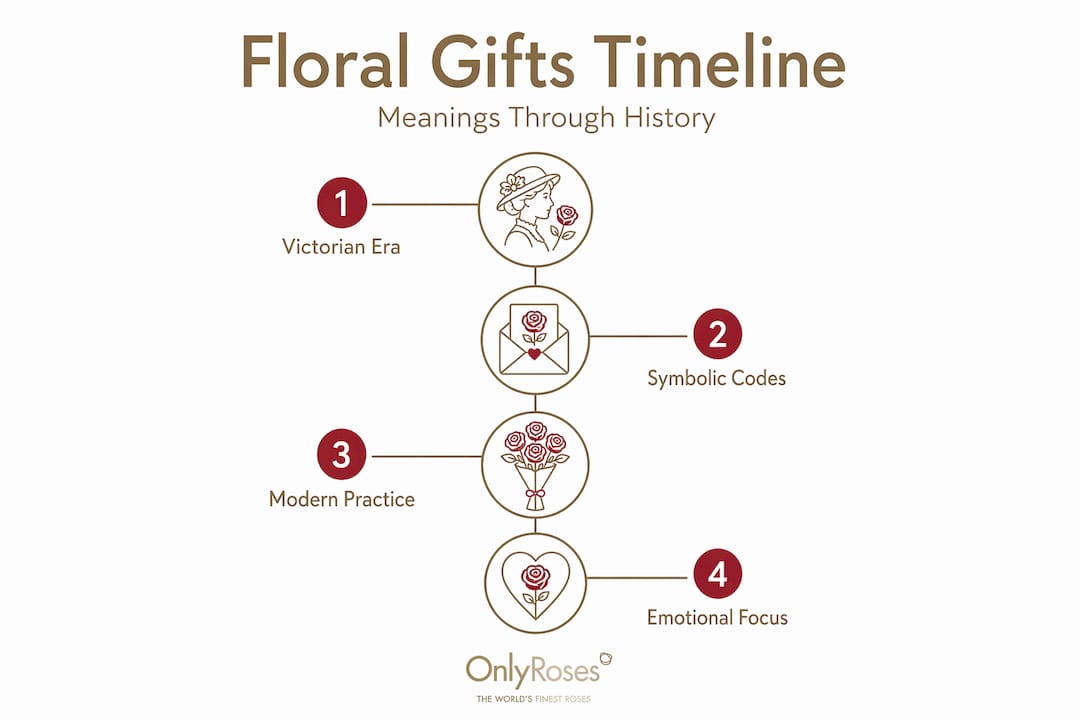
This tradition has evolved considerably. Contemporary floral gifting practices tend to focus on broader emotional categories rather than precise coded messages, but the underlying principle remains. When you hand someone a bouquet, you are making a statement. The table below captures how key elements of a floral gift carry meaning:
| Element | What it communicates |
|---|---|
| Species (e.g. rose, lily) | Primary emotion: love, remembrance, purity |
| Colour | Tone of the message: passion, friendship, sympathy |
| Quantity | Depth of feeling: a single stem versus a dozen |
| Presentation | Social register: formal, intimate, celebratory |
Symbolism and meanings behind popular floral gifts
Understanding the meaning of floral gifts means knowing what specific blooms actually say. Here is how the most commonly gifted flowers communicate:
- Red roses carry romantic love symbolism traced back to the Roman goddess Venus. They are the clearest declaration of romantic intent in the floral world.
- Pink roses signify heartfelt appreciation and genuine gratitude, making them ideal for thank-you gestures without romantic implication.
- White lilies are associated with purity in some traditions but carry strong funerary connotations in others, which makes them context-dependent.
- Sunflowers project warmth and joy. They are nearly impossible to gift badly for birthdays or cheerful occasions.
- Peonies suggest prosperity, romance, and good fortune, which makes them popular for weddings and celebrations.
Quantity adds a further layer of precision. A dozen roses means “be mine” in the traditional language of flowers. Twenty-four roses say “I am yours,” while fifty roses express unconditional love. A single stem, by contrast, can be one of the most powerful gestures of all; it says you chose with intention rather than volume.
Pro Tip: When gifting roses to a colleague or acquaintance, opt for a single stem in a non-red shade such as peach or pale pink. You convey warmth without the romantic weight that red carries.
Cultural sensitivity and gifting missteps
Here is where many well-meaning gift-givers come unstuck. Floral gift symbolism is not universal. The same flower can mean purity or mourning depending on the recipient’s cultural background, and getting this wrong can cause genuine embarrassment or distress.
The most common cultural pitfalls to avoid:
- White flowers at celebrations: In many East Asian cultures, white is associated with death and mourning. Sending white lilies or white chrysanthemums to a Chinese or Japanese colleague’s celebration could cause offence.
- Red flowers in some professional contexts: Red is deeply romantic in most Western traditions. Sending red roses to a colleague, unless your relationship is clearly personal, sends a confusing or inappropriate signal.
- Yellow flowers in some European contexts: In certain Eastern European countries, yellow flowers are associated with infidelity or endings. A bunch of yellow tulips to someone from Poland or Russia might carry unintended meaning.
- Chrysanthemums in France and Belgium: These are used almost exclusively for funerals. Gifting them on any other occasion is a serious misstep.
The broader lesson here is that floriography is not a fixed code. Meanings shift across cultures and even across floral dictionaries. Prioritising the recipient’s cultural context over any rigid symbolic system is always the right approach.
Floral gift options and occasions
Once you understand what flowers communicate, the next question is how to choose floral gifts for specific occasions. The types of floral gifts available go well beyond the standard bouquet, and matching the format to the occasion matters as much as the flower choice itself.

| Occasion | Recommended flower type | Presentation format |
|---|---|---|
| Birthday | Sunflowers, gerberas, mixed bright blooms | Loose bouquet or vibrant arrangement |
| Sympathy | White or cream roses, lilies (culturally appropriate) | Understated wrapped arrangement |
| Anniversary | Red or pink roses | Boxed arrangement or preserved roses |
| Congratulations | Peonies, yellow roses, champagne tones | Structured hat box |
| Professional gifting | Neutral tones, potted plants, single stems | Minimal, elegant presentation |
Potted plants and preserved floral arrangements have grown significantly in popularity as floral gift options because they last. A fresh bouquet fades within a week. A preserved rose can retain its appearance for months, which changes the emotional register of the gift entirely. It becomes something kept rather than something temporary.
Pro Tip: For long-distance gifting, preserved roses in a signature box are far more practical than fresh flowers. The recipient opens something that looks and feels as though it just arrived from a garden, days after it was sent.
Quantity and presentation in gifting carry weight. A solitary rose in a sculptural box communicates far more deliberate thought than a large mixed bouquet assembled in haste. The importance of floral gifts lies not in their size but in the specificity of the choice.
My perspective on the art of floral gifting
I have spent considerable time watching people approach floral gifts as a last resort rather than a first thought. They arrive at a florist with ten minutes to spare and choose whatever looks full and colourful. The result is a gift that feels generic, not because flowers are generic, but because the process was.
What I have come to believe is that floral gifting works best when you treat it the way you would treat choosing words in an important letter. The flower, the colour, the quantity, the vessel: each element is a choice, and each choice says something. Personalisation in gifting is growing precisely because people are beginning to recognise this. A thoughtful floral gift expresses something words often cannot. It arrives before you speak and stays after you leave.
The mistake I see most often is not a wrong flower. It is a thoughtless one.
— Anian
Roses that say exactly what you mean

If this article has made one thing clear, it is that the right floral gift requires genuine thought about species, colour, quantity, and occasion. Only-roses makes that process considerably easier. With a curated palette of over thirty rose colours, classic rose arrangements designed for specific emotional registers, and a preserved rose collection that lasts for months, the brand gives you the tools to gift with precision. Whether you are marking a milestone, expressing gratitude, or simply sending something that says “I chose this for you,” explore the Infinite Roses® collection and discover floral gifts that are anything but generic.
FAQ
What is the definition of floral gifts?
Floral gifts are flowers or botanical arrangements given to another person to convey emotion, mark an occasion, or express a specific sentiment. Rooted in Victorian floriography, they function as a form of intentional, symbolic communication.
What are the most common types of floral gifts?
Common types include fresh bouquets, boxed rose arrangements, potted plants, and preserved floral displays. Each format carries different practical and emotional implications depending on the occasion and recipient.
Why does the colour of a floral gift matter?
Colour significantly shapes the message of a floral gift. Red conveys romantic love, pink signals gratitude, white suggests purity or sympathy (depending on cultural context), and yellow projects friendship or cheerfulness.
How do I avoid cultural mistakes when gifting flowers?
Research the recipient’s cultural background before selecting flowers. White blooms, chrysanthemums, and yellow flowers all carry negative associations in certain cultures, making context more important than any fixed symbolic guide.
Are preserved roses a good floral gift option?
Yes. Preserved roses maintain their appearance for months and make a particularly strong gift for long-distance occasions, anniversaries, or anyone who would appreciate a lasting rather than temporary gesture.

