

TL;DR:
- A fresh flower bouquet is a unified arrangement of cut flowers, distinguished by firm stems and vibrant blooms.
- Selecting flowers with healthy stems, crisp foliage, and clear water ensures genuine freshness, while caring properly prolongs their lifespan.
A fresh flower bouquet is defined as a collection of flowers picked and fastened together in a bunch, creating a unified floral arrangement distinct from single stems or loose cuttings. Merriam-Webster defines a bouquet as flowers “picked and fastened together in a bunch,” also referred to historically as a nosegay. Whether chosen for a birthday, wedding, anniversary, or simply to brighten a room, fresh bouquets carry both visual and emotional weight that no other gift quite replicates. Understanding what makes a bouquet truly fresh, and how to select and care for one, transforms a simple purchase into a lasting experience.
What Characteristics Define a Fresh Flower Bouquet?
A fresh flower bouquet is identified by firm, upright stems and blooms that hold their shape without drooping or browning at the edges. Firm stems and robust blooms kept in clean water are the clearest indicators of genuine freshness at the point of purchase. Wilted petals, yellowing foliage, or a sour smell from the water are all signs that a bouquet has already passed its prime.
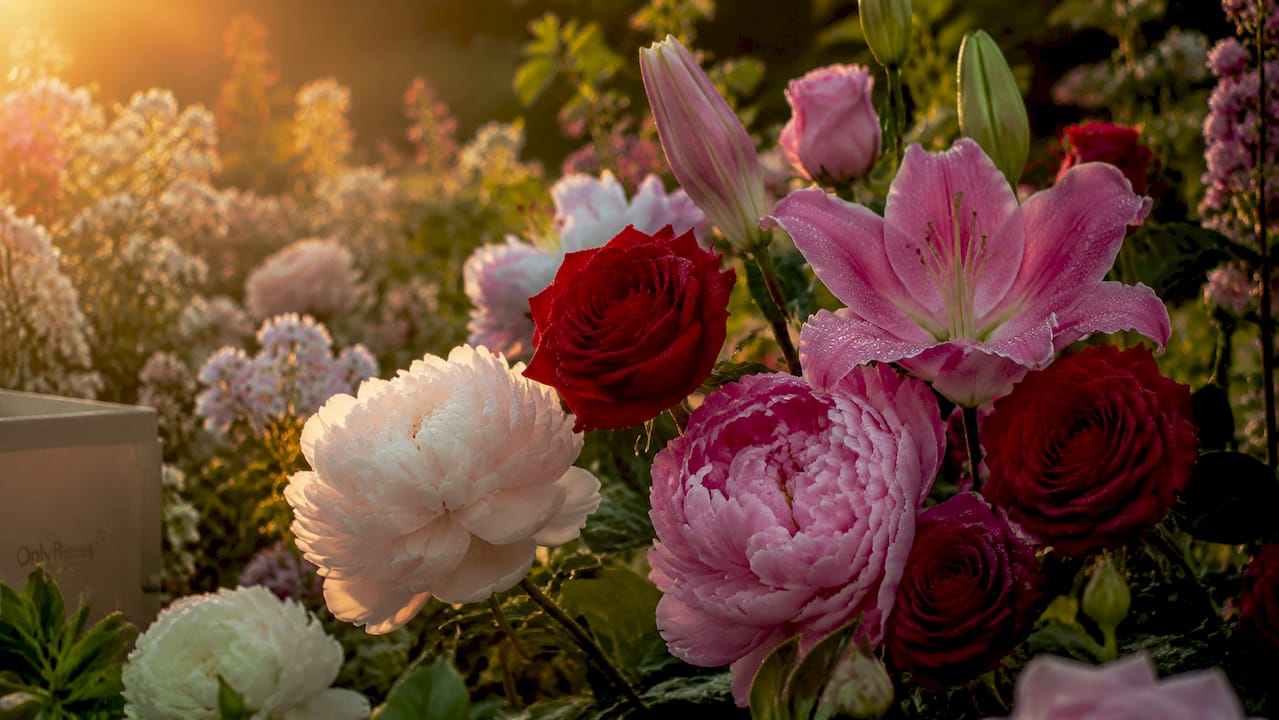
When selecting a bouquet, look beyond the blooms themselves. Stem condition is just as telling as bloom appearance, since a compromised stem cannot draw water effectively, no matter how vibrant the flower looks at first glance. Soft, slimy, or discoloured stems indicate bacterial build-up that will shorten vase life considerably.
Key signs of a genuinely fresh bouquet include:
- Petals: Fully formed, with no browning, translucency, or wilting at the tips
- Stems: Firm and green, not soft, slimy, or discoloured
- Foliage: Crisp and bright, not yellowing or dropping
- Water: Clear or lightly cloudy, not foul-smelling or dark
- Buds: Partially open or closed, indicating the bloom has life ahead of it
Pro Tip: When buying from a florist or market, ask when the flowers were delivered. Roses and peonies sourced within 24 to 48 hours of your purchase will last significantly longer than those sitting in a cold room for several days.
What are the common types of fresh flower bouquets?
The style of a bouquet shapes its visual impact as much as the flowers themselves. Hand-tied, cascade, and posy are among the most recognised bouquet forms, each with a distinct structure and a natural fit for different occasions. Understanding these styles helps you choose a bouquet that communicates the right message and suits the setting.
A hand-tied bouquet is the most familiar form: flowers are gathered loosely, layered in a spiral pattern, and secured with twine or ribbon. The result is organic and relaxed, making it ideal for birthdays, thank-you gestures, and casual gifting. A cascade bouquet, by contrast, is structured to flow downward in a waterfall shape, traditionally carried by brides at formal weddings. The posy is compact and round, typically small enough to hold in one hand, and suits both intimate gifting and table centrepieces.
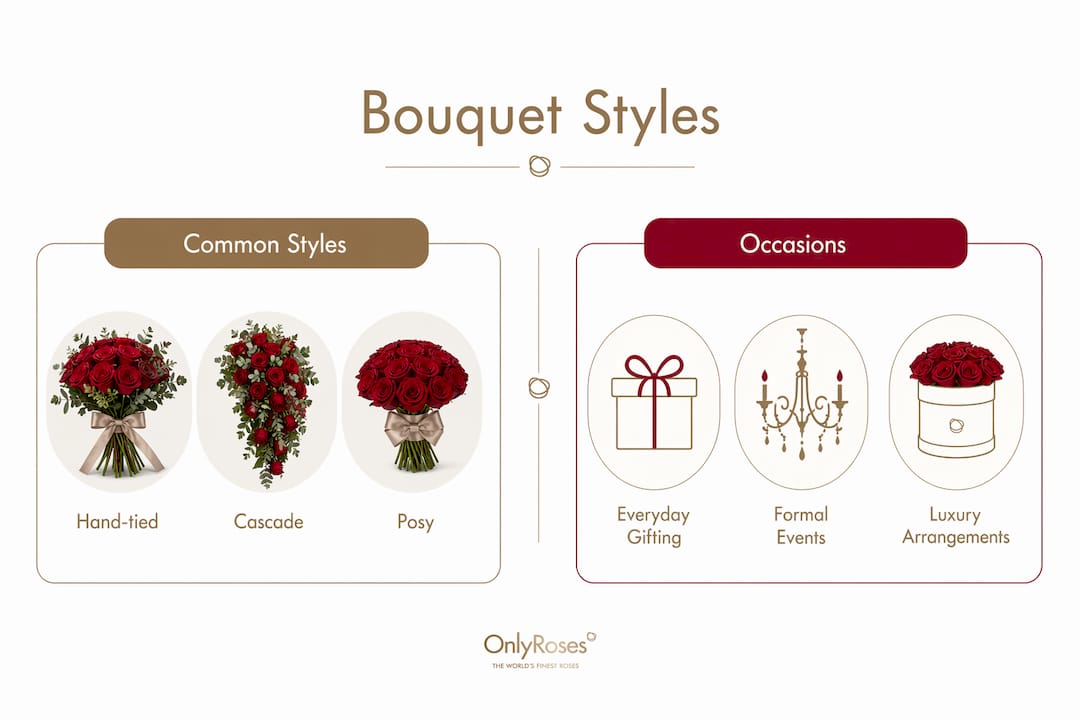
| Bouquet style | Structure | Best occasion |
|---|---|---|
| Hand-tied | Loose spiral, secured with twine | Birthdays, thank-you gifts, everyday gifting |
| Cascade | Flowing downward, structured and dramatic | Weddings, formal ceremonies |
| Posy | Small, round, tightly arranged | Table décor, intimate gifts, bridesmaids |
| Presentation | Flat-fronted, wrapped for display | Stage performances, formal presentations |
| Nosegay | Dense, fragrant, historically symbolic | Vintage-style events, sentimental gifting |
For those exploring luxury floral arrangement types, the choice of style is as deliberate as the choice of flower. Different bouquet styles suit different occasions and signals, from the warmth of a hand-tied arrangement to the drama of a cascade design.
Why do fresh flower bouquets hold such emotional significance?
Fresh flower bouquets function as one of the most universal forms of non-verbal communication across cultures and centuries. Bouquets are given as gestures of thanks, love, kindness, and sympathy, rooted in cultural customs that predate modern gifting conventions. The act of presenting flowers carries meaning that words sometimes cannot.
Floriography, the Victorian practice of assigning specific meanings to flowers and colours, adds a further layer of intention to bouquet composition. All flowers hold different meanings based on type and colour, so a bouquet of red roses communicates romantic love, while white lilies express purity or remembrance, and yellow sunflowers signal warmth and friendship. Choosing flowers with this awareness transforms a bouquet from a decorative object into a considered message.
“A bouquet is not simply a bunch of flowers. It is a curated statement, shaped by colour, form, and fragrance, that speaks on behalf of the giver in ways that words rarely achieve.”
Beyond symbolism, fresh flowers improve the atmosphere of any interior space. Their fragrance, colour, and natural texture introduce an organic quality that no artificial decoration replicates. For gifting or home décor, the benefits of fresh flowers are both immediate and measurable in mood and aesthetic impact. Explore why fresh roses make elegant gifts for a deeper look at the emotional value behind floral gifting.
How to care for fresh flower bouquets to prolong their life
Proper care after purchase determines whether a bouquet lasts three days or ten. The Royal Horticultural Society confirms that conditioning cut flowers through stripping foliage, re-cutting stems, and hydrating in cool water for at least two to three hours before display is the single most effective method for extending vase life. This process, often skipped, makes a significant difference.
Follow these steps to get the most from any fresh bouquet:
- Strip foliage below the waterline. Leaves submerged in water decompose rapidly, releasing bacteria that block stems and cloud the water. Remove all foliage that will sit below the surface before placing flowers in a vase.
- Re-cut stems at a 45-degree angle. Use sharp scissors or a clean knife. A diagonal cut increases the surface area available for water uptake and prevents the stem from resting flat against the vase base.
- Condition in cool, clean water for two to three hours. Place the bouquet in a cool room or near a cold surface before final display. This allows stems to rehydrate fully before being subjected to room temperature.
- Keep away from heat, direct sunlight, and ripening fruit. Cut flowers continue metabolic processes after cutting. Heat and ethylene gas from ripening fruit accelerate this process and shorten vase life.
- Re-cut stems every two days and change the water. Bacterial build-up is the primary cause of premature wilting. Fresh water and clean cuts every 48 hours remove this threat consistently.
Pro Tip: If a bouquet arrives looking slightly wilted after transit, re-cut stems and submerge the entire stem length in cool water for one hour. This overcomes ‘air-block’, where dried or compressed stem ends prevent water uptake, and most flowers will recover fully.
For roses specifically, the OnlyRoses premium care guide covers additional techniques for maintaining bloom quality over time.
Key Takeaways
A fresh flower bouquet is defined by the quality of its stems and blooms at purchase, the style chosen for the occasion, and the care applied after it arrives home.
| Point | Details |
|---|---|
| Core definition | A bouquet is flowers picked and fastened together, distinct from single stems or loose cuttings. |
| Freshness indicators | Firm stems, crisp foliage, and clear water confirm a bouquet is genuinely fresh at purchase. |
| Bouquet styles | Hand-tied, cascade, and posy each suit different occasions and carry distinct visual meanings. |
| Emotional significance | Floriography and cultural custom give bouquets a communicative power beyond their visual appeal. |
| Care essentials | Strip foliage, re-cut stems, and condition in cool water to extend vase life by several days. |
What I have learnt from years of choosing and gifting fresh bouquets
Most people underestimate how much the stem condition matters when selecting a bouquet. I have seen beautifully arranged flowers collapse within 24 hours simply because the stems were soft at the base or the foliage had been left to rot in the vase water. The bloom is the face of the bouquet, but the stem is its lifeline.
The other mistake I see repeatedly is placing a fresh bouquet near a fruit bowl or a sunny windowsill. Ethylene gas from ripening bananas or apples genuinely accelerates petal drop, and direct sunlight raises the temperature around the flowers faster than most people realise. Moving a bouquet to a cooler spot at night can add two or three days to its life without any other intervention.
What I find most rewarding about fresh bouquets is the intentionality they invite. Choosing a cascade of white roses for a wedding, a tight posy of garden flowers for a friend, or a dramatic hand-tied arrangement for a dinner table are all distinct decisions. Each style and flower choice says something specific. That specificity is what separates a thoughtful bouquet from a generic one, and it is worth taking the time to get right.
— Anian
Discover premium fresh and preserved roses at OnlyRoses

OnlyRoses sources its roses exclusively from high-altitude farms in Ecuador, where the combination of climate and elevation produces blooms with exceptional stem length, colour depth, and vase life. Every arrangement is built around a single flower, which means the quality and consistency are unmatched by multi-flower florists working across dozens of varieties. Whether you are looking for a classic fresh rose bouquet or a preserved arrangement that lasts for months, the luxury roses guide covers colour meanings, arrangement styles, and care in full. Browse the classic rose stems collection to find the right fresh roses for your next gift or occasion.
FAQ
What is the definition of a fresh flower bouquet?
A fresh flower bouquet is a collection of freshly cut flowers picked and fastened together in a bunch, as defined by Merriam-Webster. It is distinguished from single stems or loose flowers by its unified, arranged form.
How do I know if a bouquet is truly fresh?
Look for firm, upright stems, crisp foliage, and blooms that hold their shape without drooping. Clear vase water and partially open buds are additional signs of genuine freshness.
What are the main types of flower arrangements?
The most common bouquet styles are hand-tied, cascade, and posy. Hand-tied suits everyday gifting, cascade is traditional for weddings, and posy works well for intimate occasions and table décor.
How long do fresh flower bouquets typically last?
With proper care, including re-cutting stems, removing submerged foliage, and changing water every two days, most fresh bouquets last between five and ten days.
What does floriography mean in the context of bouquets?
Floriography is the practice of assigning symbolic meanings to flowers and colours. It influences bouquet composition so that the choice of flower type and colour communicates a specific sentiment, such as red roses for love or white lilies for remembrance.

