

TL;DR:
- Rose centrepieces anchored by roses set the tone for any event, from weddings to corporate gatherings. Proper stem preparation, vessel selection, and arrangement techniques are essential for creating visually stunning and long-lasting displays. Using high-quality, sustainably sourced roses and the right vessel enhances the arrangement’s style and durability, ensuring an elegant table centerpiece.
A rose centrepiece is a floral arrangement built around roses as the primary bloom, designed to anchor the visual identity of a table or event space. Whether you are planning a wedding reception, a birthday dinner, or a corporate gala, knowing how to create rose centrepieces gives you the power to shape the entire atmosphere of a room. The techniques used by professional florists, including stem preparation, vessel selection, and arrangement structure, are learnable with the right guidance. OnlyRoses sources its roses from high-altitude Ecuadorian farms specifically because bloom size, stem length, and colour depth directly affect how well a rose performs in a centrepiece setting.
What materials and tools do you need to create rose centrepieces?
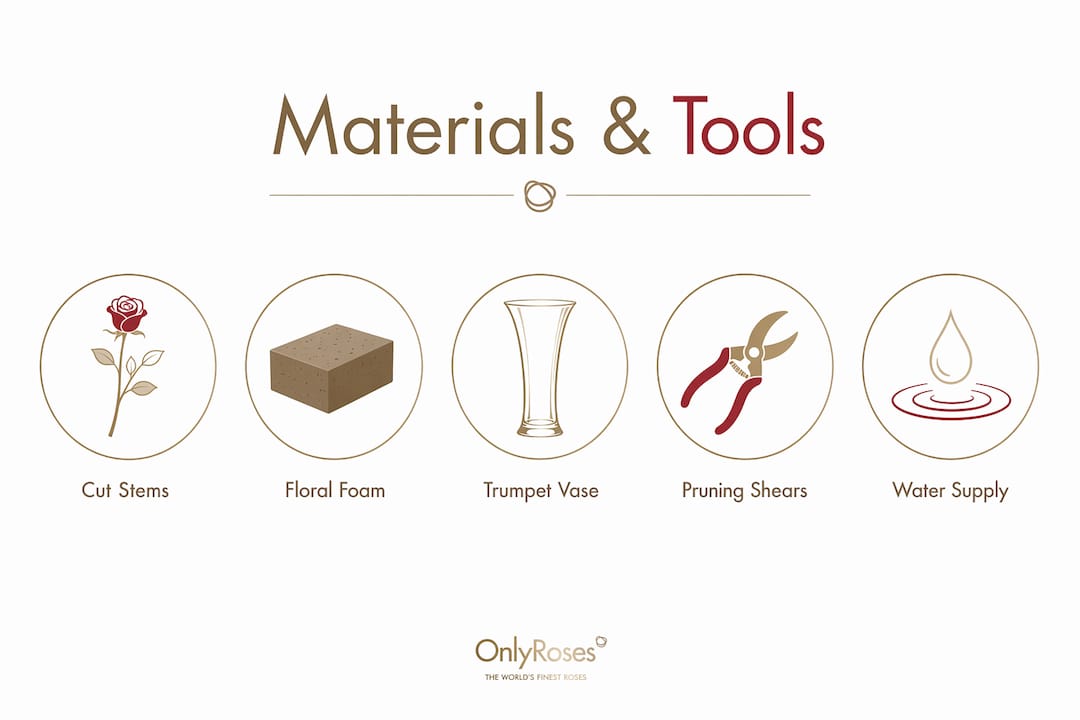
The foundation of any successful rose centrepiece is preparation. Before a single stem is placed, you need the right roses, the right vessel, and the right supporting materials.
Roses to consider:
- Standard roses such as the OnlyRoses Classic Rose Altura Duet range, which offer long stems and large, consistent blooms ideal for tall arrangements
- Spray roses, which produce multiple smaller blooms per stem and add density and texture
- Garden roses and David Austin varieties, known for their layered, full-petalled heads that create a lush, romantic look
- Infinite Roses, the signature preserved rose from OnlyRoses, which maintains its appearance for months and suits luxury or long-duration events
Vessel selection matters more than most people realise. Tall, slender vessels like trumpet vases create dramatic impact for ceremonies, while low, wide containers suit long tables to avoid blocking guest sightlines. Pedestal bowls, vintage pots, lanterns, and bud vases each communicate a distinct aesthetic, from grand and formal to relaxed and intimate.
Additional materials you will need:
- Floral foam (also called Oasis), soaked thoroughly before use
- Sharp floral scissors or secateurs
- Waterproof tape or a floral grid for open vessels
- Greenery such as eucalyptus, ruscus, or fern fronds
- Complementary blooms like peonies, dahlias, or waxflower
- Decorative accents including ribbons, candles, or pearl pins
| Material | Purpose |
|---|---|
| Floral foam | Holds stems in position and retains water |
| Trumpet vase | Creates height and drama for ceremony settings |
| Eucalyptus | Adds texture, volume, and conceals foam |
| Spray roses | Fills gaps and adds density between larger blooms |
| Floral scissors | Allows clean, precise cuts for water absorption |
How do you arrange roses into an elegant centrepiece step by step?
This is where preparation becomes craft. Follow this sequence for a professional result every time.
-
Soak your floral foam. Place the foam block in a deep container of water and allow it to absorb water naturally for approximately 15 minutes. Never push it under the water to force absorption. That traps air pockets and leads to dry patches that will shorten the life of your roses.
-
Prepare your vessel. Trim the soaked foam to fit snugly inside your chosen container. It should sit slightly above the rim so you can angle stems downward over the edges for a domed or cascading shape.
-
Cut your rose stems. Remove all leaves that would sit below the waterline. Cut stems at a 45-degree angle to maximise the surface area available for water uptake. This single step has a measurable impact on how long your blooms remain open and vibrant.
-
Place your greenery first. Eucalyptus or baby’s breath provides texture and volume while concealing the foam base. Think of greenery as the framework that gives your roses something to lean against visually.
-
Arrange your focal roses using the spiral method. The spiral technique involves placing each stem at a slight angle to the previous one, rotating the arrangement as you go. This creates a natural, organic flow rather than a stiff, symmetrical grid. It is the preferred method for lush, full centrepieces.
-
Fill gaps with secondary blooms and spray roses. Once your focal roses are placed, use spray roses, peonies, or dahlias to fill the spaces between them. Vary the height slightly so no two blooms sit at exactly the same level.
-
Check from every angle. Walk around the arrangement and view it from seated height. Adjust any stems that appear too dominant or too recessed.
Pro Tip: Cut all your stems and place them in water at least two hours before arranging. This allows the roses to hydrate fully and open slightly, giving you a more accurate sense of their final size and shape before you commit them to the foam.
What are the best rose centrepiece ideas for different event styles?
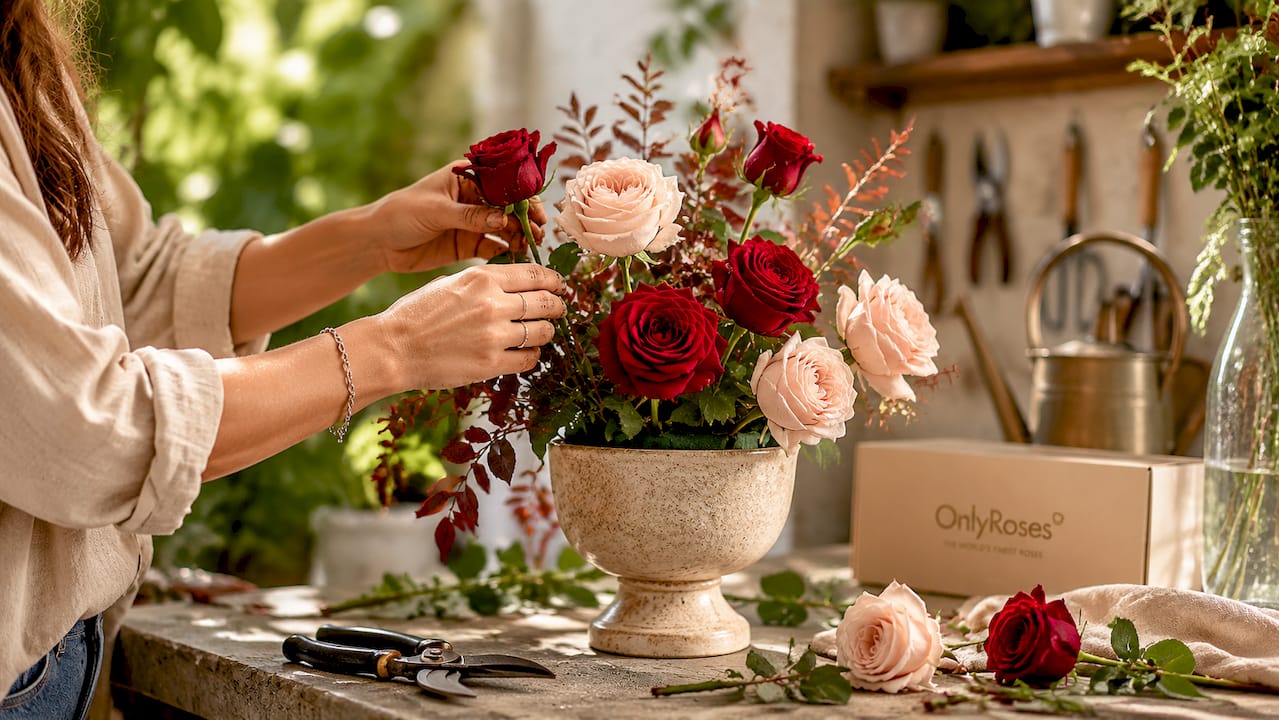
The most memorable centrepieces are those that feel intentional rather than generic. The choice of vessel is as critical as the flowers themselves, shaping both the style and the guest experience at the table.
Monochrome arrangements use a single colour in varying tones and textures. A centrepiece built entirely from blush roses in standard, spray, and garden varieties creates depth without visual noise. OnlyRoses offers over thirty colours, making it straightforward to build a precise tonal palette.
Mixed bloom arrangements pair roses with complementary flowers for richness. Mixing standard roses with spray roses or peonies and dahlias adds a luxury quality that single-variety bouquets rarely achieve. This approach suits weddings where the centrepiece needs to feel abundant and considered.
| Setting | Recommended style | Vessel type |
|---|---|---|
| Long banquet table | Low, lush arrangement in soft tones | Wide pedestal bowl or trough |
| Round wedding table | Domed arrangement at medium height | Classic urn or footed vase |
| Intimate dinner | Single-variety bud vase clusters | Three to five bud vases grouped together |
| Ceremony altar | Tall, dramatic single arrangement | Trumpet vase or column stand |
For events where longevity matters, preserved roses offer a compelling alternative to fresh blooms. Infinite Roses from OnlyRoses retain their softness and appearance for months without any water or daily care, making them ideal for exhibition spaces, long-running installations, or high-value gifting displays. You can explore elegant arrangement ideas using both fresh and preserved varieties to find the right fit for your event.
How do you keep rose centrepieces fresh throughout an event?
Fresh rose centrepieces require consistent attention to remain at their best. The good news is that the care routine is simple once you understand what roses actually need.
- Top up water daily. Floral foam dries out faster than most people expect, particularly in warm or air-conditioned rooms. Pour water directly onto the foam each morning.
- Maintain a cool room temperature. Roses deteriorate quickly above 21°C. If your venue is warm, arrange centrepieces as close to the event as possible and store them in a cool space beforehand.
- Remove wilting petals promptly. A single browning petal draws the eye and makes an entire arrangement look tired. Remove them cleanly without disturbing surrounding blooms.
- Use flower food. Adding a sachet of floral preservative to the water in your foam significantly extends bloom life by inhibiting bacterial growth.
- Expect up to seven days of beauty. With daily water maintenance, fresh rose centrepieces can maintain their visual appeal for up to seven days. That lifespan covers most multi-day events and gives you flexibility in your preparation timeline.
For events where daily maintenance is not practical, preserved roses from OnlyRoses are the most reliable solution. They require no water, no trimming, and no temperature management.
Key takeaways
The most effective rose centrepieces combine the right vessel, properly prepared stems, and a clear arrangement technique to deliver lasting visual impact.
| Point | Details |
|---|---|
| Vessel choice defines the style | Select tall vases for drama, low bowls for long tables where sightlines matter. |
| Stem preparation is non-negotiable | Cut at a 45-degree angle and hydrate roses before arranging for maximum longevity. |
| Soak floral foam fully | Allow 15 minutes of natural absorption to prevent dry pockets that shorten bloom life. |
| Mix bloom types for richness | Combining standard roses with spray roses, peonies, or dahlias creates a luxury finish. |
| Preserved roses solve longevity | Infinite Roses from OnlyRoses last months without care, ideal for extended or high-value events. |
Why vessel choice is the decision most people get wrong
I have seen beautifully sourced roses completely undermined by the wrong container. A squat, wide-mouthed vase filled with long-stemmed roses looks unresolved. A trumpet vase holding garden roses with their heavy, nodding heads looks precarious. The vessel and the bloom type need to be chosen together, not separately.
My preferred combination for a wedding centrepiece is a footed urn at medium height, filled with a mix of standard and spray roses in a tight tonal palette, with eucalyptus trailing slightly over the rim. It reads as intentional and luxurious without requiring advanced floristry skills to execute. The step-by-step arrangement guide from OnlyRoses is the resource I point beginners to first, because it treats vessel selection and stem placement as equally important decisions.
The other mistake I see consistently is over-reliance on a single bloom size. Arrangements built entirely from large-headed roses look heavy and flat. Introduce spray roses or a few stems of waxflower and the whole composition gains movement. Luxury floral design is not about using more flowers. It is about using the right combination of sizes and textures so that each bloom has space to be seen.
— Anian
Discover premium roses for your next centrepiece
OnlyRoses sources exclusively from Ecuador’s finest high-altitude farms, which is why the bloom size and colour consistency you see in the Classic Rose Stems collection is so reliable for centrepiece work. Whether you are building a single statement arrangement or dressing an entire venue, the quality of your starting material determines the quality of your result.
The Classic Rose Altura Duet in Nocturne delivers a deep, dramatic bloom that anchors dark and moody tablescapes with authority. For softer palettes, the Pastel Tones Infinite Rose offers a preserved option that requires no maintenance and holds its beauty for months. Browse the full OnlyRoses collection at only-roses.co.uk to find the right roses and accessories for your event.
FAQ
What roses are best for centrepieces?
Standard roses with long stems, spray roses for density, and garden roses for a lush, romantic look are the most effective choices. OnlyRoses Classic Rose Altura Duet varieties offer the consistency in stem length and bloom size that centrepiece work demands.
How far in advance can I make rose centrepieces?
Fresh rose centrepieces can be assembled one to two days before an event if stored in a cool room with hydrated floral foam. With daily water maintenance, they remain visually strong for up to seven days.
Do I need floral foam to arrange roses?
Floral foam is the most reliable method for structured centrepieces, but a floral grid made from waterproof tape across the mouth of a vase works well for open arrangements. Soak foam for at least 15 minutes before inserting any stems.
What is the difference between fresh and preserved rose centrepieces?
Fresh roses require daily water and temperature management but offer the natural scent and softness of a living bloom. Preserved roses require no maintenance and last months, making them the practical choice for long-running events or permanent installations.
How many roses do I need for one centrepiece?
A standard medium-height centrepiece typically requires 12 to 20 stems, depending on bloom size and vessel width. Supplement with spray roses and greenery to achieve fullness without dramatically increasing cost.

