

TL;DR:
- Proper rose wrapping combines careful stem preparation, material selection, and securing techniques to create a professional and fresh presentation. Gathering the right tools, conditioning roses, and using a moisture barrier ensures the bouquet remains attractive and hydrated during transport. The choice of paper and ribbon influences the style, with simple, restrained wrapping allowing the roses to speak for themselves.
Wrapping a rose bouquet is a precise craft that combines stem preparation, material selection, and securing technique to produce a gift-ready presentation that looks professional and stays fresh. The process draws on the same principles professional florists use daily, whether you are working with a single stem or a full arrangement. Get the preparation right before you reach for the paper, and the wrapping itself becomes straightforward. This guide covers every stage, from conditioning your roses to tying the final ribbon, so the result reflects the quality of the flowers inside.
What do you need before wrapping a rose bouquet?
Strong bouquet wrapping starts well before the paper comes out. The condition of your roses and the tools you gather determine whether the finished gift holds its shape and stays fresh for hours or days.
Selecting and preparing your roses
Choose roses with firm, upright heads and no browning at the petal edges. Cutting stems at a 45-degree angle maximises water absorption and keeps the flowers hydrated for longer. Aim for stems between 12 and 15 inches after trimming, which gives you enough length for a balanced cone wrap without excess bulk at the base.
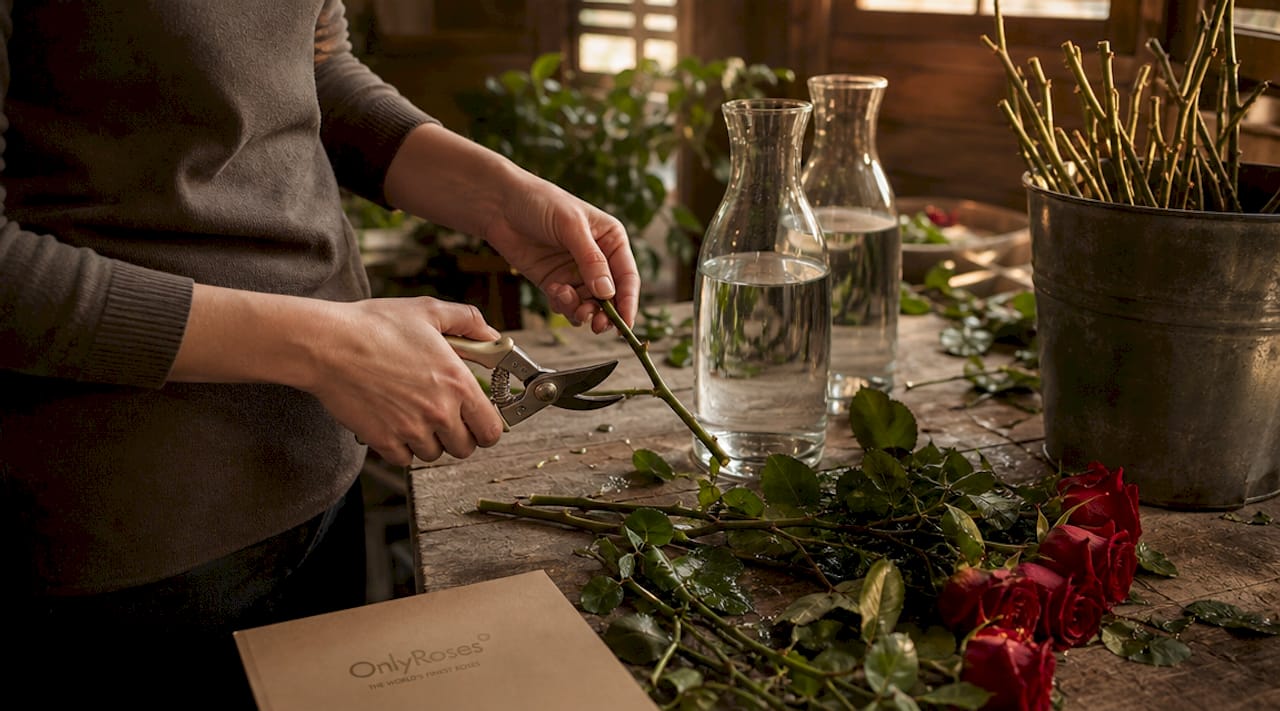
Removing foliage below the binding point is not optional. Leaves left below the wrap or near the waterline accelerate bacterial growth, which shortens the life of every bloom in the arrangement. Strip cleanly with sharp floral shears rather than tearing, which bruises the stem.
Gathering your materials
Before you begin, collect everything in one place:
- Sharp floral shears or scissors
- Wrapping paper: florist paper, kraft paper, or tissue as an inner layer
- Florist tape and double-sided tape for securing edges
- A decorative ribbon in satin, velvet, or jute depending on your style
- Damp paper towels and a small sheet of plastic wrap for the moisture barrier
- A ruler or measuring guide if you are cutting paper to size
Pro Tip: Condition your roses in a bucket of cool water for at least two hours before wrapping. This firms up the stems and reduces wilting once the bouquet is out of water.
How to wrap a rose bouquet step by step
The standard method for gifting is the cone wrap, which creates a clean, tapered shape that protects the blooms at the top while keeping the stems accessible at the base. Proper layering and angle positioning on the paper allows controlled shaping and a modern cone appearance.
- Cut your paper to size. A sheet of approximately 50 cm x 70 cm suits a medium bouquet of ten to fifteen roses. Lay it flat on a clean surface in a diamond orientation, with one corner pointing towards you.
- Position the bouquet diagonally. Place the stems across the lower third of the paper, with the blooms pointing towards the upper left corner. The stems should extend slightly beyond the bottom right corner.
- Fold the bottom corner up first. Bring the lower point of the paper up and over the stems, tucking it snugly beneath the binding point. This forms the base of the cone.
- Fold in the side corners. Bring the right side across first, then the left, overlapping slightly. The paper should sit firmly around the stems without compressing the blooms. Leave the top open so the roses can breathe.
- Secure with tape. Use floral tape or double-sided tape to hold the paper edges in place. Apply tape discreetly at the stem binding point and along any overlapping seams.
- Bind the stems. Wrap florist tape firmly around the stems just below the paper line, then cover with your chosen ribbon. Tie a neat bow or a simple knot depending on the style you want.
- Trim and finish. Cut any excess paper at the top into a clean edge. Angle the ribbon ends with scissors for a professional finish.
Pro Tip: If you are using tissue paper as an inner layer, place it inside the outer wrap before positioning the bouquet. The tissue softens the look and adds a layer of protection against moisture transfer to the outer paper.
Odd numbers of roses with adequate spacing create a more dynamic arrangement before you wrap. Grouping in threes or fives rather than even numbers gives the bouquet visual rhythm that shows through even after wrapping.
Which wrapping paper and ribbon work best for roses?
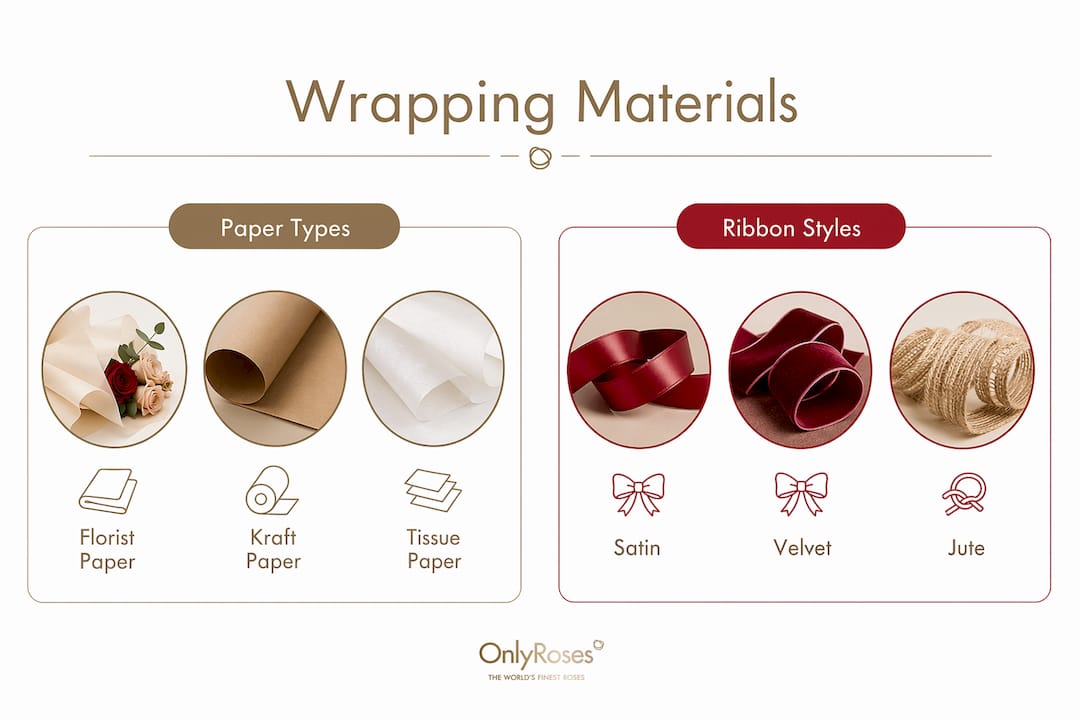
Material choice shapes the entire character of the finished bouquet. The table below compares the most common options across style, practicality, and suitability for roses.
| Material | Style | Best use | Caution |
|---|---|---|---|
| Florist paper | Clean, structured | Formal gifts, modern presentations | Can crease if handled roughly |
| Kraft paper | Rustic, natural | Casual gifts, outdoor events | Absorbs moisture quickly |
| Tissue paper | Delicate, soft | Inner layer or single stems | Too fragile as sole outer wrap |
| Cellophane | Transparent, glossy | Showcasing bloom colour | Traps condensation against stems |
| Fabric wrap | Luxurious, reusable | Premium gifting, weddings | Requires pinning or stitching to hold |
Wrapping papers differ in texture and style, with florist paper producing the sharpest lines and kraft paper lending a warmer, more organic feel. Tissue used as an inner layer softens the overall look without weakening the structure.
For ribbons, satin suits classic elegance, velvet adds depth for moody or romantic arrangements, and jute works for rustic presentations. Satin is the most forgiving to tie and holds a bow well. Velvet is heavier and can slip, so a double knot is advisable. Jute is best reserved for kraft paper wraps where the textures complement each other.
Layering two papers, such as tissue inside florist paper, adds visual interest and a sense of luxury without significantly increasing bulk. Single wraps work well for minimalist presentations where the paper itself is a statement.
How do you keep a wrapped bouquet fresh and intact?
Once wrapped, the bouquet faces its biggest challenge: staying hydrated and holding its shape until it reaches the recipient.
- Build a moisture barrier. Wrap the stem ends in damp paper towels, then cover tightly with plastic wrap before applying the decorative outer layer. A moisture barrier under decorative paper creates a hydration system that extends freshness when the bouquet is out of water, which is critical for events and gifting.
- Avoid over-tight wrapping at the bloom level. Compressing the heads causes bruising and accelerates petal drop. The paper should hold the stems, not the flowers.
- Transport upright and away from heat. Keeping the bouquet upright and away from direct sunlight during transport protects both shape and freshness. Laying a wrapped bouquet flat causes the blooms to shift and the paper to crumple.
- Time the wrap correctly. For same-day gifting, wrap no more than two to three hours before presentation. For next-day delivery, the moisture barrier becomes non-negotiable.
- Fix loose ribbons with a small piece of double-sided tape. Place it on the underside of the bow where it contacts the paper. This keeps the ribbon centred without visible adhesive.
A well-wrapped bouquet should look as good when it arrives as when it left your hands. The moisture barrier and upright transport are the two factors most people skip, and they are the two that matter most.
Key takeaways
A well-prepared rose bouquet, wrapped with the right materials and a proper moisture barrier, will hold its shape and freshness from your hands to the recipient’s.
| Point | Details |
|---|---|
| Stem preparation is non-negotiable | Cut at 45 degrees, strip foliage below the binding point, and condition in water before wrapping. |
| Paper size and positioning determine shape | Use approximately 50 cm x 70 cm in a diamond orientation for a clean, modern cone wrap. |
| Moisture barrier extends freshness | Damp paper towels and plastic wrap around the stem ends keep roses hydrated out of water. |
| Material choice sets the style | Florist paper for formal, kraft for rustic, tissue as an inner layer for softness and luxury. |
| Transport upright, away from heat | Laying the bouquet flat or leaving it in sunlight damages both shape and bloom condition. |
Why the wrap matters as much as the roses
I have seen beautifully sourced roses handed over in crumpled cellophane and watched the recipient’s face fall slightly before they caught themselves. The flowers were exceptional. The presentation undid them. That experience taught me something that no floristry manual states plainly enough: the wrap is part of the gift, not an afterthought.
What I find most people get wrong is the sequence. They focus on the ribbon and the bow, which are the last five percent of the process, and rush the first ninety-five. Stem conditioning, foliage removal, and the moisture barrier are unglamorous steps, but they are the reason a bouquet still looks alive three hours after it was wrapped. Skip them and even the most elegant paper cannot compensate.
The trend towards minimalist wrapping, single-colour kraft paper with a velvet ribbon, or white florist paper with a simple knot, reflects something I think is genuinely right. Restraint in the wrap lets the roses speak. Overcomplicated layering, excessive cellophane, and oversized bows compete with the blooms rather than framing them. If you are working with high-quality roses, the best wrapping is the one that gets out of their way.
My practical advice: practise the cone fold twice before you do it with your actual bouquet. The diagonal placement and the sequence of folds feel awkward the first time and intuitive the second. That one rehearsal is the difference between a confident, clean result and a frustrated re-wrap that creases the paper.
— Anian
Discover OnlyRoses’ luxury roses and gifting guides
If you want to start with roses that reward the effort of a beautiful wrap, OnlyRoses sources exclusively from high-altitude farms in Ecuador, where bloom size, stem length, and colour depth are consistently exceptional.

The luxury roses guide at OnlyRoses covers colour meanings, arrangement ideas, and care instructions in one place, making it a useful companion to the wrapping techniques above. For gifts that last well beyond a week, the preserved roses range offers blooms that maintain their softness and appearance for months without any water or wrapping maintenance. Browse the classic rose stems collection to find the right foundation for your next bouquet.
FAQ
What is the best paper for wrapping roses?
Florist paper produces the cleanest lines and holds a cone shape well, making it the preferred choice for formal gifts. Kraft paper works for a rustic or natural aesthetic, while tissue paper is best used as an inner layer rather than a standalone wrap.
How do you keep a wrapped bouquet fresh without water?
Wrap the stem ends in damp paper towels and cover them with plastic wrap before applying the decorative outer layer. This moisture barrier keeps roses hydrated for several hours, which is sufficient for same-day gifting and transport.
How do you tie a bouquet so it holds its shape?
Bind the stems firmly with florist tape just below the bloom line, then cover with a decorative ribbon tied in a double knot or bow. Securing the paper with double-sided tape at the seams prevents shifting during handling.
How many roses make a good bouquet for gifting?
Florists recommend odd numbers for visual impact, with groupings of five, seven, or eleven roses creating a more dynamic arrangement than even numbers. Adequate spacing between blooms prevents overcrowding and lets each flower stand out.
Can the same wrapping technique work for a single rose?
Yes. Single rose wrapping follows the same core principles as a full bouquet, scaled down to a smaller sheet of paper. The cone fold, moisture barrier, and ribbon finish all apply, though the paper size and stem binding are adjusted for one stem.

