

TL;DR:
- Rose longevity depends on genetics, handling, and environment, influencing how long they stay beautiful.
- Preserved roses last from one to three years, offering long-lasting beauty without water or sunlight.
- Proper care and sourcing high-quality roses ensure maximum lifespan and emotional impact as gifts.
Most people assume roses are a fleeting gesture, beautiful for a few days before they droop and fade. That assumption costs gift-givers a great deal, not just in money, but in the emotional resonance they were hoping to create. The truth is rather different. With the right variety, thoughtful sourcing, and proper care, roses can remain visually stunning for up to two weeks as fresh blooms, or for months and even years as preserved arrangements. This guide covers what genuinely affects rose longevity, how fresh and preserved roses compare, and how to make an informed choice that turns a simple gift into a lasting impression.
Table of Contents
- Understanding rose longevity: What it really means
- Key factors that determine rose longevity
- Fresh vs. preserved roses: How long can they last?
- Maximising the lifespan: Care tips for lasting beauty
- The truth about rose longevity: Beyond lifespan to experience
- Discover roses that last: Choose luxury and longevity
- Frequently asked questions
Key Takeaways
| Point | Details |
|---|---|
| Genetics matters | The variety and farm quality of a rose set its fundamental lifespan. |
| Care is critical | Simple actions like water changes or keeping preserved blooms dry dramatically extend rose longevity. |
| Preserved roses last years | With proper care, preserved roses can be a beautiful gift for multiple years. |
| Environment counts | Where roses are displayed—from cool living rooms to humid bathrooms—makes a big difference to their longevity. |
| Luxury is more than duration | Choosing the best roses and presenting them elegantly is as important as how long they last. |
Understanding rose longevity: What it really means
Rose longevity refers to how long a rose maintains its visual appeal after it has been cut from the plant or treated for preservation. It is not simply about whether the petals fall off. A rose that wilts, loses its colour vibrancy, or becomes limp within two days has poor longevity, even if it is technically still alive. For luxury gifting, this distinction matters enormously.
When you present someone with a beautifully arranged hatbox of roses, you want that beauty to persist. The gift should continue to deliver a moment of joy each time the recipient walks past it. A rose that collapses on day three does not do that. A rose that still looks immaculate on day twelve, or still holds its softness after six months as a preserved bloom, tells a very different story.
The factors influencing longevity span the entire journey of the rose, from the genetics encoded in the plant’s cells to the way it is handled from harvest to delivery. Key considerations include:
- Variety and genetics: Some rose cultivars are bred specifically for extended vase life
- Growing conditions: Altitude, temperature, and soil quality all influence petal density and resilience
- Post-harvest handling: How quickly roses are cooled, hydrated, and transported affects their starting condition
- Water chemistry: Research confirms that vase life extended to 15 days when using citric acid at 100 ppm combined with 8% sucrose, underscoring how much the right solution matters
- Environment at home: Temperature, light, and proximity to ripening fruit all influence how quickly a rose declines
For those exploring alternatives to fresh roses, understanding what preserved roses are and how they work is an excellent starting point, as the preserved roses guide explains the process in detail.
Key factors that determine rose longevity
With the definition clear, it is worth breaking down exactly what determines how long your roses will remain beautiful. Longevity is not one single thing. It is the sum of several interconnected elements.
- Genetics and cultivar selection: The rose’s genotype sets a biological baseline for vase life. Cultivars bred for the luxury cut flower market tend to have denser petals and more robust cell walls, giving them a natural advantage before care even begins.
- Growing altitude: High-altitude Ecuadorian roses develop denser cell structures due to intense sunlight and cooler temperatures, which improves their resistance to dehydration after cutting. This is why Ecuador consistently produces some of the world’s most prized blooms.
- Pre-purchase handling: Poor handling in the supply chain, such as inadequate cooling or delayed hydration, shortens vase life significantly before the roses even reach you. This is why sourcing from a brand with full supply chain oversight matters.
- Ethylene exposure: Ethylene gas, released naturally by ripening fruit, accelerates petal wilting in cut roses. Keeping roses away from fruit bowls is not just a minor tip; it can be the difference between roses lasting five days or ten.
- Post-harvest nutrition: Calcium, sucrose, and pH adjusters used in professional conditioning solutions actively extend vase life by feeding the stem and maintaining water uptake efficiency.
“Start with farm-fresh, high-grade AAA roses. Genetics and genotype influence base vase life, and this can be enhanced significantly by post-harvest nutrition, including calcium.”
Understanding how to select and prepare roses with longevity in mind is covered thoroughly in our guide to choosing roses for longevity, alongside detailed advice on rose preparation tips that apply from the moment they arrive.
Fresh vs. preserved roses: How long can they last?
Once you understand what affects longevity, the next natural question is which type of rose best suits your gifting intentions. The choice between fresh and preserved roses is not about which is superior. It is about what kind of experience you want the recipient to have.
| Feature | Fresh roses | Preserved roses |
|---|---|---|
| Typical lifespan | 7 to 15 days with proper care | 1 to 3 years (up to 10 years freeze-dried) |
| Water required | Yes, daily | No |
| Sunlight sensitivity | Moderate | High, avoid direct light |
| Humidity sensitivity | Low to moderate | High, avoid damp rooms |
| Fragrance | Strong and natural | Minimal to none |
| Maintenance | Regular water changes and trimming | Very low, occasional light dusting |
| Best suited for | Romantic occasions, immediate impact | Long-term gifts, décor, memorial tributes |
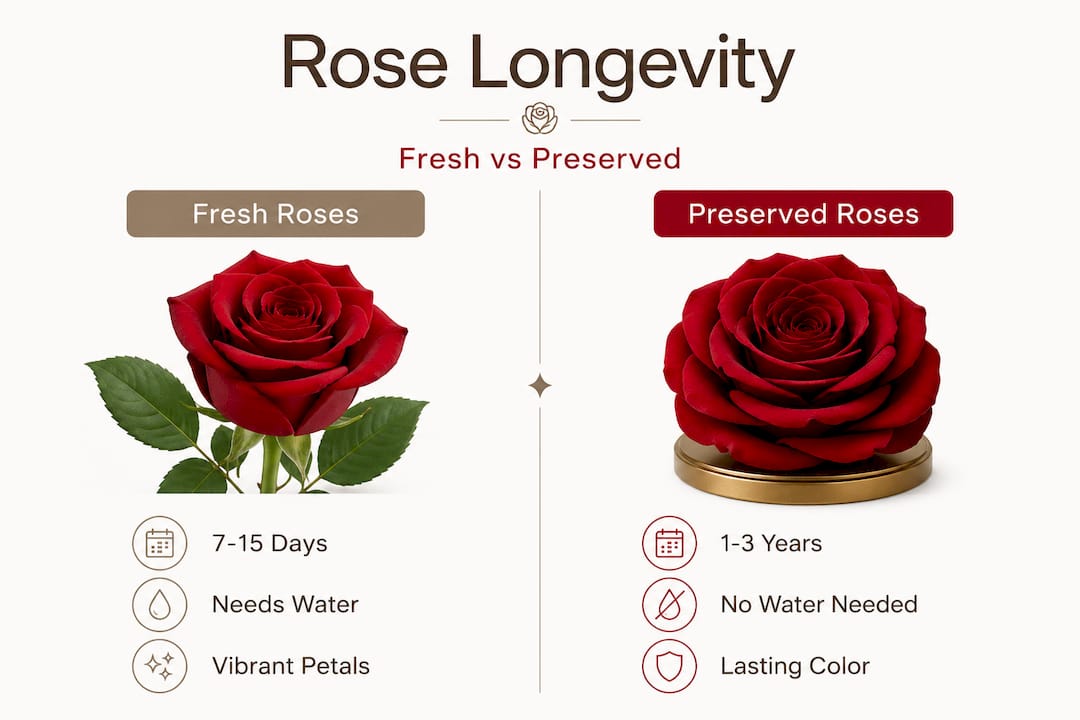
Fresh roses, when sourced from high-altitude Ecuadorian farms and cared for properly, can comfortably reach 12 to 15 days of peak beauty. Preserved roses, however, operate on an entirely different timescale. Preservation care requirements are straightforward: no water, no direct sunlight, no humidity. Roses preserved using glycerine-based methods typically last one to three years. Freeze-dried arrangements, while more brittle in texture, can last five to ten years under ideal conditions.
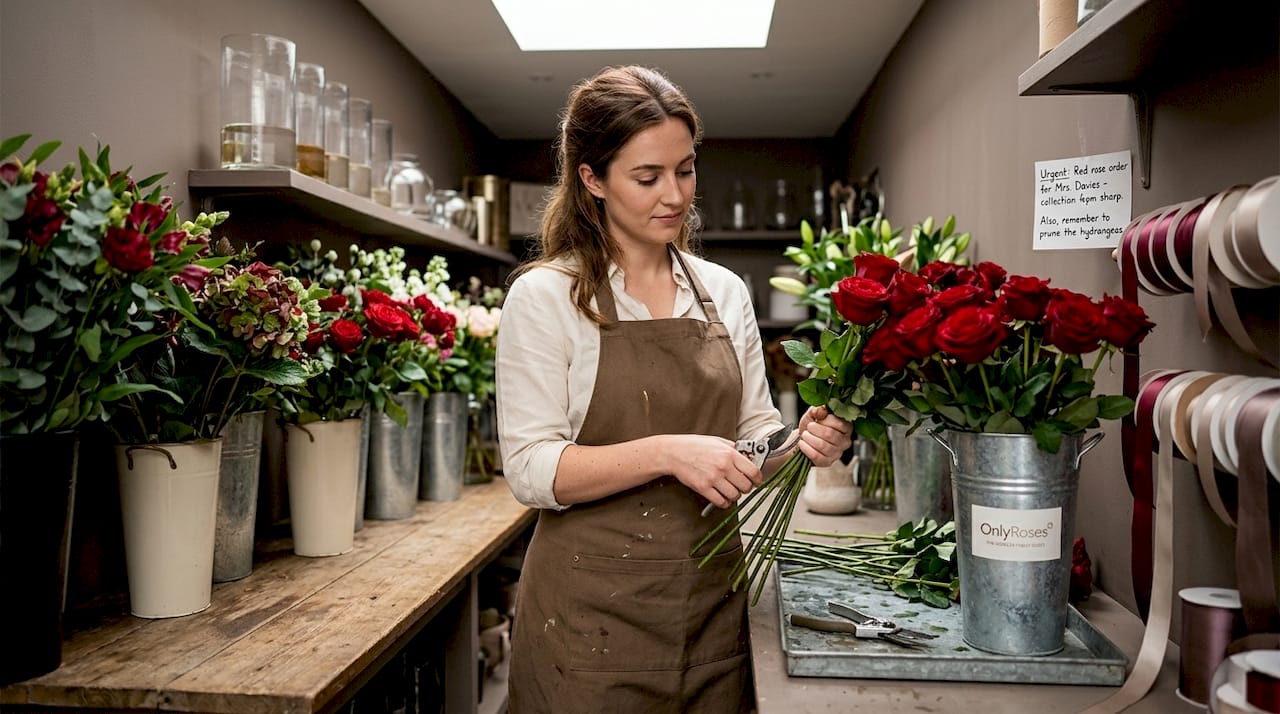
This extended lifespan gives preserved roses a fundamentally different value proposition. They are not simply flowers. They are objects of lasting beauty, closer in character to a piece of art or fine home décor than to a traditional bouquet. Our detailed resource on preserved rose lifespan outlines what to realistically expect, while the broader context behind preserved flower beauty explores why this category has become so significant in luxury gifting.
Pro Tip: If you are gifting preserved roses, choose a room with stable temperature and low humidity, such as a living room or bedroom. Bathrooms and kitchens, even with limited sunlight, can reduce longevity to as little as six to twelve months due to moisture in the air.
Maximising the lifespan: Care tips for lasting beauty
Knowing which roses to choose is only part of the equation. How you care for them once they arrive determines whether they reach their full potential.
For fresh roses:
- Trim stems at a 45-degree angle before placing in water, and repeat every two to three days
- Change the water daily and clean the vase to prevent bacterial build-up
- Add a floral preservative or a small amount of citric acid; vase life reaches 15 days with citric acid at 100 ppm and sucrose, which is why branded flower food sachets actually work
- Keep roses away from direct sunlight, heat sources, and fruit, as ethylene from fruit accelerates wilting noticeably
- Store in a cool room overnight to slow the blooming process
For preserved roses:
- Never mist or add water. Moisture is the primary cause of premature decay in preserved blooms
- Keep away from direct sunlight and areas with fluctuating humidity
- Place in a display position that is not disturbed regularly, as preserved petals can be delicate
- Occasionally remove dust with a very soft brush or cool air from a distance
Pro Tip: For fresh roses, placing them in the refrigerator overnight, particularly if the room is warm, can add several days to their vase life. Remove any fruit already stored in the fridge before doing so.
Our complete rose care guide covers both rose types in practical detail, and expert rose care advice addresses common mistakes that shorten longevity. For gift inspiration that places care and beauty together, explore ideas in unique rose gifts.
The truth about rose longevity: Beyond lifespan to experience
Here is something the longevity conversation often misses entirely: duration is not the same as impact. A rose that lasts ten days but arrives in a tired, uninspired arrangement may be forgotten within a week of wilting. A rose that lasts eight days but arrives in a sleek black hatbox, arranged with precision and intent, leaves a memory that outlasts the bloom itself.
We have seen this pattern consistently. When people ask how to choose roses that last, they are really asking a deeper question: how do I give a gift that means something? The answer involves longevity, yes, but it begins with quality. Farm-fresh, high-grade AAA roses with superior genetics and post-harvest nutrition give you the best starting point for any arrangement, fresh or preserved. From there, the presentation, the care, and the emotional context do the rest.
Preserved roses, in particular, reframe what a rose gift can be. Rather than a beautiful thing that passes, they become part of a space, a reminder of a moment or a person that remains visible for months or years. Our guide on eternal roses for gifting explores this idea in depth. The most meaningful gifts do not simply last long; they hold their meaning long after they have been given.
Discover roses that last: Choose luxury and longevity
When you understand what makes roses truly last, the choice of where to source them becomes straightforward. At OnlyRoses, every bloom is selected from the finest high-altitude Ecuadorian farms, chosen specifically for exceptional genetics, petal density, and visual longevity.

Whether you are looking for fresh roses that will hold their beauty for up to two weeks, or preserved arrangements that will become a lasting feature in someone’s home, our curated collections are built around one standard: uncompromising quality. Explore grand bouquets, classic single-variety hatboxes, and our full range of preserved rose collections. Each one arrives in our signature packaging, ready to make the kind of impression that neither the giver nor the recipient forgets.
Frequently asked questions
What makes some roses last longer than others?
Rose genetics, farm quality, and post-harvest handling have the biggest impact on how long a rose stays beautiful, with cultivar selection and altitude being particularly significant.
How long do preserved roses really last?
With proper indoor care, preserved roses typically look beautiful for one to three years, but freeze-dried arrangements can last five to ten years under ideal conditions.
Can anything extend the life of fresh-cut roses?
Yes, using solutions with citric acid and sucrose can extend vase life to 15 days, and keeping roses away from fruit prevents ethylene-accelerated wilting.
Are preserved roses safe for bathrooms or humid places?
Preserved roses last far less in humid rooms like bathrooms, often only 6 to 12 months compared to several years in dry, cool spaces.
Do preserved roses require water or sunlight?
No, preserved roses should be kept away from water, direct sunlight, and humidity to maintain their appearance and structural integrity.

