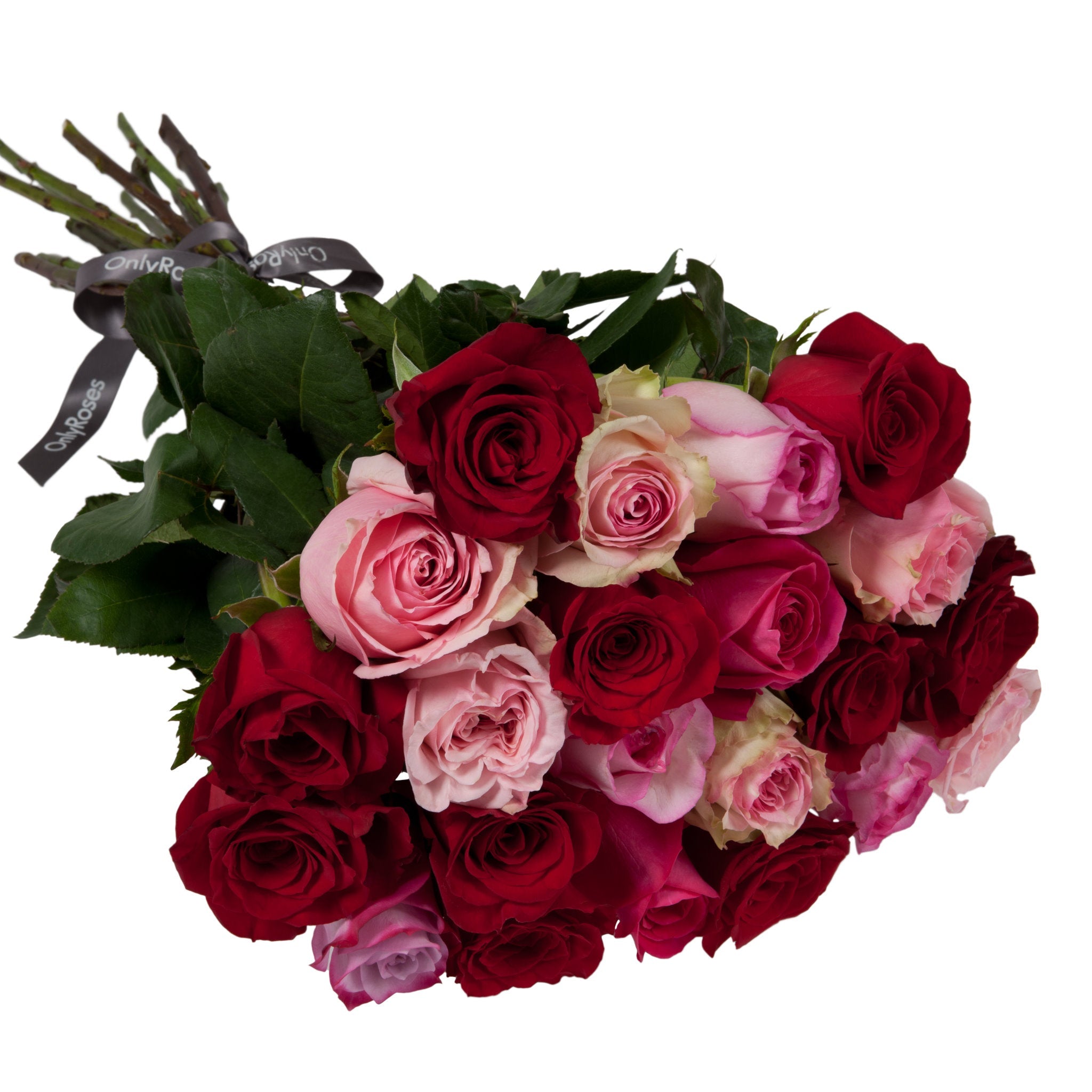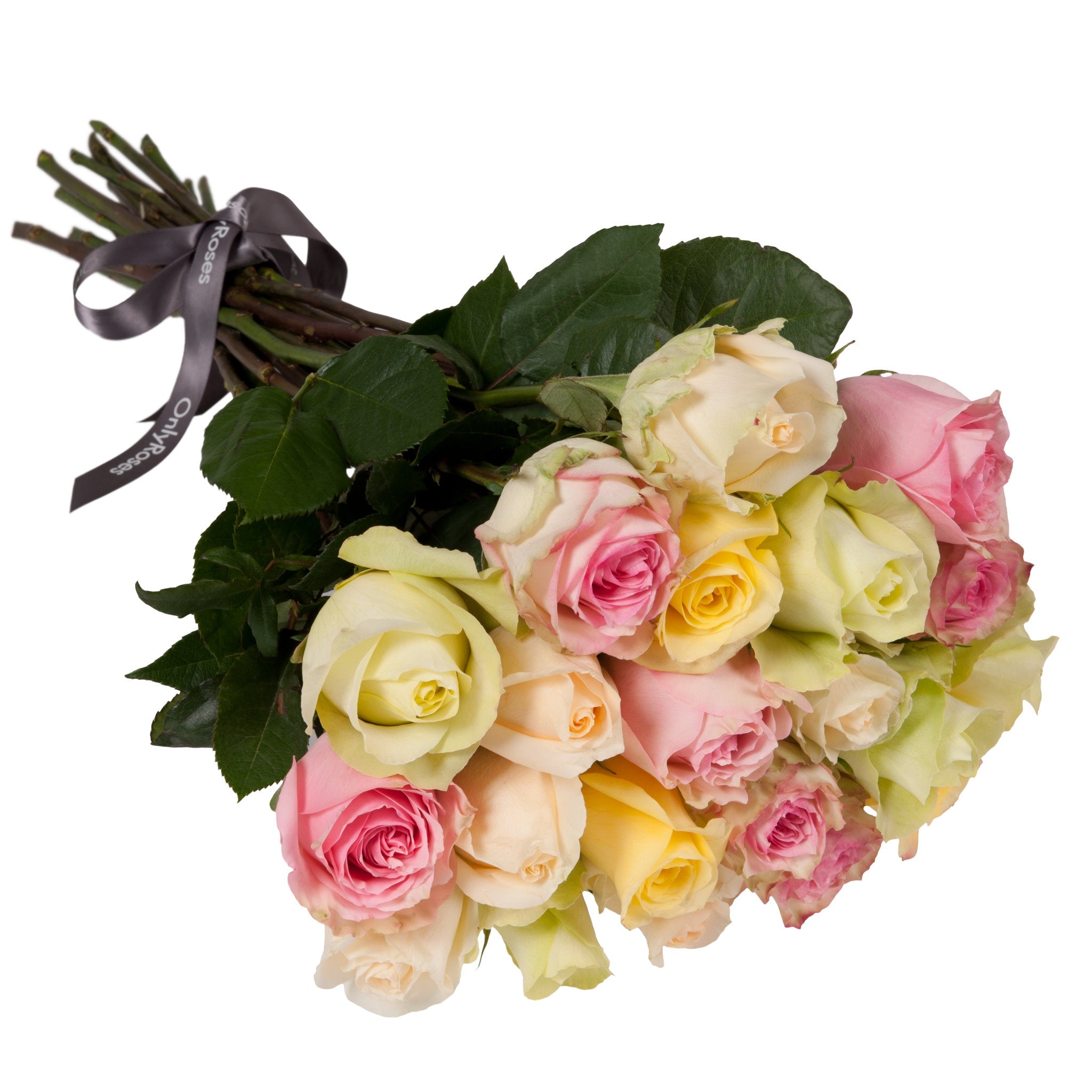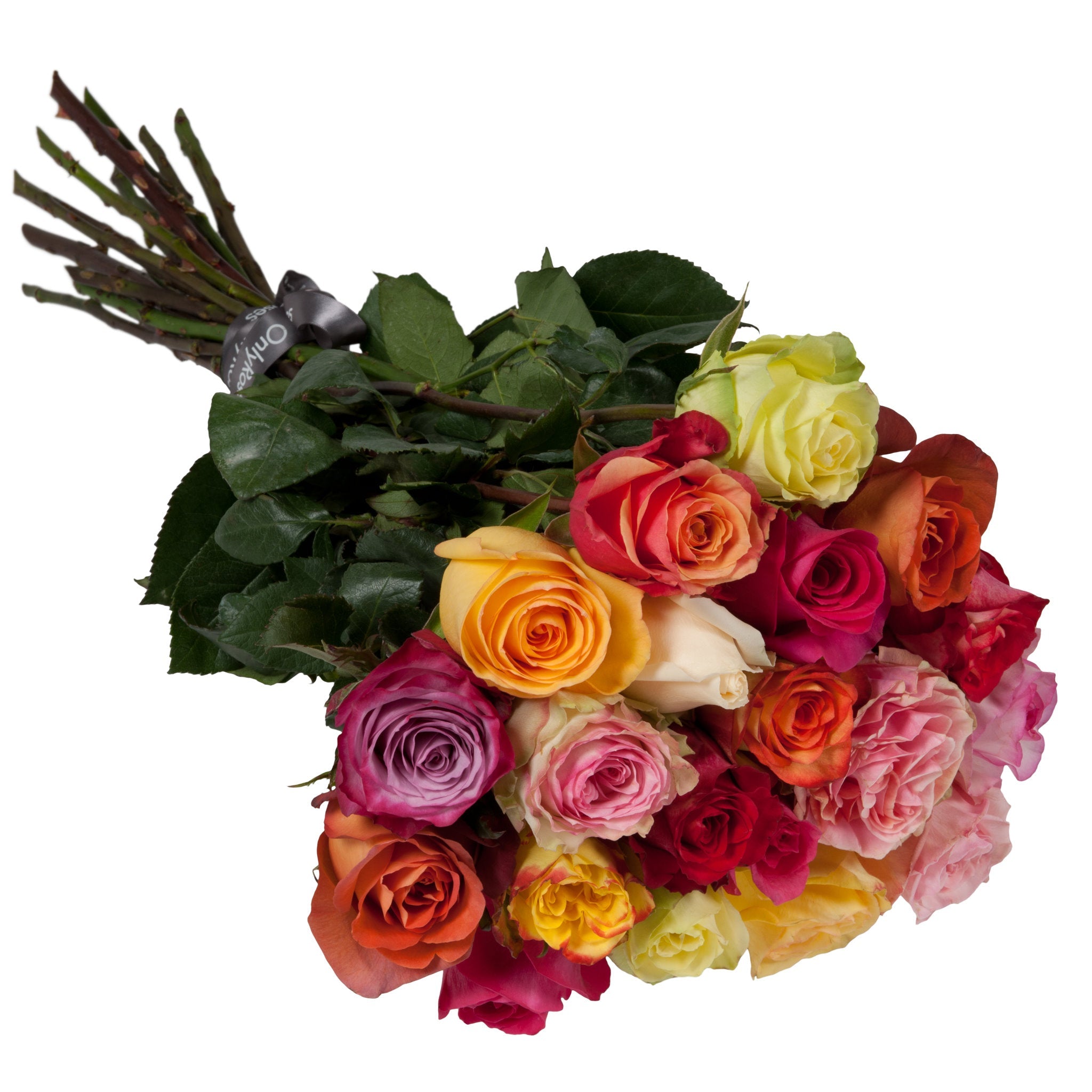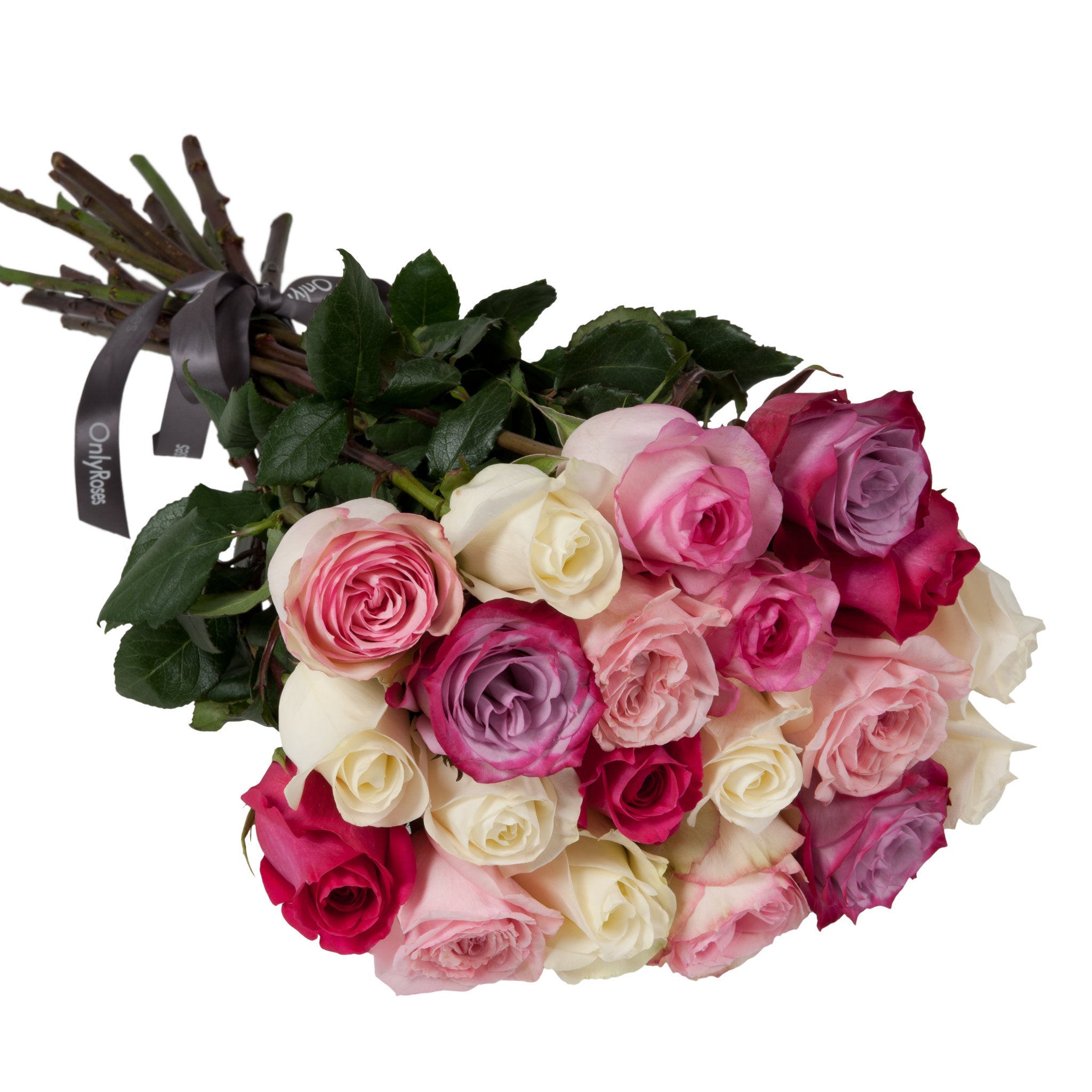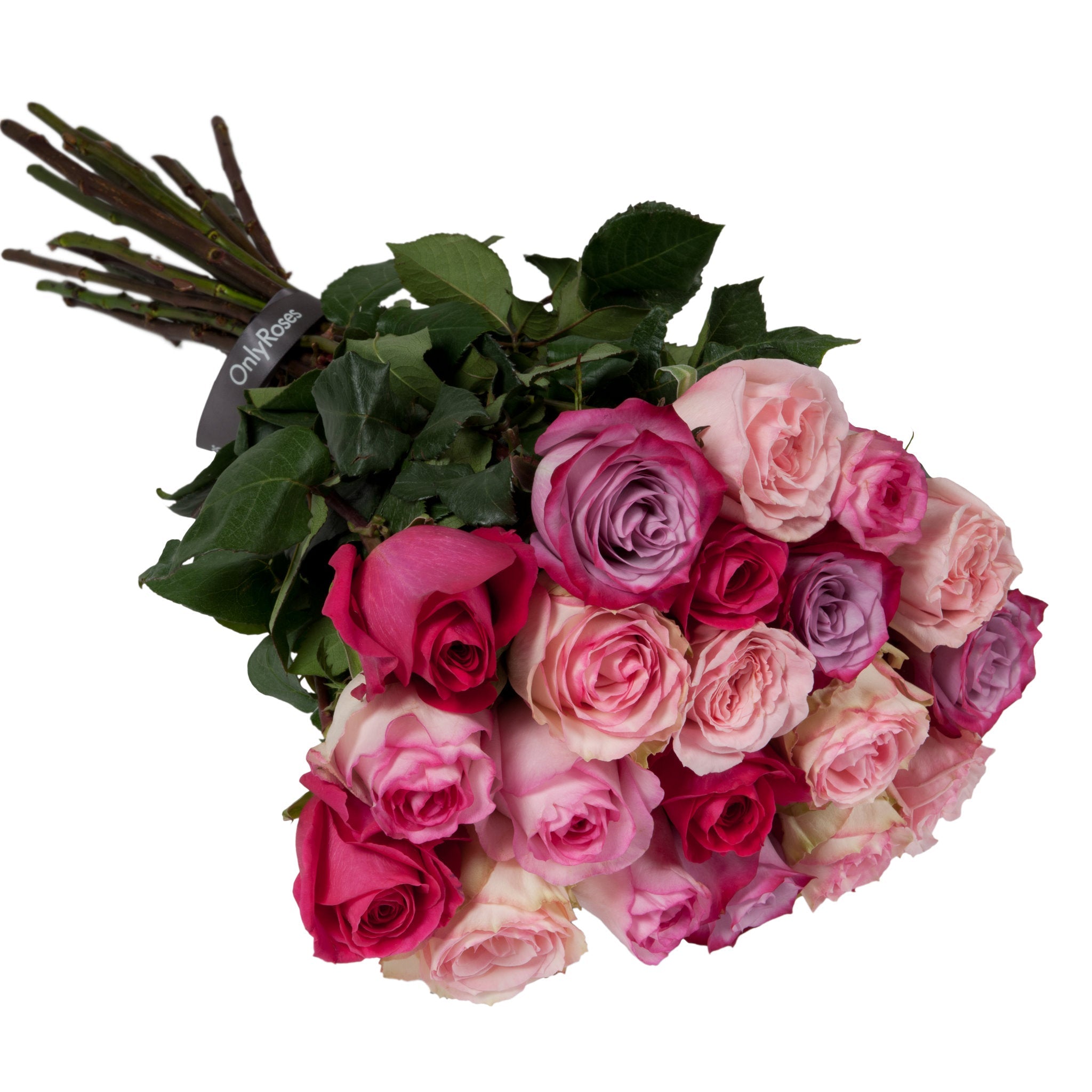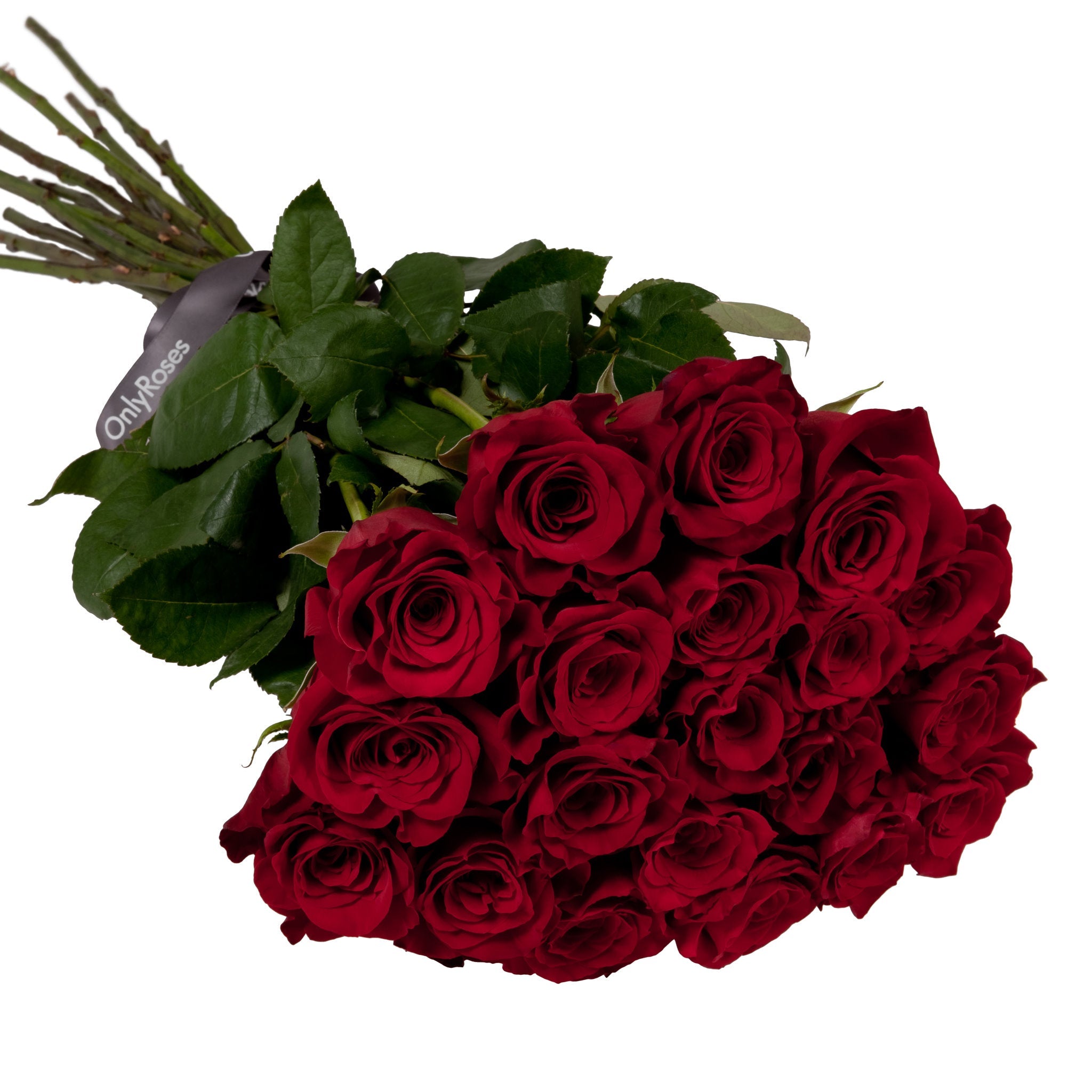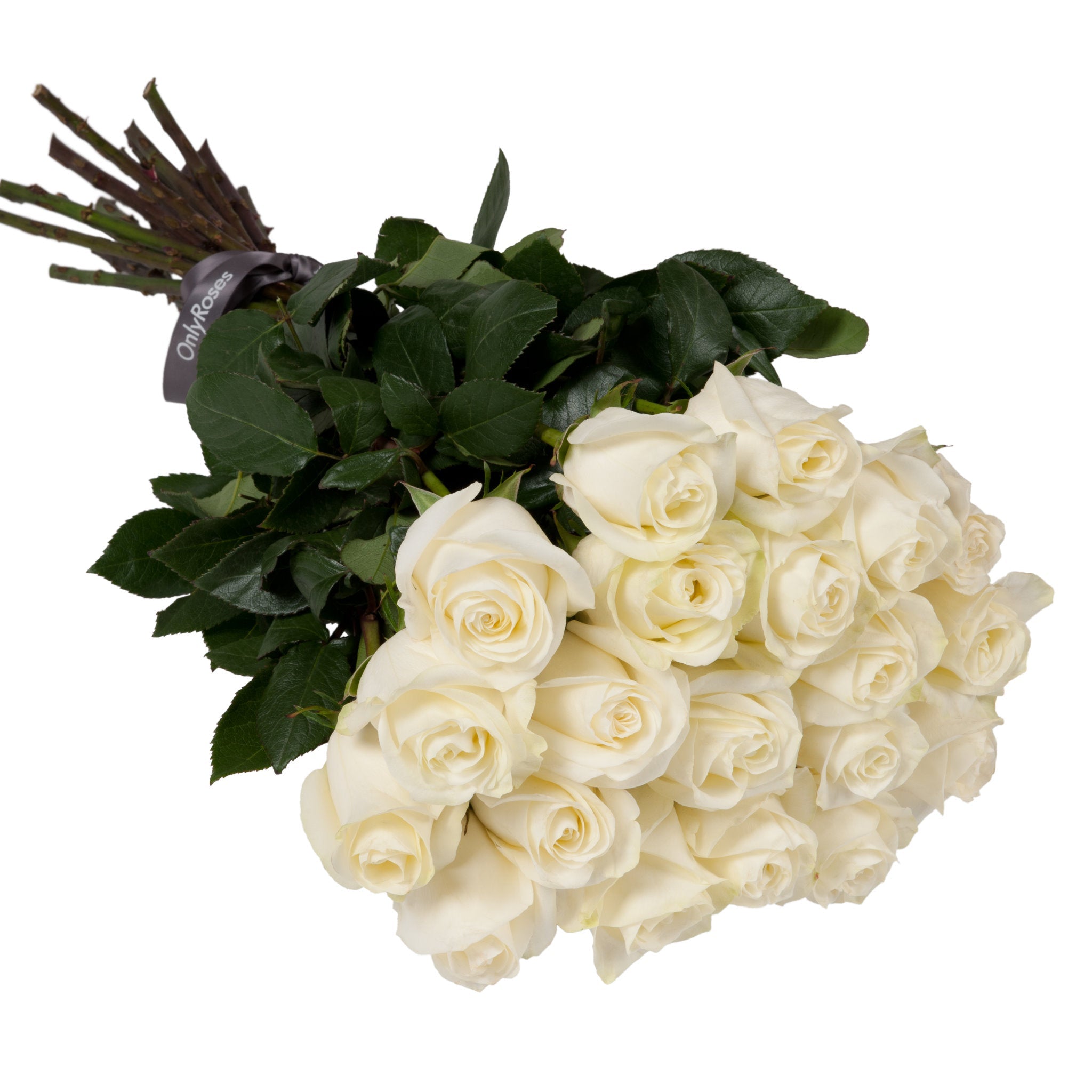

There are few things more disheartening than receiving a stunning arrangement of premium roses, only to watch them droop days before the occasion you had in mind. The good news: with the right preparation, fresh roses comfortably hold their beauty for up to two weeks. This guide covers exactly how to get there — the tools, the conditioning routine, the expert habits, and the one trick that makes the difference on the day that matters.
What you'll need
- Sharp scissors or a floral knife — for a clean diagonal cut that doesn't crush the stem.
- A clean glass or ceramic vase — free of soap residue and old flower debris.
- Cool, fresh water.
- Flower food sachets — included with every OnlyRoses arrangement.
- A refrigerator with space for overnight storage, away from fruit.
Each earns its place. Sharp blades keep the stem's vascular tissue open for water uptake; a spotless vase eliminates the bacteria that cause early wilting; and flower food does three jobs at once — a sugar to feed the bloom, an acidifier to improve water absorption, and a biocide to slow bacterial growth. That combination is genuine post-harvest science, which is why we include it and why it outperforms improvised home remedies.
The conditioning routine
- Unpack in a cool room, away from direct sun and heating. If the box feels warm from transit, let it rest ten minutes before unwrapping.
- Trim 2–3cm from each stem at a 45-degree angle — ideally under running water or submerged, to stop air entering the cut and blocking hydration.
- Hydrate immediately. Every second the cut end sits in air raises the risk of an air lock that stops water reaching the bloom.
- Strip any leaves below the waterline. Submerged foliage rots fast and breeds the bacteria that clog stems.
- Add the flower food to the packet ratio — too little does nothing, too much can burn the stems.
- Arrange with space between stems. Crowding traps heat and humidity around the petals and hastens petal drop.
- Refrigerate overnight if your event is tomorrow — the single most effective trick for day-of perfection.
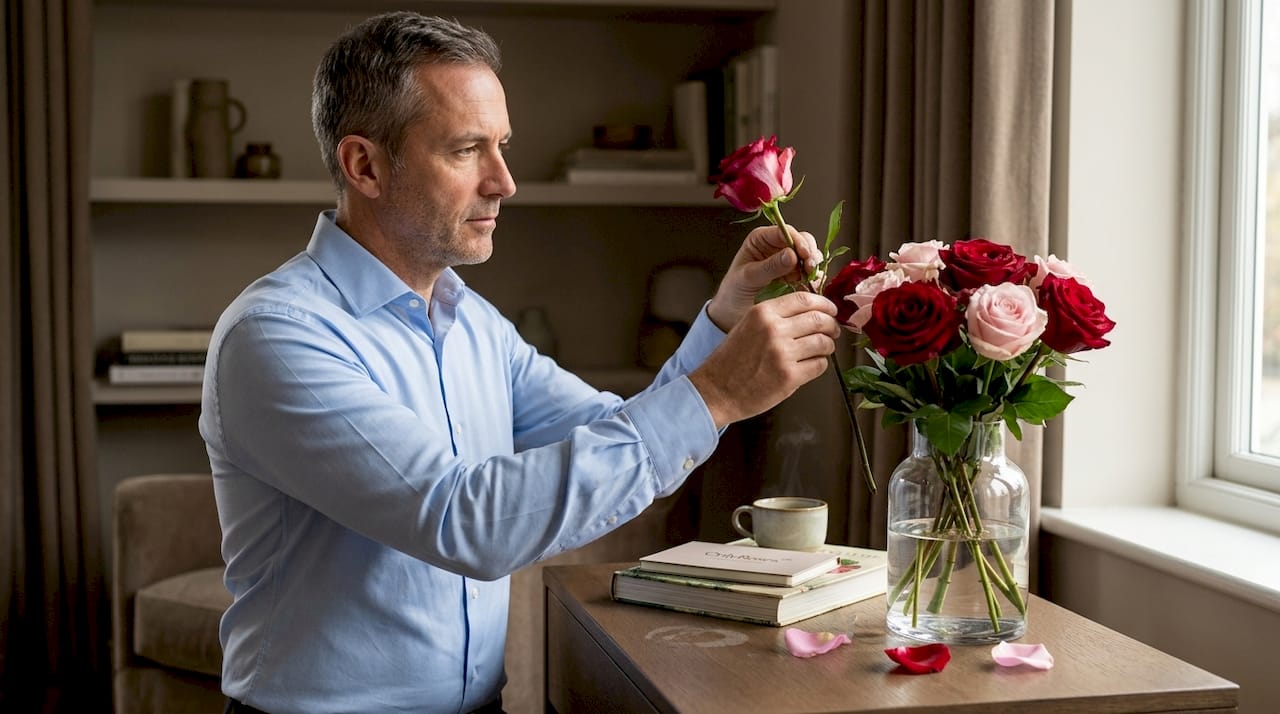
Habits that extend the life — and mistakes that shorten it
Refrigeration is your secret weapon. Returning the whole vase to the fridge overnight and back to display in the morning slows the blooms' respiration, preserving petal texture and colour depth — the same principle as a florist's cold room. Just keep it above freezing.
The common mistakes that cut rose life short:
- Placing roses near a fruit bowl — ripening fruit releases ethylene gas, which accelerates wilting.
- Direct sunlight or a south-facing windowsill.
- Forgetting to change the water, letting bacteria multiply.
- A vase that wasn't thoroughly cleaned between uses.
- Radiators, open fires or draughts nearby.
Change the water every two days, rinsing the vase each time. If a stem droops at the neck, recut it, replace the water completely and return it to a cool spot — it will usually recover.
How long should they last?
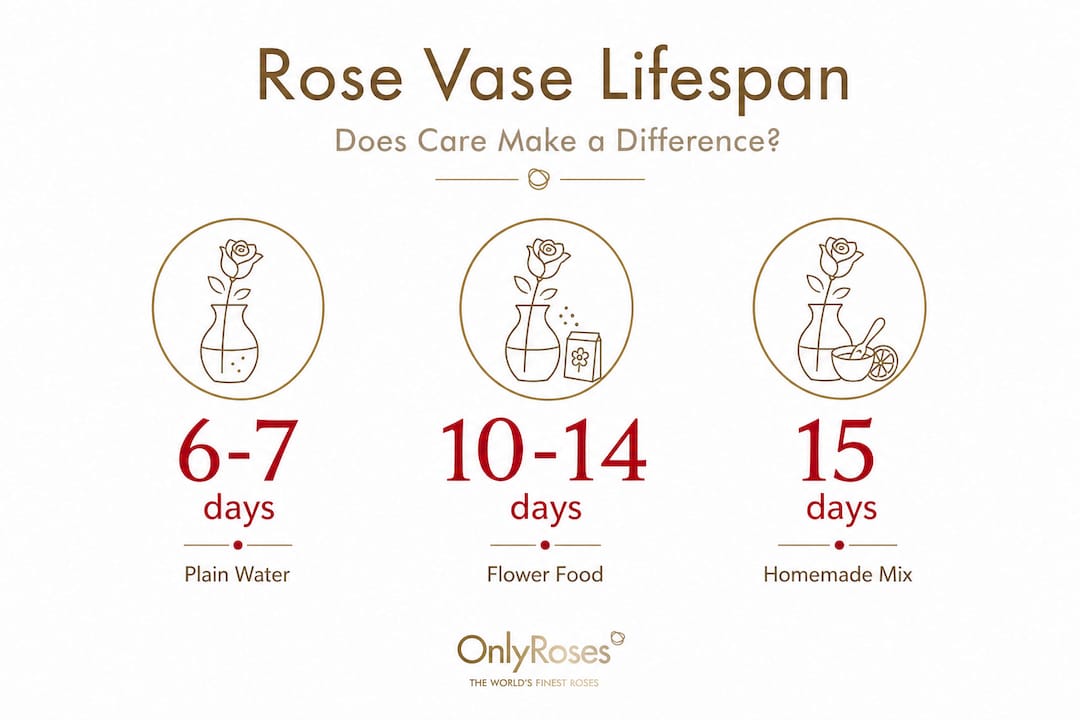
| Care method | Typical vase life | Notes |
|---|---|---|
| Plain water only | 6–7 days | Bacteria build up quickly |
| Flower food + clean vase | 10–12 days | The reliable baseline |
| Full conditioning routine | Up to two weeks | Diagonal cut, flower food, water changes |
| + overnight refrigeration | Up to two weeks, at peak | Best for event-day timing |
Signs they're thriving: firm upright stems, petals furled or gently opening, clear water. Signs of decline: drooping necks, browning outer petals, cloudy or sour-smelling water. At the first sign, recut, refresh the water and add flower food.
A note from our boutique
What we've seen over nearly two decades serving London is that the gap between a good gift and an unforgettable one usually comes down to timing and temperature. London makes roses work harder than most — centrally heated flats, draughty hallways, the swing between a cold street and a warm room. The overnight-refrigeration step genuinely pays off here in a way that shows on the day. The rhythm we recommend to every busy client: order two days ahead, condition on day one, refrigerate on day two, display on the morning of the occasion.
And if you'd rather the question of longevity simply disappeared, our preserved Infinite Roses® keep their beauty for one to three years — up to five in ideal conditions — with no water and no routine at all. Our guide to preserved vs fresh roses weighs the two.
Premium roses, built to last

Every arrangement we send begins with high-altitude Ecuadorian roses — denser petals and stronger stems mean a longer vase life before you do anything at all — conditioned and finished by hand in our Knightsbridge boutique. Browse fresh Classic Roses®, explore the full range with the luxury roses guide, or read the complete rose care guide for fresh and preserved alike. We deliver across London.
Frequently asked questions
How often should I change the water?
Every two days, rinsing the vase each time to prevent the bacterial build-up that causes early wilting.
What's the ideal temperature for storing roses overnight?
Between 2 and 7°C — cool enough to slow ageing, safely above freezing.
Do I need commercial flower food, or will a home remedy do?
Commercial flower food combines a sugar, an acidifier and a biocide in the right balance — the three things vase life depends on. Home substitutes rarely deliver all three reliably, which is why we include proper flower food with every arrangement.
Why do roses droop even after a fresh cut?
Usually an air lock or bacteria blocking water uptake. Recut the stems, replace the water entirely, and return the vase to a cool spot to restore hydration.
How long do fresh roses last?
Up to two weeks with the full conditioning routine. For something that lasts far longer with no care, preserved Infinite Roses® hold their beauty for one to three years.