

TL;DR:
- Rose stem length, graded from 40 cm to 90 cm, serves as a primary indicator of quality, pricing, and arrangement suitability. Longer stems demand more cultivation resources and are preferred for luxury bouquets and high-end displays, while shorter stems are suitable for compact designs and posies. Accurate measurement and matching stem length to the vase and occasion ensure optimal presentation and flower longevity.
Rose stem length is the measured distance of a cut rose’s stem from the base of the cut to the base of the bloom, typically expressed in centimetres and used to grade roses for quality, pricing, and arrangement suitability. Whether you are selecting roses for a bouquet, planning a garden planting, or choosing a gift, understanding stem length helps you make far better decisions. The grading system used by wholesalers and premium growers like those supplying OnlyRoses is precise, standardised, and directly tied to the value of every stem.
What Is Rose Stem Length and How Is It Graded?
Wholesale grading for fresh-cut roses uses length classes ranging from approximately 40 cm to 90 cm, typically measured in 5 cm increments. This means a rose labelled as a “70 cm stem” has been cut and graded to fall within that specific length band. Premium Ecuador roses, which are among the most sought-after in the global cut flower trade, are commonly graded at 60 cm, 70 cm, and 80 cm lengths.
The grading system exists because stem length is one of the clearest indicators of rose quality. Longer stems require more time, space, and resources to grow, which is why they command higher prices at market. A 60 cm stem and an 80 cm stem from the same variety are not simply different sizes. They represent different tiers of cultivation investment.
| Grade | Stem length | Typical use |
|---|---|---|
| Short | 40 cm to 50 cm | Compact arrangements, posies, low vases |
| Mid | 55 cm to 65 cm | Standard bouquets, everyday gifting |
| Long | 70 cm to 80 cm | Luxury bouquets, tall vases, statement pieces |
| Extra long | 85 cm to 90 cm | High-end floral design, premium gifting |
Uniformity within a bunch matters as much as the grade itself. Stem length variation greater than the tolerated range causes pricing and presentation problems at every stage of the supply chain. A bunch with mixed lengths looks uneven in a vase and is difficult to price consistently. This is why reputable suppliers verify bunch uniformity before dispatch.
Pro Tip: When buying roses for a specific vase or arrangement, always ask for the stem grade rather than a general description. A “long-stem rose” means different things to different sellers, but a “70 cm grade” is a precise specification.
How does rose stem length affect vase choice and floral design?
The vase height rule states that the vase should be approximately half the height of the flower stem for the best visual proportion. A 70 cm rose stem, for example, pairs well with a vase of roughly 35 cm. This ratio keeps the bloom elevated above the rim at the right height without the arrangement looking top-heavy or lost.
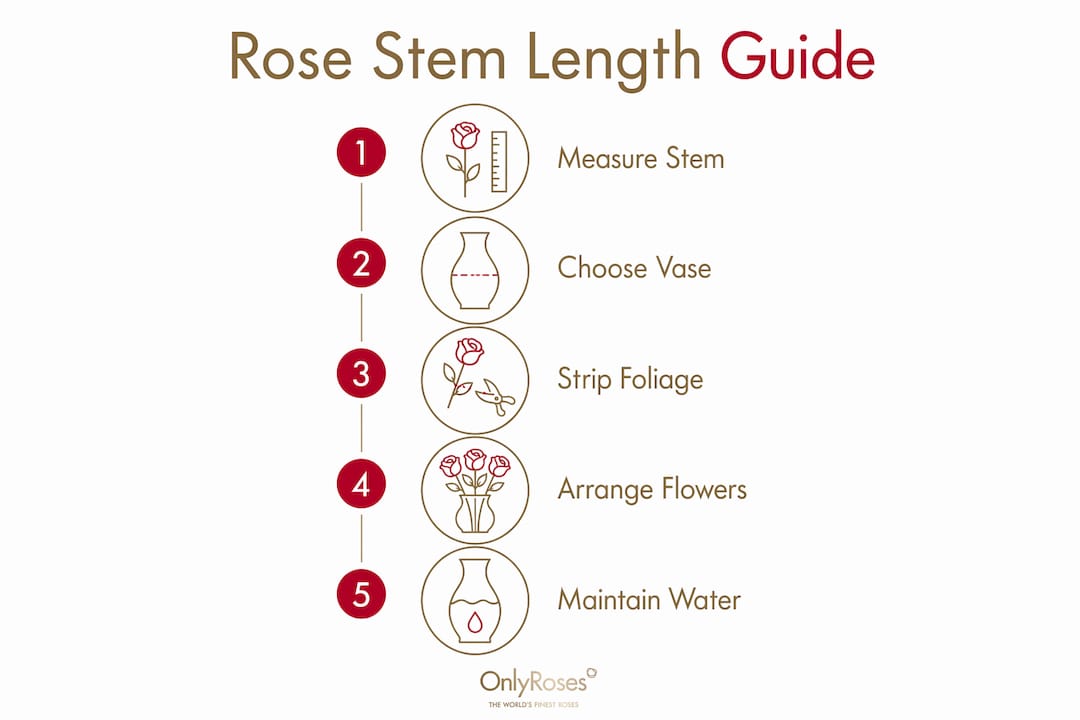
Selecting the right vase is only part of the equation. The more useful concept for florists and home arrangers is usable stem length, which is the distance from the cut end to the point where you want the bloom to sit above the vase rim. Nominal stem length without accounting for bloom positioning can produce awkward displays where flowers sit too low or too high. Measuring usable length before you cut saves wasted stems and poor results.
Here is a practical sequence for matching stem length to your arrangement:
- Choose your vase first and measure its height.
- Multiply the vase height by two to find the ideal stem length for that container.
- Measure the usable stem length of your roses, accounting for how far the bloom should sit above the rim.
- Trim the stem at a 45-degree angle under water to prevent air entering the cut and reducing water uptake.
- Re-cut every two to three days to maintain hydration and extend vase life.
Pro Tip: Strip all foliage that would sit below the waterline before placing stems in a vase. Submerged leaves decay quickly and introduce bacteria that shorten the life of every stem in the arrangement.
What factors influence natural rose stem length?
Rose stems typically range from 25 cm to 60 cm depending on the variety and growing conditions, though cultivated long-stem varieties regularly exceed this range. The difference between a garden rose and a premium cut rose is largely a product of deliberate cultivation rather than genetics alone.
Several factors determine how long a rose stem grows in practice:
- Variety selection. Hybrid tea roses are bred specifically for long, straight canes. Shrub roses and miniature varieties naturally produce shorter stems regardless of growing conditions.
- Pruning technique. Hard pruning redirects the plant’s energy into fewer, stronger canes. Growers producing premium cut roses prune aggressively to encourage length over volume.
- Light and altitude. High-altitude growing regions like Ecuador’s Andean plateau receive intense equatorial sunlight with cooler temperatures. This combination produces longer canes with denser petals and deeper colour than roses grown at sea level.
- Nutrition and irrigation. Controlled feeding programmes with balanced nitrogen and potassium levels support cane elongation without sacrificing bloom quality.
- Growth regulation. Commercial growers use regulated pruning cycles timed to market demand, ensuring stems reach the desired grade length at the point of harvest.
Understanding these factors is useful for gardeners who want to encourage longer stems from their own plants. The principle is consistent: fewer canes, more energy per stem, greater length.
Short vs long rose stems: what should buyers and gift-givers consider?
Longer stems command premium prices in the cut flower market because they signal maturity, careful cultivation, and transport durability. A rose that has grown a 70 cm stem is structurally stronger than one at 40 cm, which means it handles packaging and delivery with less bruising or breakage. For gifting, this translates directly into presentation quality on arrival.
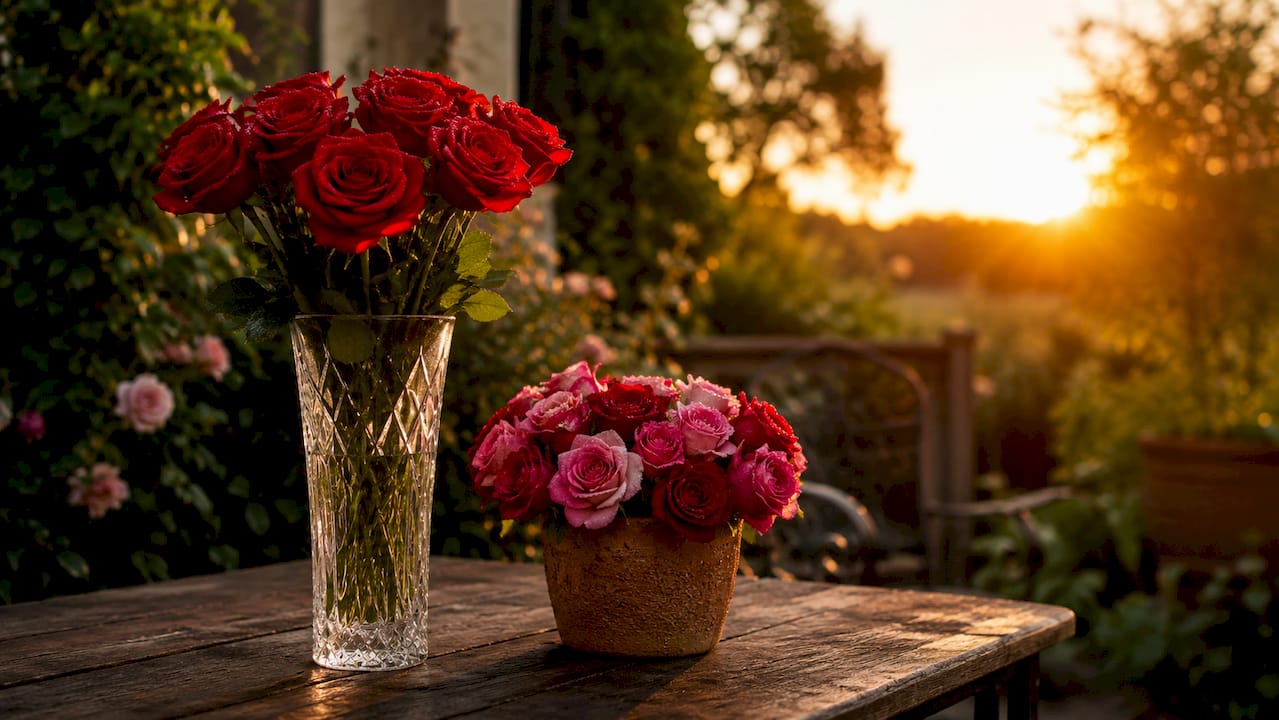
That said, shorter stems are not inferior for every purpose. A compact 40 cm to 50 cm stem suits low posies, hat box arrangements, and table centrepieces where height would be a disadvantage rather than an asset. The stem length and arrangement style must be matched to the occasion and the container, not simply maximised.
For buyers, the practical guidance is straightforward. Choose longer stems when the rose is the focal point of a gift or a tall arrangement. Choose shorter stems when the design calls for density, compactness, or a specific container format. Bloom size also correlates with stem length in premium varieties. A longer stem generally supports a larger, more open bloom head, which increases the visual impact of each individual rose.
| Occasion | Recommended stem length | Reason |
|---|---|---|
| Romantic gift bouquet | 70 cm to 80 cm | Maximum visual impact and presentation quality |
| Hat box arrangement | 40 cm to 50 cm | Compact format suits the container |
| Tall vase centrepiece | 75 cm to 90 cm | Height fills the space proportionally |
| Mixed posy or hand-tied | 50 cm to 60 cm | Versatile length for layered designs |
Pro Tip: For gifting, always consider the recipient’s home. A 90 cm stem rose is spectacular, but only if the recipient has a vase tall enough to display it properly. A 60 cm to 70 cm stem is the most versatile choice for most households.
Key takeaways
Rose stem length, graded in centimetres from 40 cm to 90 cm, determines rose quality, pricing, and arrangement suitability in equal measure.
| Point | Details |
|---|---|
| Standard grading range | Fresh-cut roses are graded from 40 cm to 90 cm in 5 cm increments, with 60 cm to 80 cm being the most common premium grades. |
| Usable length matters most | Measure from the cut end to the desired bloom height above the vase rim, not just the nominal stem grade. |
| Vase proportion rule | The vase height should be approximately half the stem length for balanced visual display. |
| Longer stems signal quality | Premium grades command higher prices because longer stems indicate maturity, strength, and careful cultivation. |
| Match length to occasion | Choose 70 cm or above for gifting and tall arrangements; 40 cm to 50 cm for compact or hat box designs. |
Why stem length is the detail most buyers overlook
I have spent years looking at rose arrangements that almost work. The bloom is beautiful, the colour is right, the packaging is considered. But the stems are too short for the vase, or too long for the space, and the whole thing loses its authority. Stem length is the structural decision that everything else depends on, and it is the one most buyers treat as an afterthought.
The mistake I see most often is treating “long-stem roses” as a single category. A 50 cm stem and a 75 cm stem are not the same product dressed up differently. They suit different vases, different rooms, and different occasions. When you understand the grading system, you stop guessing and start specifying.
For gardeners, the lesson is equally clear. If you want longer stems from your own roses, the answer is not more fertiliser. It is harder pruning, fewer canes, and better light. The plant will do the rest. For buyers, the answer is simpler still: ask for the grade, not the description.
— Anian
Discover luxury rose stems with OnlyRoses
OnlyRoses sources exclusively from high-altitude Ecuadorian farms, where the growing conditions produce the long, strong canes and large bloom heads that define premium cut roses. Every stem is graded for consistency, so what you order is exactly what arrives.
Whether you are building a statement arrangement or selecting a gift that makes an impression on arrival, the classic rose stems collection offers a curated range of lengths and colours to suit every occasion. For a deeper understanding of how stem length, bloom size, and arrangement style work together, the luxury roses guide covers everything from colour selection to care. When stem length is treated as a quality standard rather than an afterthought, the difference in the final arrangement is immediate.
FAQ
What is the average rose stem length for cut flowers?
The average cut rose stem length falls between 50 cm and 70 cm, with premium grades from Ecuador commonly available at 60 cm, 70 cm, and 80 cm. Wholesale grading uses 5 cm increments from approximately 40 cm to 90 cm.
How long are rose stems in a standard bouquet?
Most standard bouquets use stems in the 50 cm to 60 cm range, which suits a wide variety of vases and hand-tied designs. Premium or luxury bouquets typically feature 70 cm to 80 cm stems for greater visual impact.
Does a longer rose stem mean better quality?
Longer stems generally indicate a more mature, carefully cultivated rose and command higher prices in the wholesale market. They are also structurally stronger, which improves durability during transport and extends vase life.
How do I measure rose stem length correctly?
Measure from the base of the cut end to the base of the bloom head. For arrangement purposes, calculate the usable stem length by accounting for how far the bloom should sit above the vase rim, not just the total stem measurement.
What stem length should I choose for a gift?
A 60 cm to 70 cm stem is the most versatile choice for gifting, as it suits most standard vases and creates strong visual presence without requiring specialist containers. Choose 80 cm or above for a statement piece in a tall vase.

