

TL;DR:
- Proper rose care involves correct planting, watering, feeding, pruning, and pest management to promote healthy growth and abundant flowering.
- Plant roses in well-drained soil with sufficient sunlight, keeping the graft union at soil level and training climbing varieties horizontally for more blooms.
- Regular watering at the soil base, biannual feeding, and strategic pruning help maintain vigorous, disease-resistant roses with continuous blossoms.
Rose care is the practice of nurturing roses through correct planting, watering, feeding, pruning, and pest management to achieve vigorous growth and prolific flowering. Whether you grow hybrid teas in a formal border, climbers across a pergola, or long-stem varieties for cutting, the principles of good rose cultivation remain consistent. Organisations such as the RHS and David Austin Roses have refined these techniques over decades, and this guide draws on their guidance to give you a clear, practical roses care instructions guide you can apply from the first season onwards.
What Are the Key Planting Techniques for Roses?
Getting planting right sets the foundation for every season that follows. Roses need at least six hours of direct sunlight daily, good air circulation to reduce fungal pressure, and free-draining soil. Waterlogged ground is the single most common cause of early rose failure.
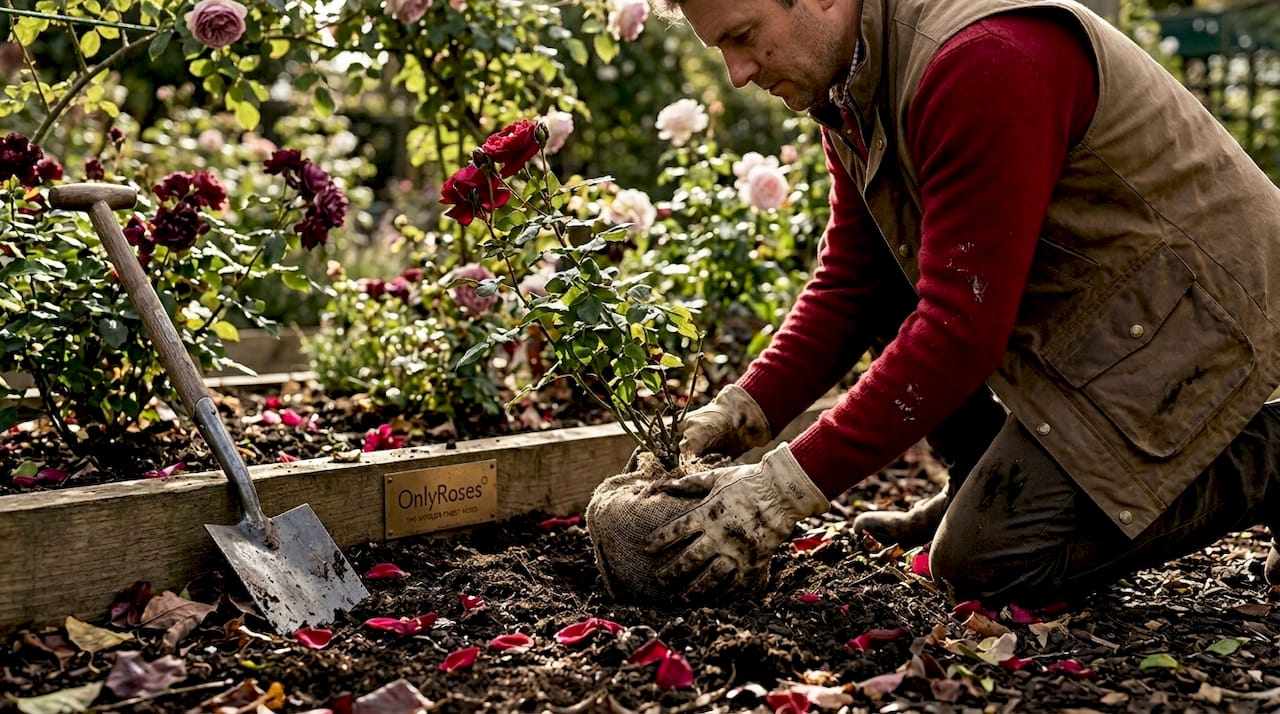
Soil preparation matters as much as position. Work in generous quantities of well-rotted compost before planting, and check that your soil pH sits between 6.0 and 7.0. That slightly acidic to neutral range is where roses absorb nutrients most efficiently, and straying outside it leads to yellowing leaves and poor bloom quality regardless of how much you feed.
Planting depth is a detail many gardeners overlook. For bare-root roses, the graft union should sit at soil level rather than buried beneath it. A buried union increases the risk of root disease and inhibits healthy shoot development. Container-grown roses can go in at any time the ground is workable, while bare-root stock is best planted between November and March.
Key points to observe when planting:
- Dig a hole wide enough to spread roots without bending them
- Backfill with a compost and soil mix, firming gently to remove air pockets
- Water thoroughly after planting, even in cool weather
- Add mycorrhizal fungi to the planting hole to support early root establishment, but avoid phosphorus-heavy fertilisers alongside it
For climbing roses, position the plant 30–45 cm away from a wall to avoid the driest soil zone. Training canes horizontally rather than vertically encourages flowering from base to tip, producing far more blooms per cane. Use soft ties in figure-eight loops when securing stems to supports. Wire or rough string can girdle the vascular tissue and cause lasting damage.
Pro Tip: When planting a climbing rose against a fence, angle the canes at 45 degrees toward the structure from day one. This trains the plant into its support naturally and avoids the need to force mature, woody stems later.
How Should Roses Be Watered and Fed?
Water and feed are where most gardeners either neglect their roses or overdo it. Both mistakes produce the same result: weak growth and poor flowering.
- New roses require watering two to three times per week throughout their first two summers while the root system establishes.
- Established roses need approximately 5 to 10 litres per plant once a week during dry spells in high summer. That volume sounds generous, but shallow watering encourages surface roots that are vulnerable to drought.
- Always water at soil level, directing the flow to the base of the plant rather than over the foliage. Wet leaves create the conditions that fungal diseases such as black spot and powdery mildew need to take hold.
- Mulch after watering with a 10 cm layer of well-rotted compost or bark, keeping a clear gap around the stem base. Mulch retains moisture, suppresses weeds, and feeds the soil as it breaks down.
For feeding, roses respond best to two applications per year. Apply a balanced rose fertiliser in early spring as growth begins, then again in mid-summer to support the second flush of flowers. The recommended application rate is 70 g to 100 g per square metre. Feeding beyond mid-summer pushes soft growth that will not harden before winter and is vulnerable to frost damage.
Pro Tip: If you used mycorrhizal fungi at planting, choose a fertiliser low in phosphorus. High phosphorus levels suppress the fungal network that helps your rose access water and nutrients from a wider soil area.
What Are the Best Pruning and Deadheading Practices?
Pruning is the skill that separates a rose that flowers once and fades from one that blooms repeatedly through summer and into autumn. The goal is always the same: remove what is dead, diseased, or crossing, and open the plant to light and air.
For most bush and shrub roses, the main annual prune takes place in late winter or early spring, just as the buds begin to swell. Cut to an outward-facing bud at a 45-degree angle above a leaf node, sloping away from the bud to shed water. Remove any dead or diseased wood by cutting back to healthy white-centred tissue. Brown or hollow centres indicate disease or dieback and must be removed entirely.
Deadheading during the growing season keeps repeat-flowering roses productive. Once a bloom fades, cut the stem back to the first set of five leaflets below the flower head. This redirects the plant’s energy from seed production into forming new buds.
Points to keep in mind for effective pruning:
- Single-flush roses, such as many old garden varieties, flower on the previous year’s wood. Hard pruning after flowering removes next year’s blooms.
- Climbing roses need their oldest canes removed at the base every few years to encourage vigorous new growth from the crown.
- Hybrid teas and floribundas tolerate harder pruning than shrub roses and respond with stronger, longer stems.
- Always use clean, sharp secateurs. Blunt blades crush rather than cut, leaving ragged wounds that invite disease.
Pro Tip: Dip your secateurs in a diluted bleach solution between plants when pruning a bed with any sign of disease. This prevents transferring black spot spores from one plant to the next.
How to Manage Common Rose Pests and Diseases
Healthy, well-fed roses in good soil resist pests and disease far better than stressed plants. Prevention through good cultural practice is more effective than any spray programme.
The most common threats to watch for include:
- Aphids: Clusters of green or black insects on new growth and buds. Blast off with water or use an insecticidal soap. Encourage ladybirds and lacewings by avoiding broad-spectrum insecticides.
- Rose sawfly: Larvae skeletonise leaves from late spring. Pick off by hand or use a targeted organic spray.
- Black spot: Yellow-edged black spots on leaves, leading to defoliation. Caused by the fungus Diplocarpon rosae. Remove and bin affected leaves. Do not compost them.
- Powdery mildew: White powdery coating on young growth, typically in dry conditions with poor air circulation. Improve spacing and avoid overhead watering.
- Rust: Orange pustules on leaf undersides in late summer. Remove affected material and consider a resistant variety for future planting.
Good hygiene is the most underrated tool in disease prevention. Clear fallen leaves from around the base of plants in autumn, as they harbour overwintering spores. Selecting disease-resistant varieties from breeders such as David Austin Roses reduces the need for intervention significantly.
How Do Care Requirements Differ Between Rose Types?
Rose types vary considerably in their growth habits, and care routines need to reflect that. The table below summarises the key differences.
| Rose type | Pruning approach | Watering and feeding notes |
|---|---|---|
| Hybrid tea | Hard prune in late winter to 30–45 cm | High feeder; benefits from monthly liquid feed in season |
| Climbing rose | Remove oldest canes; train laterally | Moderate feeder; water deeply at base weekly |
| Shrub rose | Light to moderate prune; remove dead wood | Lower maintenance; mulch well to retain moisture |
| Long-stem cut rose | Prune to encourage long, straight canes | Regular feeding supports stem length and bloom size |
Long-stem roses grown for cutting, such as those sourced from high-altitude Ecuadorian farms, require consistent feeding and careful pruning to maintain the stem length and bloom size that make them desirable. The classic rose stems produced by specialist growers reflect years of refined cultivation practice applied at scale.
Key Takeaways
Successful rose care depends on matching planting, watering, feeding, and pruning to the specific needs of each rose type from the very first season.
| Point | Details |
|---|---|
| Planting depth matters | Position the graft union at soil level to prevent dieback and support healthy growth. |
| Water at the base | Direct 5 to 10 litres weekly to the soil, not the foliage, to prevent fungal disease. |
| Feed twice yearly | Apply 70 g to 100 g of rose fertiliser per square metre in early spring and mid-summer. |
| Prune with purpose | Cut at 45 degrees above an outward-facing bud; remove all dead or diseased wood fully. |
| Match care to rose type | Climbers, hybrid teas, and shrub roses each require distinct pruning timing and training methods. |
What I Have Learnt from Years of Watching Roses Grow
The most common mistake I see is treating rose care as a fixed schedule rather than a conversation with the plant. Roses tell you what they need. Yellowing leaves with green veins point to a pH problem, not a feeding deficit. Soft, lush growth in late summer means you have fed too late in the season. Sparse flowering on a climber almost always means the canes are running vertically instead of being trained across a horizontal support.
The variety you choose shapes how much work follows. A disease-resistant shrub rose from David Austin Roses in the right position will largely look after itself with basic maintenance. A hybrid tea in a shaded, poorly drained spot will fight you every season regardless of how carefully you follow a roses care instructions guide.
My honest advice is to observe before you intervene. Walk the garden weekly, look at the leaves, check the new growth, feel the soil. Most problems caught early are solved with a pair of secateurs and a watering can. Most problems left late require a spray, a hard prune, or a replacement plant. Patience and attention are the two inputs no guide can supply for you.
— Anian
Discover Premium Roses and Expert Care From OnlyRoses

OnlyRoses sources its roses exclusively from the finest high-altitude farms, including those in Ecuador, where consistent growing conditions produce exceptional bloom size, stem length, and colour depth. Whether you are looking to grow your own or gift something extraordinary, the luxury roses guide on the OnlyRoses website covers varieties, colours, arrangements, and care in detail. For those interested in roses that last far beyond a single season, the preserved rose collection offers blooms that retain their softness and appearance for months. Explore the full range at OnlyRoses and find the variety that suits your garden or your next occasion.
FAQ
What is the best soil pH for growing roses?
Roses grow best in soil with a pH between 6.0 and 7.0. This slightly acidic to neutral range supports efficient nutrient uptake and directly affects bloom quality.
How often should established roses be watered?
Established roses need approximately 5 to 10 litres of water per plant once a week during dry summer periods. Always water at soil level to avoid wetting the foliage and encouraging fungal disease.
When is the right time to prune roses?
Most bush and shrub roses are pruned in late winter or early spring as buds begin to swell. Climbing roses are pruned after flowering, with the oldest canes removed at the base to encourage new growth.
How do I stop black spot on my roses?
Remove and bin affected leaves immediately, and avoid overhead watering. Improving air circulation through pruning and selecting disease-resistant varieties from breeders such as David Austin Roses reduces recurrence significantly.
What is deadheading and why does it matter?
Deadheading is the removal of spent blooms by cutting at a 45-degree angle above the first set of five leaflets below the flower. It redirects the plant’s energy from seed formation into producing new buds, extending the flowering season.

