

TL;DR:
- Rose expiry signifies the end of freshness and beauty in various rose products, influenced by storage conditions and product type. Fresh roses typically last 5 to 14 days in a vase, while preserved roses can last 1 to 3 years with minimal care. Proper storage, environmental control, and understanding product limitations help maximize their lifespan and prevent waste.
Rose expiry is the point at which roses and rose-related products lose their freshness and intended quality, marking the end of their optimal usability or aesthetic appeal. The term covers several distinct contexts: cut roses in a vase, preserved roses used for décor, rose fertilizer in the garden shed, and even rosé wine in the cellar. Understanding what rose expiry means in each context helps you get the most from every bloom, bottle, or bag of feed you bring home.
What Is Rose Expiry for Fresh Cut Roses?
Cut roses typically last 5 to 7 days in a vase, though attentive care can extend that window to 14 days. That range is not arbitrary. Rose variety, water quality, ambient temperature, and the condition of the stems at purchase all determine where your flowers land on that spectrum. A rose bought wilting from a petrol station forecourt will not recover to the same standard as one sourced fresh from a specialist grower.
Colour is a surprisingly reliable indicator of longevity. Red and dark pink roses contain higher concentrations of anthocyanins, the pigments that strengthen cell walls, and can outlast lighter-coloured varieties by three to five days under identical conditions. This is not merely aesthetic preference. It reflects genuine structural differences in petal biology that breeders at specialist farms actively select for.
| Rose type | Average vase life |
|---|---|
| Red and deep pink | 10 to 14 days with care |
| White and cream | 7 to 10 days with care |
| Yellow and peach | 5 to 8 days with care |
| Garden roses (full head) | 4 to 7 days with care |
| Spray roses (multi-stem) | 7 to 12 days with care |
Temperature is the single most controllable factor. Roses kept in a room above 21°C deteriorate noticeably faster than those kept in a cooler space. Keep them away from direct sunlight, radiators, and fruit bowls. Ethylene gas released by ripening fruit accelerates petal drop significantly.
Pro Tip: Cut stems at a 45° angle under running water every two days and change the vase water at the same time. A flat or crushed cut blocks water uptake and speeds wilting faster than almost any other single mistake.
How long do preserved roses last compared to fresh ones?
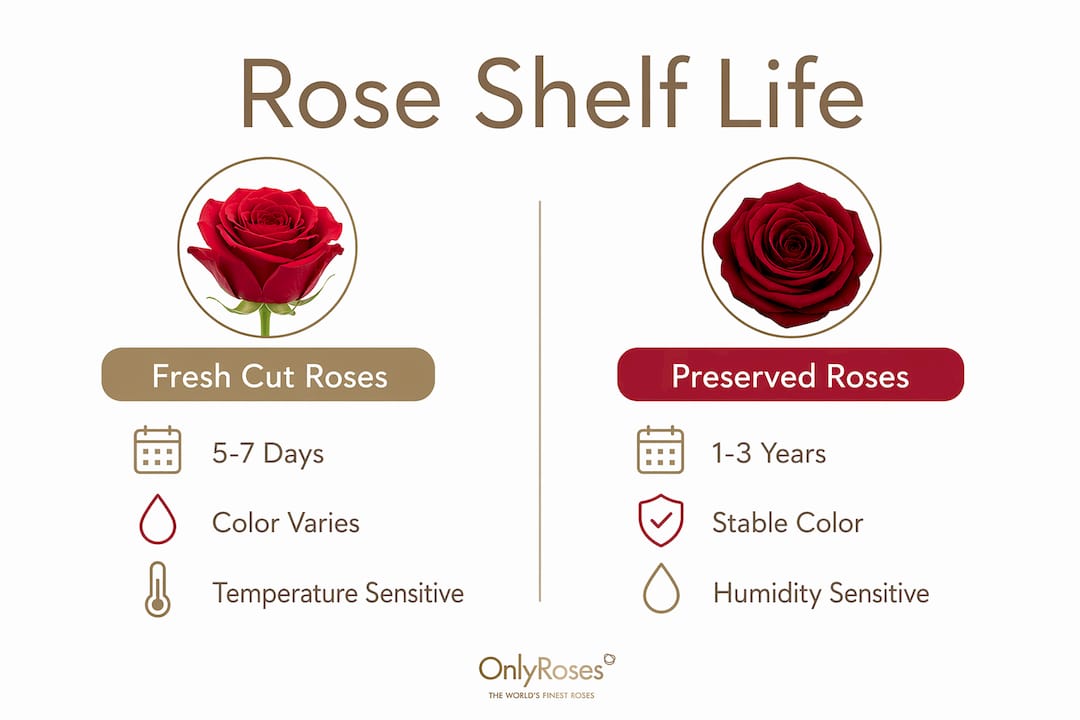
Preserved roses last between one and three years without water, making them a fundamentally different product from cut fresh roses. The preservation process replaces the rose’s natural sap with a glycerin and dye solution, locking in the petal’s softness and colour while halting the biological processes that cause wilting. The result looks and feels almost identical to a fresh bloom, but the expiry timeline is measured in years rather than days.
That said, preservation does not grant immortality. Biological degradation and oxidation continue at a much slower rate, and environmental conditions still matter. Humidity above 60%, direct sunlight, and physical handling all accelerate the decline of preserved petals. A preserved rose left on a sunny windowsill will fade and become brittle within months. The same rose kept in a cool, shaded interior can hold its appearance for the full three-year window.
| Feature | Fresh cut roses | Preserved roses |
|---|---|---|
| Typical lifespan | 5 to 14 days | 1 to 3 years |
| Water required | Daily | None |
| Sunlight tolerance | Low | Very low |
| Fragrance | Natural scent present | Minimal to none |
| Ideal use | Gifting, events | Long-term décor, keepsakes |
OnlyRoses sources its preserved roses from Ecuador’s high-altitude farms, where the combination of equatorial light and cool temperatures produces petals with exceptional density. That structural quality translates directly into longer preservation life compared with roses grown at lower altitudes.
Pro Tip: Store preserved roses away from air conditioning vents and open windows. Fluctuating humidity is the fastest route to premature brittleness. A consistent indoor environment is all they need.
Does rose fertilizer expire and how can you tell?
Rose fertilizer typically lasts one to three years after opening, though improper storage shortens that window considerably. Heat, moisture, and light exposure all degrade the active nutrients, reducing effectiveness even when the product looks unchanged. This matters because applying degraded fertilizer is not simply a waste of money. It can alter soil chemistry in ways that stress the plant rather than support it.
The signs of expiry are straightforward once you know what to look for:
- Colour change: Granules or liquid that have shifted noticeably from their original shade indicate chemical breakdown.
- Texture shift: Clumping, hardening, or unusual stickiness in granular fertilizers signals moisture contamination.
- Unpleasant odour: A strong, acrid, or rotten smell beyond the product’s normal scent is a clear warning sign.
- Sediment or separation: Liquid fertilizers that have separated and cannot be re-mixed have likely lost potency.
- Reduced solubility: Granules that no longer dissolve properly in water will not deliver nutrients to the root zone effectively.
Expired fertilizer can stunt growth or damage plants outright, so the instinct to use it up rather than discard it is counterproductive. Store fertilizer in a sealed container in a cool, dry location away from direct light. If you are unsure whether a product is still viable, apply a small test quantity to a single plant and observe the response over two weeks before treating the whole garden.
What is rosé wine expiry and how does it differ from rose flowers?
Rosé wine expiry is a chemical process driven by oxidation, not a biological one like flower deterioration. Unopened still rosé wine lasts one to two years, while sparkling rosé holds quality for one to three years under ideal storage conditions. These are drinking windows, not safety deadlines. Rosé wine does not become harmful after this period. It simply loses the freshness and fruit character that defines the style.
Once opened, the clock accelerates sharply. Oxidation begins immediately after a bottle is uncorked, and opened rosé should be consumed within three to five days when stored refrigerated with an airtight stopper. Leaving an open bottle at room temperature overnight will flatten the wine’s character by morning.
Practical storage guidance for rosé wine:
- Store unopened bottles upright in a cool, dark location below 15°C.
- Avoid temperature fluctuations, which accelerate oxidation more than consistent warmth does.
- Use a vacuum wine stopper rather than the original cork for opened bottles.
- Refrigerate opened bottles immediately and keep them away from strong-smelling foods.
The key distinction from flower expiry is intent. A wilted rose has lost its aesthetic purpose entirely. A rosé wine past its drinking window is simply less enjoyable, not unusable. The two types of expiry share a name in casual conversation but operate through entirely different mechanisms.
Key Takeaways
Rose expiry varies dramatically by product type, and understanding the specific mechanism behind each form of deterioration is the most effective way to extend quality and avoid waste.
| Point | Details |
|---|---|
| Fresh rose shelf life | Cut roses last 5 to 14 days depending on variety, care, and environment. |
| Preserved rose longevity | Glycerin-treated roses last 1 to 3 years with no water and minimal maintenance. |
| Fertilizer expiry signs | Colour change, clumping, and strong odour indicate degraded fertilizer that may harm plants. |
| Rosé wine drinking window | Unopened still rosé lasts 1 to 2 years; opened bottles should be consumed within 3 to 5 days. |
| Storage is the key variable | Consistent cool, dry, and dark conditions extend the lifespan of roses, fertilizer, and wine alike. |
Why I think most people misunderstand rose expiry entirely
People tend to treat rose expiry as a failure, as if a wilting bloom or a fading preserved petal represents something going wrong. It does not. It represents something going exactly as nature intended, just faster or slower depending on the choices made around it.
What I have found, after years of working with premium roses, is that the biggest losses come not from bad luck but from avoidable habits. Placing fresh roses near a fruit bowl. Leaving a preserved arrangement in direct afternoon sun. Buying fertilizer in bulk and storing it in a damp shed. Each of these decisions quietly shortens the lifespan of the product in ways that feel invisible until the damage is done.
The more useful reframe is this: rose expiry is not a deadline to race against. It is a signal to pay attention to conditions. Fresh and preserved roses serve different purposes, and choosing the right type for the occasion is itself a form of care. A preserved rose in a luxury hat box is not a substitute for a fresh bouquet on a birthday. But for a permanent desk arrangement or a keepsake from a significant occasion, it is the more considered choice by a considerable margin.
The one thing I would advocate for above all else is buying quality at the source. Roses from high-altitude Ecuadorian farms arrive with denser petals and stronger stems, and that structural advantage compounds across every stage of their lifespan.
— Anian
Discover OnlyRoses’ fresh and preserved rose collections
OnlyRoses brings together the full spectrum of rose longevity in a single curated collection, from classic rose stems sourced from Ecuador’s finest high-altitude farms to preserved roses designed to hold their beauty for years. Every arrangement is presented in the brand’s signature packaging, making each purchase as considered as the occasion it marks.

Whether you are looking for a fresh bouquet with maximum vase life or a lasting gift that requires no upkeep, OnlyRoses offers both with the same commitment to quality. The Classic Rose Heart collection is a particularly strong choice for gifting, combining premium bloom quality with elegant presentation that extends the emotional life of the arrangement well beyond the flowers themselves.
FAQ
How long do roses last in a vase on average?
Cut roses last between 5 and 7 days in a vase under normal conditions, and up to 14 days with proper care including regular stem trimming, clean water, and a cool environment.
When do preserved roses expire?
Preserved roses typically last one to three years before showing visible signs of deterioration such as fading colour or brittleness, provided they are kept away from direct sunlight and high humidity.
What are the signs of wilted or expired fresh roses?
Signs include drooping heads, browning or translucent petals, slimy stems, and cloudy vase water. These indicate the rose has passed its usable lifespan and should be replaced.
Does rose fertilizer have an expiration date?
Rose fertilizer lasts one to three years after opening, but heat, moisture, and light exposure can shorten this significantly. Discard any product showing colour changes, clumping, or a strong unpleasant odour.
Is rosé wine expiry the same as rose flower expiry?
No. Rosé wine expiry is driven by oxidation and affects flavour quality, not safety. Rose flower expiry is a biological process. Unopened still rosé lasts one to two years; opened bottles should be consumed within three to five days when refrigerated.

