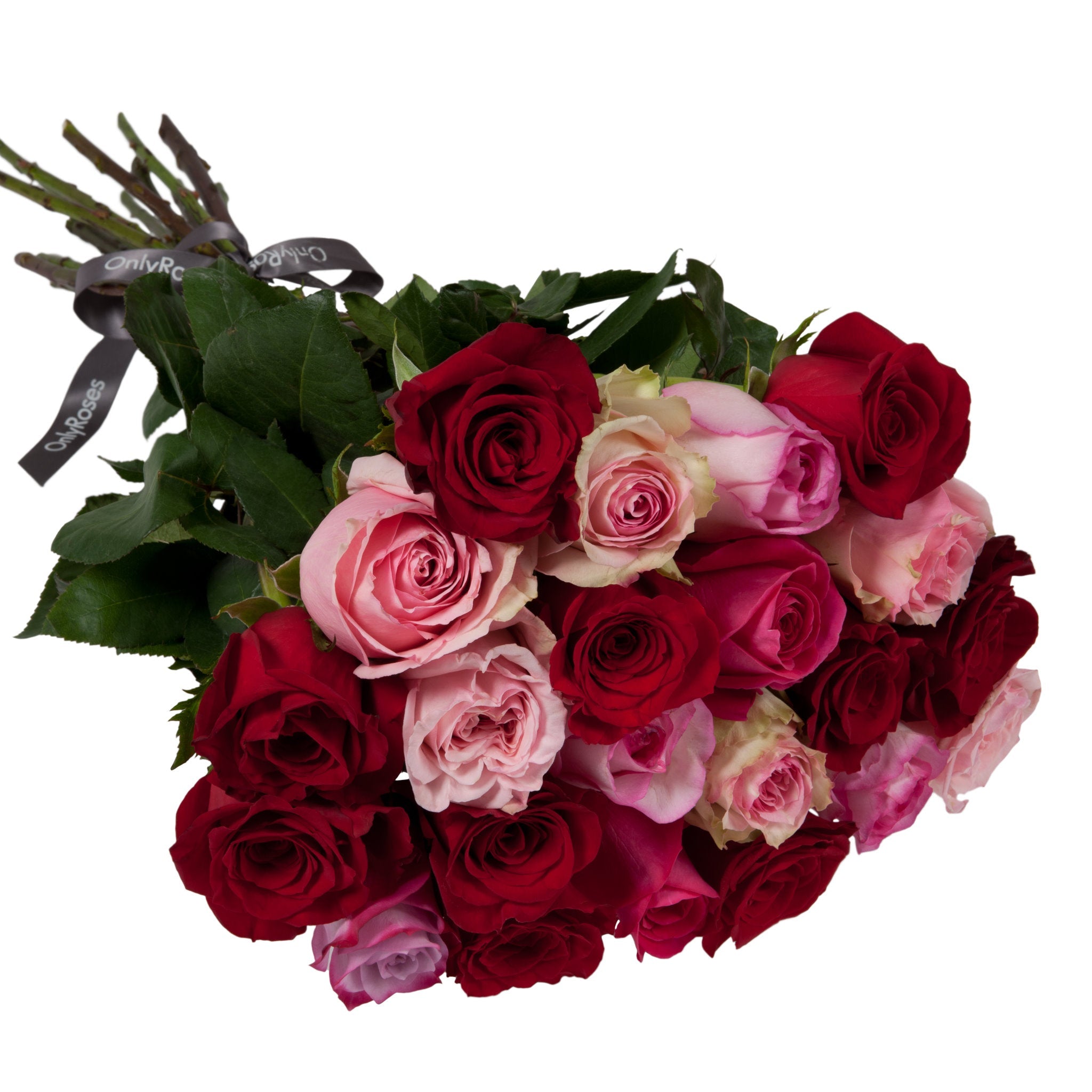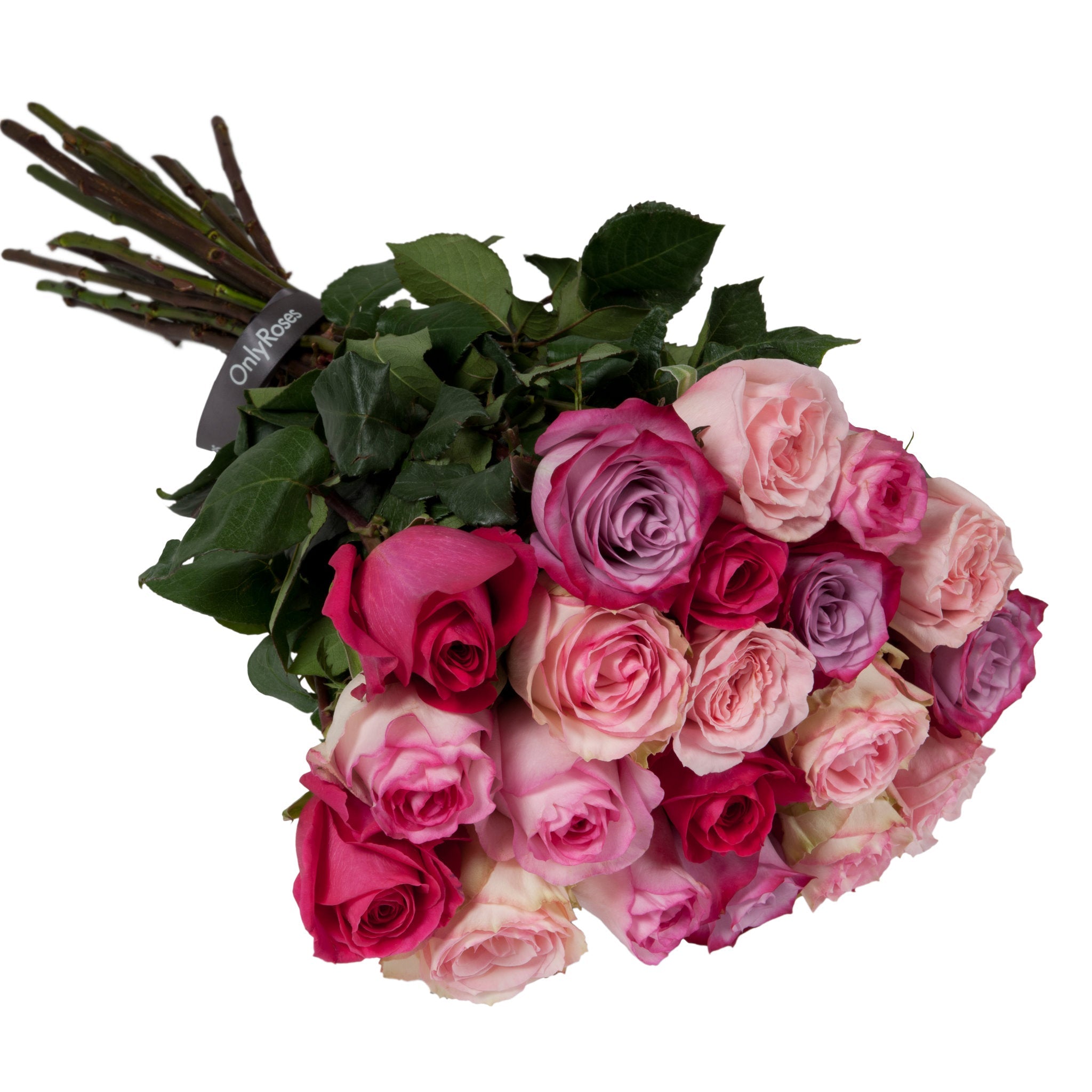

Most people assume roses mean love, full stop. Hand someone a yellow rose at the wrong moment, though, and you discover how much is lost in that shorthand. Roses carry an entire vocabulary — built over five thousand years, refined through myth, religion and Victorian etiquette, and still very much alive in how our clients choose roses in our Knightsbridge boutique today. Understanding that vocabulary is what separates a gift that is merely beautiful from one that says precisely what you mean. This guide covers where rose symbolism comes from, why the rose became the flower of love, what each colour and quantity communicates, and how meanings shift across the cultures our roses travel to.
Where rose symbolism comes from
Roses have been woven into human culture for at least five millennia. The ancient Greeks made the rose sacred to Aphrodite, goddess of love; the Romans scattered petals at feasts, funerals and triumphs, and held confidential meetings sub rosa — “under the rose” — a carved bloom above the table signalling that what was said stayed private. Medieval Europe added reverence, adopting the rose as a symbol of the Virgin Mary; Persian poetry made it the emblem of longing; Renaissance painters used it to signal love to anyone viewing the canvas.
It was Victorian Britain that gave all of this a grammar. Social etiquette forbade direct declarations, so flowers did the talking: published floriography dictionaries let sender and recipient decode the same bouquet, and the colour, the number of stems, even whether the thorns were removed all modified the message. A bouquet was not decoration. It was a letter.
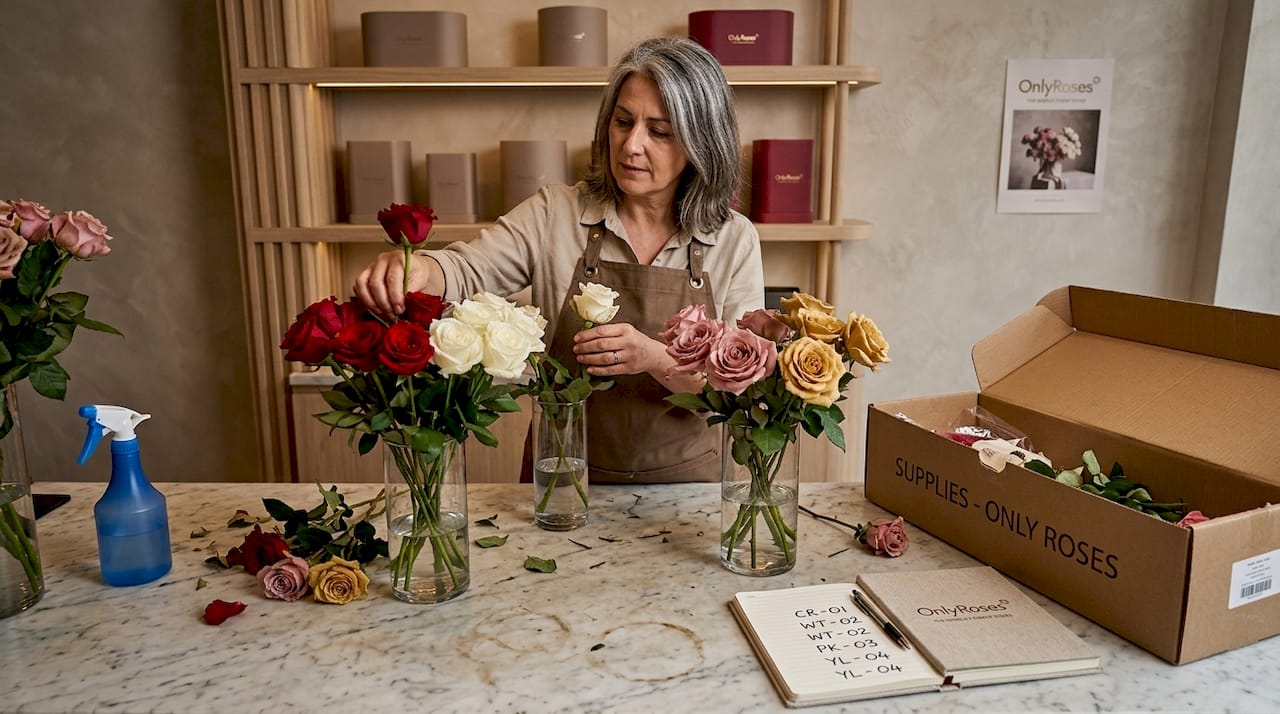
Why roses, of all flowers, came to mean love
Two reasons, and neither is simply “because they are beautiful.” First, no other flower accumulated sacred weight in so many traditions at once — goddess of love, divine grace, poetic longing — so by the modern era the association was not decorative but deeply encoded. Second, roses let people say serious things safely. A dozen red roses makes a specific, unmistakable statement without demanding a speech; the flower carries the emotional risk so the giver doesn’t have to. That is why the rose has survived every shift in fashion: human feeling still sometimes needs a messenger.
What each colour says
The colour of a rose is not decoration — it is the declaration. The essentials:
| Colour | Core meaning | Best occasion |
|---|---|---|
| Red | Passionate love, devotion | Valentine’s Day, anniversaries |
| Pink | Admiration, gratitude, tenderness | Thank-yous, new beginnings |
| White | Purity, reverence, new starts | Weddings, sympathy, milestones |
| Yellow | Friendship, joy | Birthdays, congratulations |
| Orange | Enthusiasm, energy | Celebrations, bold gestures |
| Purple / lavender | Enchantment, rarity | First gifts, unique occasions |
Red and white together traditionally signify unity — a powerful pairing for weddings and significant anniversaries. For the full vocabulary across every shade we grow, our rose colour meaning guide is the reference, our post on rose colour meanings for gifts goes deeper on selection, and all thirty-plus shades can be browsed in roses by colour.
Symbolism around the world — and the missteps to avoid
Rose meanings are not universal, and our clients gift across continents, so the differences matter:
- Britain: red roses are synonymous with romantic love, white with weddings and remembrance.
- The Middle East: roses signal hospitality, respect and generosity as much as romance — quantity and presentation carry their own weight, which is why grand arrangements are the convention for honouring a host or marking Eid.
- Eastern Europe: give odd numbers — even-numbered bouquets are reserved for mourning — and treat yellow with care, as it can carry associations of parting or jealousy.
- East Asia: white blooms are associated with mourning in several traditions; red roses, by contrast, have been embraced for modern romance.
- India: roses are auspicious — woven through weddings, festivals and religious offerings.
The lesson is not to memorise every rule but to consider the recipient’s frame of reference before the occasion’s convention — and when in doubt, a short handwritten note explaining why you chose the colour removes every ambiguity at a stroke.
Quantity: the other half of the language
The Victorians counted stems as carefully as they chose colours, and the convention persists: a single rose is the most intimate statement of all — I chose this specifically for you; twelve signal complete devotion; twenty-four, extravagant commitment; and from 101 stems, the gesture becomes unmistakable — the scale our clients reach for when the occasion outranks convention. Some make the count itself the message: one rose for every year together. For how this plays out on the most symbolic occasion of all, see our guide to roses for anniversaries.
Why this still matters
We live in an age of instant, disposable communication — which is precisely why the deliberate act of choosing a specific rose, in a specific colour and number, lands harder than ever. It cannot be automated and it cannot be faked: the recipient feels the judgement behind it. The most memorable gifts our boutique sends are rarely the largest. They are the most precisely meant.
Say it with OnlyRoses
Every rose we sell is grown at high altitude in Ecuador and finished by hand in Knightsbridge — a flower worthy of what it is being asked to say. Choose the exact shade in roses by colour, send a single perfect stem from Classic Rose Stems, make it permanent with preserved Infinite Roses®, or let our bespoke service build the message stem by stem. The luxury roses guide walks you through all of it.
Frequently asked questions
Why do roses symbolise love?
Centuries of sacred and romantic association — from Aphrodite and Venus through medieval devotion and Victorian floriography — made the rose the most encoded flower in Western culture. No other bloom lets you say something serious without saying a word.
What do different rose colours mean?
Red signals romantic love, pink admiration and gratitude, white purity and reverence, yellow friendship, orange enthusiasm, and purple enchantment. Context and culture shift these meanings, so consider the recipient as well as the convention.
Is rose symbolism the same in every culture?
No. White is bridal in Britain but linked to mourning in parts of East Asia; yellow reads as friendship in the UK but can suggest parting in Eastern Europe; in the Middle East, roses speak of hospitality and honour as much as romance. The recipient’s background should guide the choice.
How many roses should I give?
One for intimacy, twelve for devotion, twenty-four for extravagance — and for the occasions that outrank convention, statement arrangements from 101 stems. One rose per year together is a tradition our clients love.